Adjustable Weight Benches for Home Gyms
Discover how an adjustable weight bench can revolutionize your home gym setup. Learn what features matter most, how to choose the right model, and maximize your training potential with one versatile piece of equipment.
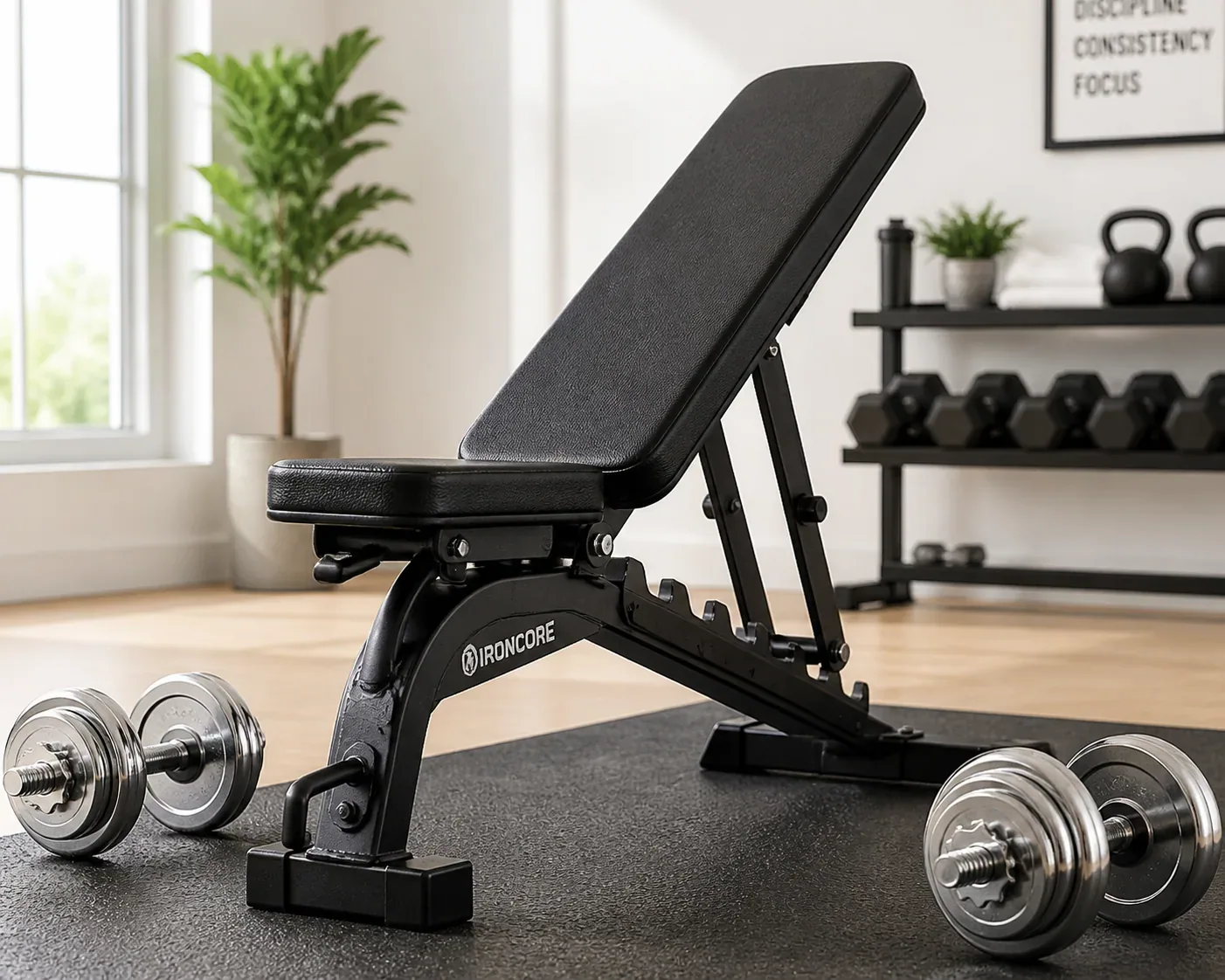
Adjustable Weight Bench for Home Gym: The Complete Buyer's Guide
Introduction
73% of people who join traditional gyms abandon their memberships within the first year—commute times, scheduling conflicts, and intimidation create barriers that derail fitness goals before they start. The adjustable weight bench represents a direct solution to this problem, transforming any corner of your home into a legitimate strength-training facility that eliminates excuses. Modern adjustable benches feature steel frames rated for 300–660 lbs, multiple backrest angles, and foldable designs that deliver gym-quality functionality without the commercial price tag or ongoing membership fees.
Building a home gym doesn't require a warehouse of equipment or a six-figure investment. The trend toward home workouts accelerated over recent years, and manufacturers responded by engineering compact, multi-functional pieces that handle what used to require three or four separate machines. An adjustable weight bench sits at the center of this revolution—it's the foundation piece that enables serious strength training in minimal space.
This guide walks you through everything you need to know before investing in an adjustable weight bench, including which features matter most, how different models compare, what exercises you can perform, and how to select the perfect bench for your goals and budget.
Shop adjustable weight benches and start building your home gym today.
Why Adjustable Weight Benches Are Game-Changers for Home Fitness
The shift toward home workouts and why compact equipment dominates the market
Home fitness evolved from a niche category into mainstream necessity. People discovered that training at home eliminates the friction points that derail consistency—there's no commute, no waiting for equipment, and no audience triggering self-consciousness. This shift in mindset created demand for equipment that works in real living spaces rather than sprawling commercial gyms.
Compact, multi-functional pieces naturally rose to the top of purchase lists. An adjustable weight bench fits seamlessly into apartments, spare bedrooms, and garage corners while handling the workload of multiple specialized machines. Manufacturers capitalized on this trend by refining designs, improving materials, and pricing products competitively enough that home gym ownership became genuinely affordable.
How a single bench eliminates the need for multiple pieces of specialized equipment
Consider what a commercial gym requires to offer similar training variety: a flat bench, an incline bench, a decline bench, leg extension machine, ab equipment, and dumbbell stations. That's five to six separate pieces consuming hundreds of square feet and thousands of dollars. An adjustable weight bench consolidates these functions into one compact unit.
A single bench with multiple backrest angles and adequate weight capacity enables barbell presses, dumbbell work, core training, and unilateral exercises without switching stations. Users perform chest presses in flat, incline, and decline positions; dumbbell flyes that target specific angles; decline sit-ups for core work; and leg raises for lower abdominal engagement—all from the same equipment. This versatility is what makes adjustable benches so practical for home training.
Cost comparison: adjustable benches vs. gym memberships vs. commercial-grade alternatives
A typical gym membership costs $40–$150 monthly, translating to $480–$1,800 annually. Over five years, that's $2,400–$9,000 spent on access to equipment you don't own. Quality adjustable weight benches range from $80–$200, meaning a one-time investment recovers itself in 1–5 months compared to ongoing membership fees.
Commercial-grade benches from fitness equipment manufacturers cost $500–$2,000 or more, delivering superior durability and stability for serious lifters. For home users prioritizing value, an adjustable bench in the $100–$200 range provides 90% of the functionality at 10–20% of the cost. The economics strongly favor home ownership over gym memberships when consistency is achievable.
Space efficiency and the appeal to apartment dwellers and small-space enthusiasts
Urban living and smaller homes created a massive market for space-conscious fitness equipment. Adjustable benches address this directly with foldable or compact designs that store in closets, under beds, or against walls when not in use. Some models compress to dimensions similar to a rolled yoga mat, making storage realistic in apartments and smaller homes.
This accessibility democratized strength training. Previously, home training meant dedicating an entire room to equipment. Adjustable benches made home gyms viable for anyone with 2–3 square feet of floor space and basic storage options. For apartment dwellers, that possibility-opening feature justifies purchase alone.
Critical Features That Separate Quality Benches From Budget Models
Steel frame construction and welding quality for longevity and durability
The frame is everything. Steel construction provides the stability foundation that enables safe, heavy lifting. Quality matters dramatically—benches with well-executed welds, proper gauge steel, and reinforced joints maintain integrity through thousands of repetitions over years of use. Budget models sometimes cut corners by using thinner steel or inferior welding, resulting in wobbling, creaking, and potential failure when weights approach rated capacity.
Inspect frame design and welding patterns when comparing options. Heavy-duty models typically feature visible reinforcement around joints and connection points. Thinner, lighter frames feel unstable during pressing movements and compromise the entire training experience.
Backrest angle adjustments: incline, decline, and flat positions for training applications
Backrest versatility determines what exercises you can safely perform. Flat position supports barbell bench presses and dumbbell work targeting the mid-chest. Incline positions (typically 30–45 degrees) shift emphasis to upper chest and anterior shoulders, essential for balanced upper-body development. Decline positions enable core-focused work like sit-ups and leg raises while also allowing decline bench presses.
Premium benches offer 7–12 adjustable positions; budget models might offer 3–5. More positions provide finer control over training angles and exercise selection. Quick-lock mechanisms that hold position securely matter significantly—benches that slip or shift during sets create safety concerns and waste training focus.
Weight capacity ratings: understanding 300 lbs, 500 lbs, and 660 lbs benches
Weight capacity indicates safe maximum load including your bodyweight plus added weights. A 300 lbs capacity suits beginners and lighter users doing primarily dumbbell work. A 500 lbs capacity accommodates intermediate lifters using barbells and heavier dumbbells. A 660 lbs capacity serves advanced lifters pushing significant barbell weights. Capacity correlates strongly with frame quality—benches rated higher typically feature more robust construction.
Realistic assessment prevents dangerous overloading. Knowing your training intensity, bodyweight, and projected heaviest lifts guides proper capacity selection. Exceeding a bench's rating risks frame failure and serious injury.
Foam padding density and its impact on comfort during long training sessions
Adequate padding absorbs pressure from your back, shoulders, and legs during extended sessions. High-density foam provides better support than low-density alternatives while resisting compression over time. Budget benches sometimes use thin, low-density padding that flattens after weeks of use, creating uncomfortable contact with underlying frame.
Quality padding maintains comfort through hundreds of training sessions without degrading. This matters more than it initially seems—uncomfortable benches discourage training consistency, undermining your entire home gym investment. PU leather covers add durability and ease of cleaning while protecting padding from sweat and wear.
Explore quality adjustable benches with premium padding and durable construction.
Exercise Versatility—What You Can Actually Do on an Adjustable Bench
Barbell bench press variations in flat, incline, and decline positions
The barbell bench press is the gold standard chest-building exercise, and an adjustable bench enables all major variations. Flat-position barbell presses target the mid-chest and anterior shoulders with maximum weight potential. Incline presses shift the emphasis to upper chest and front delts, essential for complete chest development and shoulder strength. Decline presses activate lower chest and triceps while reducing shoulder involvement.
Being able to perform all three variations on one bench means you can structure complete chest training programs without additional equipment. Progressive overload across different angles drives comprehensive muscle development that single-position benches cannot deliver.
Dumbbell exercises: chest presses, flyes, pullovers, and shoulder work
Dumbbells offer superior training stimulus compared to barbells for certain applications. Dumbbell presses allow independent arm movement, forcing stabilizer muscles to engage and addressing strength imbalances between sides. Dumbbell flyes stretch the chest through fuller range of motion than barbells allow, creating more complete muscle fiber recruitment.
Pullovers performed on an adjustable bench enable direct serratus anterior and chest engagement. Shoulder work including dumbbell presses, lateral raises, and reverse flyes can all be performed safely across multiple backrest angles. The ability to adjust the bench angle fine-tunes exercise angles for specific muscle targeting that fixed-position benches cannot match.
Core and ab training: decline sit-ups, weighted crunches, and leg raises
A decline backrest transforms your bench into specialized core equipment. Decline sit-ups with hands behind head or across chest provide weighted resistance that body-weight abdominal training cannot match. Weighted crunches using dumbbells or weight plates magnify intensity further. Hanging leg raises performed with the bench at decline position create intense lower abdominal stimulus.
These core movements build functional strength essential for athletic performance, spinal health, and aesthetic development. Including core work on your bench creates balanced training without requiring separate ab equipment.
Unilateral training for addressing strength imbalances and asymmetries
Single-arm dumbbell work identifies and corrects strength gaps between sides. Single-leg movements performed on an inclined surface provide stability while isolating each leg for balanced development. Unilateral training improves movement quality and prevents dominant-side compensation patterns that limit strength gains.
An adjustable bench supports all these variations safely, making it ideal for comprehensive, balanced training that advanced lifters understand drives better results than purely bilateral work.
The Bottom Line: Making Your Home Gym Investment Count
An adjustable weight bench is the cornerstone of a legitimate home training facility that combines affordability, versatility, and durability to deliver results rivaling expensive gym memberships. The features that matter most are steel construction quality, stable weight capacity, and reliable adjustment mechanisms that hold position securely through every set.
Your specific choice depends on your fitness level, available space, and budget constraints. Beginners focused on dumbbell work and lighter loads do well with $80–$120 benches rated for 300–500 lbs. Intermediate and advanced lifters planning barbell training benefit from investing $150–$200 in benches rated for 500–660 lbs with premium padding and more adjustable positions.
What sets successful home gym builders apart is their commitment to consistency. An adjustable bench removes friction between you and your workouts—no commute, no waiting for equipment, no self-consciousness about form or noise. Start by assessing your actual training needs and intensity level, measure your available space carefully, and invest in a model matching those parameters. Whether you spend $100 or $200, you're making a decision that pays dividends every single day you train.
Find your perfect adjustable weight bench and begin your home fitness transformation now.