Apolosign Digital Signage for Restaurants
Discover how restaurants leverage Apolosign digital signage displays for dynamic menu boards, promotions, and customer experiences. Explore features, setup, and real-world benefits for food service businesses.
Restaurant owners face a persistent challenge: promotional budgets leak away into static materials that customers ignore. Traditional printed menus, laminated posters, and paper-based promotions sit unchanged for months, blending into the background noise of daily dining. In a competitive market where customer attention spans shrink by the day, this approach leaves money on the table.
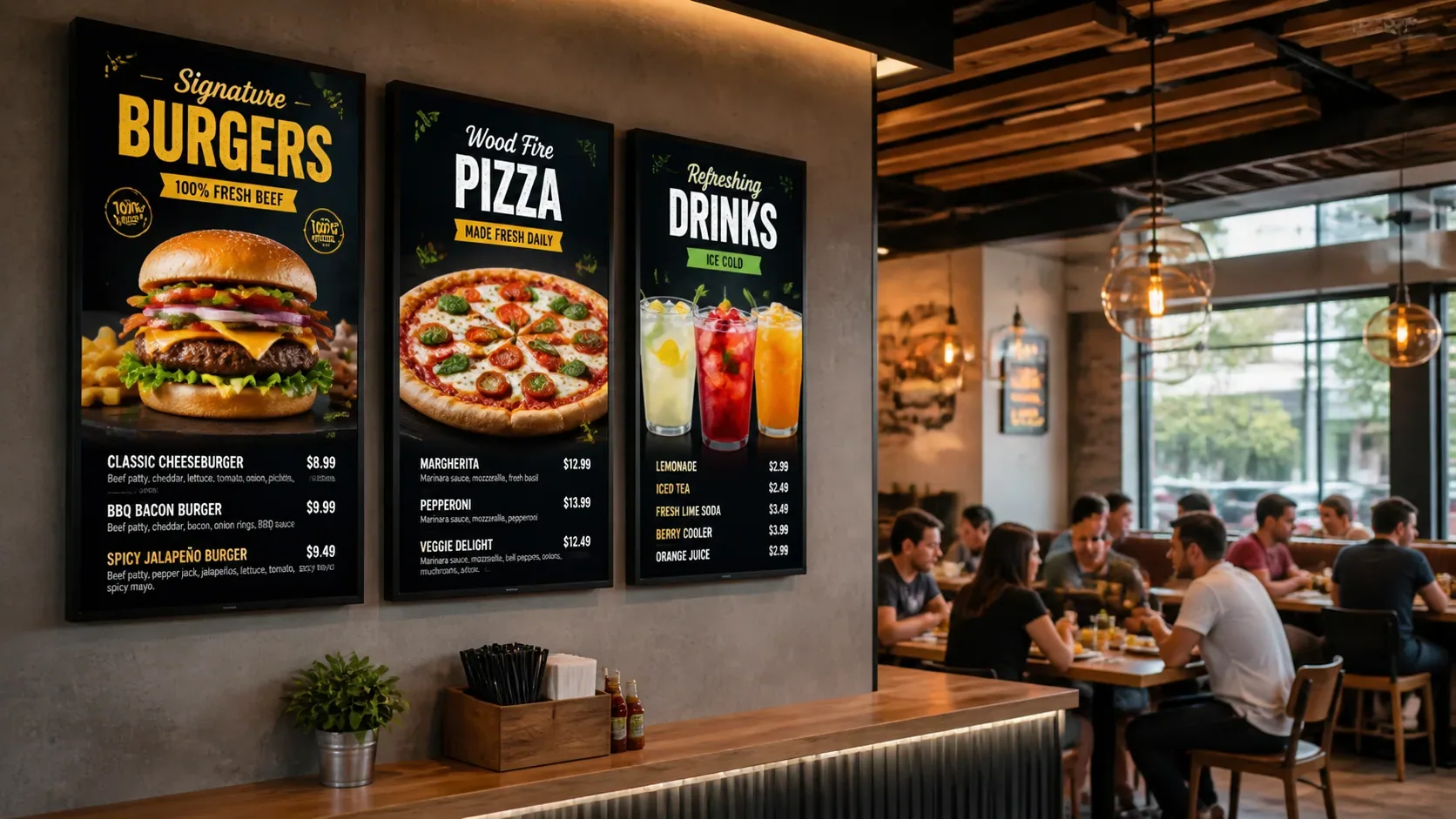
Digital menu boards and promotional displays have fundamentally changed how successful restaurants engage customers. These systems enable real-time menu updates, highlight high-margin items, and create visual impact that paper simply cannot achieve. Apolosign's digital signage display lineup brings this capability within reach for restaurants of any size, offering high-brightness LCD screens with Android-based functionality, remote content management, and installation that doesn't require IT specialists or complex infrastructure.
Discover how Apolosign digital signage can transform your restaurant's customer engagement strategy.
Why Restaurants Need Digital Menu Boards Instead of Printed Signage
Speed of menu updates
Printed menus lock you into static content for weeks or months. A supplier shortage, unexpected price increase, or new seasonal item requires reprinting, which consumes both time and budget. Digital displays eliminate this friction. Change pricing, remove sold-out items, or promote specials in seconds without reprinting costs or waste.
Visual impact of high-brightness displays
Vibrant, professionally photographed menu items grab attention far more effectively than faded prints. High-brightness LCD panels ensure your displays remain visible and engaging even in bright dining environments or outdoor settings where natural light competes for customer focus.
Reduced printing waste
Paper menu boards, laminated posters, and promotional materials accumulate quickly and eventually end up in landfills. Transitioning to digital eliminates this waste stream entirely while reinforcing your restaurant's commitment to sustainability—a message many modern diners appreciate.
Consistency across locations
Multi-location restaurants face coordination challenges with traditional signage. One location might have outdated pricing while another features incorrect promotions. Digital displays synchronize across all venues from a central dashboard, ensuring brand consistency and accurate information everywhere.
Seasonal and time-based promotions
Different dayparts demand different menus. Breakfast specials, lunch combos, dinner entrées, and happy hour deals all require separate signage in traditional setups. Apolosign displays automate this rotation, switching menus based on time of day without any manual intervention.
Upselling opportunities
Your display becomes a sales tool, not just an information board. Feature high-margin items, bundle deals, and limited-time offers precisely where customers make ordering decisions. Strategic placement of visually compelling content drives impulse purchases and increases average transaction value.
Apolosign Display Features Optimized for Food Service Operations
Android-based system
The familiar Android operating platform means your displays run apps, streaming services, and custom menu software without requiring additional hardware or complex infrastructure. Restaurant staff already familiar with Android devices can navigate setup and basic troubleshooting independently.
4K and Full HD resolution options
Crystal-clear image quality ensures menu text remains legible from across a dining room and food photography looks stunning enough to drive purchases. Resolution matters when customers are reading detailed descriptions from several feet away.
Screen sizes from 32 to 65+ inches
Flexibility in sizing accommodates any space. Compact 32-inch displays work for counter environments and small cafés, while larger 55- and 65-inch models command attention in dining rooms, lobbies, and outdoor patios.
Wi-Fi and USB connectivity
Content updates happen seamlessly over your restaurant's network, or staff can transfer files directly via USB for reliable offline operation. This dual connectivity approach works for restaurants with robust IT infrastructure and those running leaner independent operations.
Remote content management
Push menu updates, promotions, and announcements to all displays simultaneously from your office, home, or phone. Multi-location operators benefit enormously from centralized control that eliminates coordination hassles.
24/7 continuous operation capability
Restaurants operate beyond standard business hours, and your displays need to keep pace. Apolosign screens handle extended operation without screen degradation or performance issues, whether you run breakfast service, late-night seating, or round-the-clock delivery operations.
Slim bezels and modern design
Professional aesthetics complement any dining environment, from upscale fine dining establishments to casual quick-service concepts. The slim-bezel design creates a seamless, modern appearance that enhances rather than detracts from your restaurant's atmosphere.
Explore Apolosign's full range of display models and specifications for your restaurant's needs.
Real-World Restaurant Use Cases for Apolosign Digital Signage
Quick-service restaurants (QSR)
Digital menu boards above counters update throughout the day, highlighting breakfast items in the morning, lunch specials at midday, and promotional items during slower periods. This dynamic approach maximizes relevance and drives sales during peak ordering windows.
Fine dining establishments
Elegant displays showcase wine pairings, chef specials, and seasonal tasting menus with high-resolution imagery that communicates quality and craftsmanship. The sophisticated presentation reinforces your restaurant's upscale positioning.
Cafés and coffee shops
Rotating breakfast menus, pastry displays, and loyalty program promotions work effectively on compact 32-inch screens positioned at ordering points. Frequent menu changes keep the offering fresh without physical reprinting.
Food courts and multi-vendor locations
Individual vendor displays operate independently while maintaining brand consistency across the entire food court. Each operator controls their menu while adhering to overall aesthetic standards.
Outdoor patio and drive-thru applications
High-brightness models remain visible in direct sunlight and handle weather exposure better than printed alternatives. Drive-thru operators particularly benefit from displays that adjust content based on time and demand patterns.
Setting Up Your Apolosign Display: Installation and Configuration Simplified
Unboxing and physical setup
Apolosign displays arrive with clear assembly instructions. Stand assembly typically takes minutes, and wall mounting requires only basic hardware and careful placement according to viewing distance guidelines. No specialized tools or expertise necessary.
Power and connectivity requirements
Identify an accessible power outlet near your intended display location—preferably with backup power if your restaurant operates during peak service. Wi-Fi connection ensures reliable content updates, though USB input serves as a backup for independent operators without robust network infrastructure.
Android system initialization
Basic configuration steps guide you through network connection, account setup, and access to content management tools. First-time setup usually completes within 15–20 minutes.
Content management software walkthrough
Upload your menu images, promotional videos, and text content through an intuitive interface. The software accepts common file formats and displays previews before pushing content to your screens.
Scheduling content rotation
Automation is where digital signage becomes powerful. Schedule menu changes for breakfast, lunch, and dinner without manual intervention. Set happy hour promotions to activate automatically during specified time windows, and rotate seasonal content based on your calendar.
Pricing, ROI, and Budget Planning for Restaurant Digital Signage
Display cost breakdown
Apolosign's pricing ranges from approximately $400 for entry-level 32-inch models to $1,500+ for premium 65-inch displays with advanced brightness specifications. Mid-range 43-inch and 55-inch options typically fall between $600 and $1,200, making it straightforward to align your purchase with budget constraints.
Single-location versus multi-location investment
Independent restaurants calculate ROI based on cost for one or two displays. Multi-location operators enjoy economies of scale—purchasing five displays costs significantly less per unit than single-unit pricing, and centralized management reduces ongoing operational complexity.
Comparing to traditional signage
Calculate your total cost of ownership for printed menus, laminated posters, and promotional materials over three to five years. Factor in design costs, reprinting expenses, staff time managing inventory, and disposal. Most restaurants discover that digital displays pay for themselves within 12–18 months simply through elimination of printing costs and operational efficiencies.
Revenue impact metrics
Track upsells generated by prominent display of high-margin items. Monitor reduced food waste when you quickly remove unavailable items instead of serving disappointed customers. Measure menu change efficiency—the time and cost saved by digital updates versus reprinting.
Payback period calculation
Typical timeframes for recovering initial investment range from 12 to 24 months, depending on your sales volume, display quantity, and the efficiency gains you capture. Restaurants with higher transaction volumes and multiple locations see faster payback periods.
Transform Your Restaurant's Customer Experience with Apolosign Digital Signage Today
Apolosign digital signage displays represent a pragmatic evolution in restaurant communication. The combination of affordable pricing, straightforward setup, and powerful content management capabilities brings professional digital menus within reach for restaurants of all sizes—from independent operators to growing chains.
The real competitive advantage isn't simply owning the technology. It's the flexibility to respond instantly to market conditions. When a supplier runs short on an ingredient, you update your menu in seconds rather than facing customer disappointment. When a promotional item generates customer enthusiasm, you amplify it across all displays simultaneously. When you want to highlight a high-margin dish, you showcase it with compelling imagery that printed materials simply cannot replicate.
Your next move is straightforward: assess your current signage approach and identify where digital displays would create the most impact. Consider your high-traffic areas, your average transaction value, and which menu changes occur most frequently. Then explore Apolosign's specific models that align with your budget and space requirements.
The restaurants gaining ground in today's market aren't the ones maintaining printed menus and static posters. They're the ones leveraging digital displays to create responsive, dynamic customer experiences that adapt to real business conditions. Your customers expect flexibility, visual quality, and current information—digital signage delivers all three.
Start your restaurant's digital signage transformation with Apolosign today.