Frizzlife Under Sink Water Filters: DIY Installation Guide
Discover how Frizzlife under sink water filters deliver restaurant-quality drinking water with zero plumber visits. Compare models, installation methods, and long-term costs for the best home filtration solution.
Over 77% of American homeowners worry about tap water quality, yet most delay upgrading their filtration systems because they assume professional installation is mandatory. This misconception keeps countless families buying bottled water and accepting questionable tap quality when affordable solutions exist. Frizzlife under sink water filters have quietly revolutionized how everyday people approach home water quality by combining compact design, affordable pricing, and genuine filtration performance into a package that actually works for renters, budget-conscious homeowners, and anyone tired of buying bottled water.
The barrier to cleaner water isn't technical complexity—it's the belief that filtration requires professional help. Most homeowners simply don't realize how straightforward modern under-sink systems have become. The quick-install cartridge design, leak-resistant fittings, and DIY-friendly approach have eliminated the need for plumbers or specialized knowledge.
This guide breaks down everything you need to know about Frizzlife under sink filters—from installation and cartridge replacement to calculating your true cost of ownership and understanding which contaminants actually get removed. By the end, you'll know exactly whether this system fits your household's needs and budget.
How Frizzlife Under Sink Filters Actually Work: The Multi-Stage Filtration Breakdown
Understanding Multi-Stage Filtration Process
Frizzlife under sink systems operate through sequential filtration stages that work together to remove different contaminants. Water enters the system and passes through mechanical filtration first, which catches sediment, rust particles, and larger debris. This protects the downstream cartridges and maintains water flow. Subsequently, activated carbon filtration removes chlorine, chlorine byproducts, pesticides, and volatile organic compounds (VOCs) that affect taste and odor. The result is water that tastes noticeably fresher without the chemical tang typical of municipal supplies.
Specific Contaminants Targeted by Frizzlife Cartridges
Frizzlife cartridges are engineered to reduce specific contaminants commonly found in tap water. Chlorine taste and odor improvements are among the most noticeable changes users report. Lead removal capabilities meet NSF standards, which matters tremendously for older homes where lead pipes remain common. Sediment filtration protects your water quality, while cyst reduction addresses Cryptosporidium and Giardia concerns. VOC removal handles chemical contaminants that pitcher filters simply can't address.
Flow Rate Impact on Filtration Effectiveness
High-flow performance distinguishes Frizzlife systems from competitors. When water moves too slowly through filter media, it can't absorb contaminants effectively. Conversely, water moving too fast bypasses filtration entirely. Frizzlife's engineering balances flow rate and filtration efficiency, delivering genuinely filtered water without the frustrating slowdown of traditional under-sink systems. Most models maintain 1.5-2 gallons per minute, which feels normal at the tap while still allowing adequate contact time with filter media.
Activated Carbon Versus Mechanical Filtration
Activated carbon filtration operates through absorption—contaminants stick to the carbon's porous surface. This method excels at removing chemicals and improving taste. Mechanical filtration works through physical barriers, trapping particles larger than the filter's pore size. Frizzlife systems combine both approaches, with mechanical stages protecting carbon cartridges from premature clogging. This combination extends cartridge lifespan and maintains consistent water quality longer than single-stage systems.
Why Compact Under-Sink Placement Maintains Water Quality
The confined space under your sink raises legitimate questions about water quality degradation. In reality, Frizzlife's compact design doesn't compromise performance. The system sits close to where you use water, meaning filtered water reaches your glass immediately after leaving the cartridge. Temperature stability is maintained in cabinet spaces, and the short distance prevents recontamination from storage in long pipes. Under-sink placement actually offers advantages over point-of-use systems installed elsewhere in your home.
Cartridge Specifications and Filtration Outcomes
Different Frizzlife models use cartridges with varying filtration capabilities. Basic models typically feature two-stage filtration, while premium options include three or more stages. Cartridge specifications determine which contaminants get removed and how effectively. Higher-tier cartridges contain more activated carbon and advanced filter media, extending lifespan and improving contaminant removal rates. Understanding your model's cartridge specifications helps predict what improvements you'll actually see in your tap water.
Installation Reality Check: What the DIY Process Actually Involves
Step-by-Step Breakdown of Frizzlife's Quick-Change Installation Method
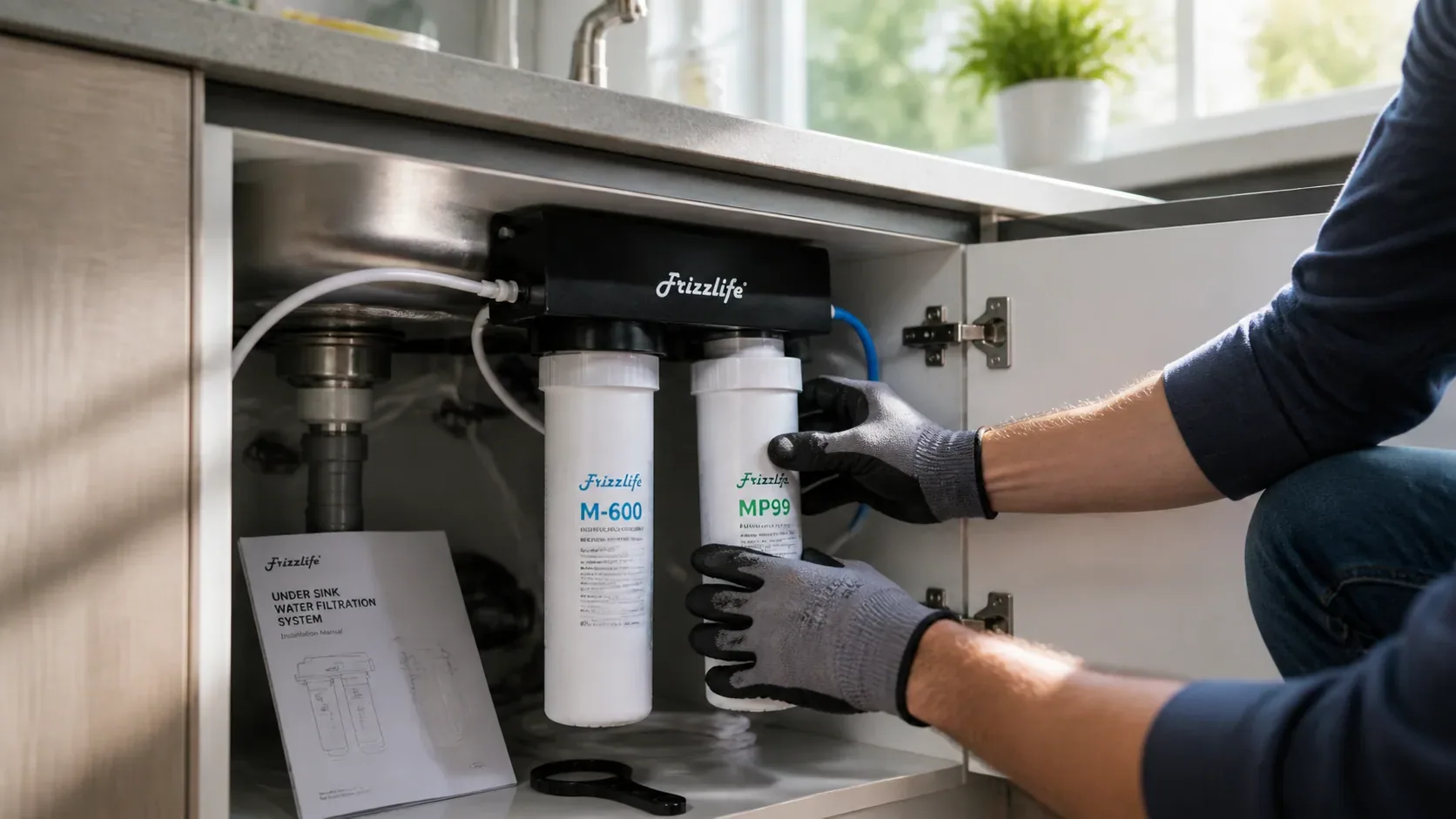
Frizzlife's installation process strips away complexity. First, you shut off water supply under the sink and drain the system completely. Next, you locate your cold water line and attach the system's input valve—this typically requires a simple wrench (often included). The system connects to your existing faucet through an outlet line, or you can install a dedicated filtered water faucet in your countertop. The twist-in cartridge slides into place and locks with a quarter-turn, requiring no tools whatsoever. Water lines connect via push-fit fittings that click into place and hold firm. The entire process takes 20-30 minutes for someone with minimal plumbing experience.
Connection Points and Water Line Integration
Your cold water line serves as the system's input. The installation kit includes a saddle valve, compression fittings, or connection points compatible with standard copper, PVC, or flexible water lines. Output connects to either your existing faucet's spray head or a new dedicated faucet installed through your countertop or sink. These connection points use leak-resistant fittings designed to prevent water damage under your cabinet. The key advantage is that nothing requires permanent modification to your plumbing—everything disconnects cleanly if you move or need to service the system.
Common Installation Scenarios for Different Kitchen Setups
Standard kitchen cabinets with direct access to water lines present no obstacles. Tight spaces requiring system repositioning are manageable with flexible water lines. Apartment kitchens with limited undersink space can accommodate Frizzlife's compact footprint better than many competitors. Older cabinets with awkward plumbing layouts sometimes require adapter fittings, available from Frizzlife or general hardware stores. Kitchens with disposal units, garbage disposals, or existing water filtration need thoughtful planning, but most configurations work with minor adjustments.
Leak-Resistant Fitting Technology
Frizzlife's fittings use multiple design features to prevent leaks. Push-fit connectors create secure seals without requiring Teflon tape or compound. Compression fittings use metal ferrules that tighten progressively, preventing blow-outs common with cheaper alternatives. Rubber O-rings and gaskets maintain integrity over years of water pressure cycling. These features matter because a leak under your cabinet means water damage, mold risk, and ruined cabinetry. Frizzlife's engineering choices prioritize this risk mitigation.
Timeline for Installation
First-time installers typically complete setup in 20-30 minutes. Plumbing-experienced homeowners finish in 10-15 minutes. Tight spaces or awkward configurations might extend the timeline to 45 minutes. The waterproofing test—turning water back on and checking for leaks—adds another 5-10 minutes. No cure time, drying period, or complex steps delay activation. Within an hour of opening the box, most people run filtered water from their kitchen tap.
Troubleshooting Common Installation Hiccups
Water line incompatibility occasionally requires adapter fittings. Push-fit connections that leak typically need reinsertion—disconnect, reseat the line fully, and reconnect. Low water pressure after installation usually indicates cartridge position or blockage. Loose fittings generate drips; tighten by hand or with a wrench. Some water lines resist the saddle valve attachment; heating the line briefly with hot water makes plastic more pliable. Most problems resolve with simple adjustments before requiring outside help.
When Professional Help Actually Becomes Necessary
Unusual plumbing configurations, corroded water lines, or non-standard connections sometimes exceed DIY capability. High water pressure (above 80 PSI) occasionally causes fitting failures requiring pressure regulators. Severely damaged cabinet interiors might necessitate structural assessment before installation. If your water line uses non-standard materials or connections, a plumber's expertise prevents costly mistakes. For most homeowners, professional installation costs $100-200, still far cheaper than whole-house system installation but should be unnecessary.
Rental-Friendly Alternatives and Temporary Installation Options
Renters face installation restrictions, but Frizzlife systems work without permanent modifications. Using a temporary saddle valve on the cold water line creates no lasting changes—remove the system and tighten the connection when moving. Installing an over-the-sink cartridge model requires zero plumbing knowledge. Some renters use the system temporarily and move it between apartments. Portable models with separate water containers offer another option, though they lack the convenience of direct-tap filtration. Document your system condition before removal to recover your security deposit confidently.
Cartridge Replacement: The Hidden Cost of Ownership
Filter Lifespan Expectations
Frizzlife cartridge lifespan depends heavily on your water usage and source quality. Standard models typically last 6-12 months for average households consuming 2-4 gallons of filtered water daily. High-usage families might replace cartridges every 4-6 months. If your tap water already contains minimal contaminants, cartridges can extend beyond 12 months. Well water with high sediment or heavily chlorinated municipal supplies accelerate cartridge exhaustion. The system's water meter or simple calendar tracking helps predict replacement timing accurately.
Identifying When Cartridge Replacement Is Needed
Water pressure drops noticeably when sediment clogs the cartridge. The initial powerful stream becomes a trickle. Taste degradation signals cartridge exhaustion—chlorine flavor returns or water quality noticeably declines. Some systems include indicator lights or volume counters that estimate remaining cartridge life. The safest approach combines observation with timing—if your model typically lasts 8-10 months and you're at month 10, replacement prevents performance loss. Waiting for obvious signs sometimes means you've exceeded the cartridge's useful life.
Twist-In Cartridge Design and Replacement Ease
Frizzlife's twist-in design is brilliantly simple. You close a shutoff valve, unscrew the old cartridge by hand, and screw the new one into place with a quarter-turn lock. No tools, no water line disconnection, no complexity. The cartridge housing catches initial water spray, so the replacement process stays relatively dry. Most people complete cartridge changes in 2-3 minutes. This simplicity matters tremendously for adoption—when replacement takes seconds, people actually perform maintenance on schedule rather than procrastinating.
Cost Per Replacement and Annual Expenses
Replacement cartridges typically cost $30-60 each, depending on the model and where you purchase. With average replacement every 8-10 months, annual costs run $36-90 for typical households. High-usage families budgeting for quarterly replacements might spend $120-240 annually. This cost structure matters—it's predictable and manageable within most household budgets. The yearly expense beats bottled water spending by substantial margins, especially for families already buying cases of bottled water.
Where to Buy Replacement Cartridges
Frizzlife's official website offers cartridges and often includes subscription discounts that reduce per-unit costs. Amazon provides convenient delivery and competitive pricing. Home improvement stores including Home Depot and Lowe's stock compatible cartridges. Direct retailer websites sometimes offer bundle discounts for multiple cartridges. Pricing varies 10-20% across retailers, so comparison shopping saves money on regular replacements. Subscription services that auto-deliver cartridges before exhaustion appeal to organized households seeking convenience.
Comparing Frizzlife Cartridge Costs to Competitors
Pitcher filters require frequent replacement ($10-25 per filter, lasting 1-2 months), resulting in $60-150 annually. Faucet-mounted systems use cheaper cartridges ($15-30) but require more frequent changes, reaching $80-120 yearly. Whole-house system cartridges cost $100-300 but last 12-24 months, though initial system costs exceed $1,000. Frizzlife's cartridge cost structure sits favorably in the mid-range, offering per-unit pricing better than pitcher filters while avoiding whole-house system complexity and expense.
Environmental Considerations and Recycling Options
Used cartridges generate waste. Frizzlife and many retailers have partnered with recycling programs accepting used cartridges. TerraCycle specifically handles water filter cartridges, offering mail-in programs. Some water treatment retailers accept old cartridges for recycling when you purchase replacements. Composting isn't appropriate because cartridges contain activated carbon and filter media requiring specialized processing. Responsible disposal matters for environmentally conscious households, so investigating your local recycling options before purchasing makes sense.
Frizzlife Model Comparison: Choosing the Right System for Your Home
Overview of Popular Under Sink Models
Frizzlife offers multiple under-sink models designed for different priorities. The basic entry-level models provide two-stage filtration at accessible price points. Mid-range options add enhanced cartridges and faster flow rates. Premium models include advanced filtration technology and extended cartridge lifespan. Each tier targets specific buyer profiles—budget-conscious consumers, families prioritizing performance, or those with particular contaminant concerns. Understanding which model aligns with your needs prevents overspending or underperforming systems.
Flow Rate Variations and Daily Water Usage
Flow rates typically range from 1 to 2+ gallons per minute across Frizzlife's lineup. For average households using filtered water for drinking and cooking, 1.5 GPM feels perfectly adequate. Larger families or high-usage patterns benefit from 2+ GPM systems avoiding wait times at the tap. Low-flow models (under 1 GPM) frustrate active users but excel in water-conscious households. Your typical filtered water usage should influence this decision—occasional drinkers tolerate slower flow, while families using filtered water throughout the day prefer faster systems.
Compact Versus Standard Cabinet Models
Compact models fit tight undercabinet spaces, measuring roughly 15 inches in height. Standard models occupy more space but sometimes include additional filtration stages. If your cabinet space is severely limited, compact models prevent installation challenges. Standard models offer flexibility for households with adequate cabinet space. Neither sacrifices performance significantly—the choice is primarily practical rather than functional.
Filtration Stage Differences Across Model Tiers
Basic models employ two-stage filtration adequate for chlorine and sediment reduction. Mid-tier systems add a third stage improving lead removal and VOC reduction. Premium models include advanced activated carbon and sometimes specialty cartridges addressing specific contaminants. More stages theoretically improve contaminant removal, but diminishing returns exist. For most households, two-stage systems satisfy primary concerns. Those with specific contamination issues benefit from upgraded models.
Price Point Breakdown Across the Range
$60-80 models provide essential two-stage filtration suitable for basic chlorine and taste improvement. $100-120 systems add better cartridges and flow rates, appealing to quality-conscious families. $150-180 options include premium filtration technology and extended cartridge lifespan for heavy users. $200+ premium models feature advanced filtration stages and specialized cartridges for severe contamination. Your budget should reflect actual water concerns—don't overspend for unused capabilities, but avoid underspending on systems inadequate for your contaminant profile.
Warranty Coverage and Customer Support
Frizzlife provides warranty coverage varying by model, typically 1-3 years on the system housing and cartridges. Customer support responds through multiple channels including email, phone, and social media. Warranty claims process reasonably—defective systems get replacement or repair without excessive hassle. The company's online presence and community forums provide peer support and troubleshooting. Good warranty coverage matters because defects in the first year reveal themselves quickly, and you deserve replacement options.
Best Models for Specific Scenarios
Renters should consider compact models using non-permanent installation methods. Large families with high water usage benefit from 2+ GPM systems minimizing wait times. Older homes in lead-prone areas need models with certified lead removal cartridges. Well water systems might require models handling higher sediment loads. Budget-conscious households with normal contamination concerns fit well in mid-tier options. Matching your specific situation to the right model prevents future regrets about performance or expense.
Real-World Performance: What Frizzlife Actually Removes from Your Tap Water
Chlorine Reduction Rates and Taste Improvements
Activated carbon in Frizzlife cartridges binds to chlorine molecules effectively. Most users report 90%+ chlorine reduction, with noticeable taste improvements within days of installation. The characteristic "tap water" flavor disappears, replaced by fresher-tasting water. Chlorine odor reduction happens simultaneously—that typical municipal water smell vanishes. For households using chlorinated municipal supplies, this improvement alone justifies system investment. Taste changes so dramatically that family members quickly become advocates for the system.
Lead Removal Capabilities and NSF Standards
Frizzlife cartridges with NSF/ANSI standard certification reduce lead by over 99%. For older homes with lead service lines or plumbing components, this capability addresses serious health concerns. Lead reduction matters most during the first flush—the cartridge's initial activation phase removes lead most effectively. Homes in lead-prone regions like older urban areas or those with identified lead issues benefit significantly from this feature. Lead removal requires specific cartridge types; verify your model's NSF certification before purchasing if lead concerns drive your decision.
Sediment and Particulate Filtration
Mechanical filtration stages capture sediment particles, rust, and debris down to microfilter specifications. Users report noticeably clearer water—discoloration from sediment disappears. Appliances connected to filtered water (ice makers, coffee machines) remain cleaner longer, extending equipment lifespan. Sediment reduction particularly benefits well water users whose water often contains visible particles. Municipal water also contains sediment, though usually less obvious. The clarity improvement alone proves system effectiveness to skeptical homeowners.
Cyst and Microorganism Reduction
Frizzlife cartridges address Cryptosporidium and Giardia concerns through mechanical filtration stages. These parasites affect water safety in some regions, particularly near agricultural areas or wildlife habitats. The filtration meets NSF standards for cyst reduction, though effectiveness varies by specific microorganisms present. Households with identified protozoan contamination require this capability. Standard municipal water rarely contains these organisms if treatment operates properly, but well water and isolated supplies sometimes do.
VOC Removal and Chemical Contaminant Reduction
Volatile organic compounds include pesticides, industrial chemicals, and other substances affecting water quality and safety. Activated carbon excels at VOC absorption. Agricultural areas with pesticide runoff, industrial regions, or those with chemical spill history benefit from VOC removal. Most urban households have minimal VOC concerns, but awareness of local water issues helps determine if this feature justifies upgrade costs. Testing your tap water reveals actual VOC presence, guiding informed purchasing decisions.
What Frizzlife Does NOT Remove
Frizzlife systems don't remove fluoride—the mineral passes through unchanged. For those seeking fluoride-free water, additional treatment is necessary. Minerals including calcium and magnesium (hardness) also pass through; this preserves mineral content but doesn't address hard water problems. Bacteria and viruses aren't removed by standard Frizzlife cartridges—these require UV treatment or higher-spec systems. Frizzlife honestly acknowledges these limitations, helping users set realistic expectations and seek additional treatment if needed.
Water Quality Testing and Verification
Professional water testing reveals what your tap water actually contains, guiding informed Frizzlife model selection. Home testing kits provide quick results for common contaminants. Many municipalities offer free or low-cost testing through health departments. Before purchasing, understanding your specific contamination profile prevents buying unnecessary capabilities or under-treating genuine concerns. After installation, retesting confirms system effectiveness and builds confidence in the filtration.
Before-and-After Taste Comparisons
Users consistently report taste improvements within hours of first use. Water tastes noticeably fresher, without chemical undertones. Beverages made with filtered water—coffee, tea, juice—benefit from improved source water. Ice cubes freeze clearer and taste better. Children often accept more water when taste improves. Family members who questioned the system become believers within the first week. This subjective but powerful improvement drives customer satisfaction and positive reviews across platforms.
Installation Limitations and When Frizzlife May Not Be the Right Fit
Apartment and Rental Restrictions
Landlords frequently prohibit permanent water system modifications. Saddle valves require drilling or clamping to water lines, creating modification concerns. Some lease agreements specifically forbid under-sink modifications. Renters must verify lease permissions before purchasing. Portable or temporary models work for some rentals, though they lack the convenience of direct-tap filtration. Renter-focused options exist but represent compromises compared to permanent installation.
Plumbing Configuration Complications
Non-standard plumbing materials—older steel pipes, rare plastic types, or unusual configurations—sometimes resist quick-connect fitting attachment. Homes with active water softeners, existing filtration systems, or complex valve arrangements require careful planning. Multiple water line feeds or unusual shutoff valve positions complicate installation. Professional assessment identifies compatibility before purchasing prevents frustration and return hassles.
Water Pressure Requirements
Frizzlife systems function optimally between 40-80 PSI (pounds per square inch). Excessively low pressure (under 30 PSI) results in inadequate flow and poor performance. High pressure (over 100 PSI) stresses fittings and cartridges, risking premature failure. Pressure regulation devices address extreme situations but add cost and complexity. Checking home water pressure reveals compatibility before commitment.
Cabinet Space Constraints
Deep undercabinet placement against back walls works well. Shallow cabinets or those packed with existing storage might not accommodate the system. Unusual cabinet geometry, center support posts, or plumbing runs can block ideal positioning. Measuring available space precisely prevents discovering incompatibility during installation. Some users creatively mount systems outside traditional cabinet locations using flexible water lines.
Faucet Type Compatibility
Standard faucets connect easily to Frizzlife systems. Unusual faucet styles—those with integrated filters, non-detachable aerators, or unique connection points—sometimes resist integration. Gravity-fed faucets or those with unusual valve mechanisms occasionally present challenges. Installing a dedicated filtered water faucet bypasses incompatibility but requires countertop drilling. Identifying faucet compatibility before purchasing matters for smooth installation.
Water Line Setup Issues
Homes without accessible shutoff valves require plumber help accessing main water lines. Copper tubing requires special fittings and potentially soldering expertise. PEX tubing connections need appropriate adapters. Visible water line damage, corrosion, or leaks should be addressed before filtration system installation. Flexible water lines purchased separately add costs if your home's configuration requires them.
Hard Water Considerations
Mineral-heavy hard water passes through Frizzlife systems largely unchanged. If hardness represents a primary concern, under-sink softening systems work better than Frizzlife's standard cartridges. Combining water softening with Frizzlife filtration addresses both issues but increases complexity and cost. Most households with hard water accept it after resolving chlorine and taste issues with Frizzlife.
Situations Requiring Whole-House Systems
Severe contamination affecting entire-home water—high lead, bacteria throughout the system, or industrial contamination—warrants whole-house filtration. Those wanting filtered water from every tap benefit from whole-house systems despite higher costs. Homes with severe water quality issues beyond typical chlorine and sediment might need comprehensive solutions. Professional water testing guides this determination.
The True Cost of Ownership: Budget Planning for Long-Term Filtration
Initial System Purchase Price
Entry-level Frizzlife under-sink systems start around $60-80 for complete kits including necessary connection hardware. Mid-range options cost $100-150 with enhanced cartridges and fittings. Premium models reach $200+ with advanced filtration stages. These prices include everything needed for most installations—connection hardware, shutoff valves, and initial cartridges. Unusual plumbing might require additional adapter fittings ($10-30). Your initial investment depends on model selection and baseline compatibility.
Replacement Cartridge Costs Over Time Periods
Year one typically costs $30-60 for initial system plus one replacement cartridge ($35-50), totaling $95-110. Years two through five cost roughly $40-70 annually for cartridge replacements. Five-year total investment lands around $275-410 for typical households. High-usage families with quarterly cartridge changes face $120-240 annually after initial purchase. Calculating your specific cost requires estimating actual cartridge replacement frequency based on water usage and local water quality.
Comparison to Bottled Water Spending
Average American households buying bottled water spend $150-300+ annually depending on consumption patterns. Those consuming 2-3 bottles daily easily exceed $300 yearly. Families with multiple members drinking bottled water approach $500+ annually. Frizzlife system costs—$95-110 first year, then $40-70 annually—undercut bottled water spending dramatically. The payback period ranges from immediate for heavy bottled water consumers to several years for light users. Environmental benefits from reduced plastic waste add non-financial incentives.
Comparison to Pitcher Filters, Faucet-Mounted, and Whole-House Systems
Pitcher filters cost $10-25 per filter, requiring monthly replacement ($30-100 annually) plus initial pitcher ($30-50). Faucet-mounted systems use $15-30 filters lasting 2-4 months ($60-120 annually) plus $30 initial cost. Both methods cost surprisingly close to Frizzlife annually but deliver less convenience and slower water access. Whole-house systems cost $1,000-3,000 for installation plus $50-150 annually for cartridges. Whole-house systems beat Frizzlife on convenience but cost 10-30 times more initially. For most budgets, Frizzlife represents the sweet spot between cost and functionality.
Hidden Costs
A wrench might be necessary if none exists in your household ($10-20). Specialized adapter fittings for unusual plumbing add $10-30 occasionally. Emergency replacement cartridges sometimes cost more at retail locations than planned purchases ($10-20 premium). Water pressure regulator installation (if needed) adds $50-150. These hidden costs remain unusual for standard installations but should be budgeted as contingencies. Total risk exposure rarely exceeds $100 beyond stated system costs.
ROI Timeline: When Systems Pay for Themselves
Households currently buying bottled water see ROI within months. Someone spending $200+ annually on bottled water recoups system investment within 6-12 months. Moderate bottled water users ($100-150 annually) achieve ROI within 12-18 months. Those using tap water already but concerned about quality might not achieve financial ROI but gain health and taste benefits. For environmental-focused households, ROI includes plastic waste reduction and ecosystem impact, valuable beyond pure financial calculation.
Long-Term Affordability for Families and High-Usage Households
Large families or high-usage situations benefit from Frizzlife's scalability. Installing multiple systems costs roughly twice the single-system investment but serves different water access points. Families using 10+ gallons of filtered water daily might face more frequent cartridge changes (quarterly vs. annual) but still maintain affordability. Upgrade cartridges addressing specific contaminants add $5-15 per replacement but target particular family health concerns. Long-term affordability scales well with household size and filtration needs.
Why Homeowners Choose Frizzlife Over Other Filtration Options
Compact Design and Counter Space Savings
Kitchen countertops become increasingly precious in modern homes. Pitcher filters and faucet-mounted dispensers consume valuable space. Frizzlife's under-sink placement preserves your beautiful countertops for food prep and appliances. The system sits invisible under your cabinet, occupying what's typically wasted space. This design advantage appeals to homeowners prioritizing aesthetics alongside functionality. Renters appreciate the non-visual modification—landlords notice pitcher filters, but under-sink systems remain invisible.
Ease of Installation as Primary Decision Factor
The DIY-friendly installation removes installation anxiety preventing many from upgrading water quality. No plumber calls, no $200-500 service fees, no appointment scheduling. The quick-change cartridge system means maintenance doesn't intimidate. This simplicity democratizes water filtration—renters can install and remove systems, budget-conscious homeowners avoid professional costs, and those with limited DIY confidence still succeed. The 20-30 minute installation proves manageable for anyone with basic mechanical ability.
Affordability Sweet Spot
Pitcher filters are cheaper initially but cost more over time and provide lesser convenience. Whole-house systems deliver better coverage but cost thousands and require professional installation. Frizzlife balances upfront cost ($60-200), annual expenses ($40-70), and convenience effectively. The price point feels accessible—not impulse-purchase cheap, but not investment-level expensive. This positioning appeals to practical homeowners seeking value without premium pricing.
Improved Water Taste Consistency
Pitcher filters require refilling, sitting overnight for activation, and often delivering inconsistent results. Faucet-mounted filters decrease flow unacceptably. Frizzlife delivers consistent filtered water every time you turn the tap. Taste remains reliably improved from first use until cartridge exhaustion. This consistency builds trust—you know what you're getting. Family members accept the system because taste improvements prove consistent and undeniable.
Leak-Resistant Technology and Peace of Mind
Water damage from leaking filtration systems terrifies homeowners. Frizzlife's engineering prioritizes leak resistance through design choices—push-fit connectors, compression fittings, quality O-rings. Users report years of leak-free operation under their cabinets. This reliability matters psychologically—you don't worry about expensive water damage while sleeping. The peace of mind from reliable, leak-resistant equipment justifies system choice.
Brand Reputation and Customer Reviews
Frizzlife maintains strong online presence with thousands of positive customer reviews. Users document their experiences, installation success, and satisfaction openly. The brand responds to customer concerns and improves products based on feedback. This transparency and engagement build trust that cheaper alternatives lack. Prospective buyers reading genuine customer experiences make informed decisions with confidence.
Convenience of Filtered Water Without Constant Pitcher Refilling
Pitcher filters require daily refilling, planning ahead for filtered water availability, and refrigerator space sacrifice. Frizzlife delivers filtered water continuously from your existing faucet. No refilling, no waiting, no planning. The convenience proves addictive—families who install Frizzlife rarely want to revert to other methods. Children drink more water when it's immediately available and tastes good. This behavioral shift improves household hydration naturally.
Maintenance Beyond Cartridge Replacement: Keeping Your System Running
Regular Inspection of Fittings and Connections
Monthly visual checks catch leaks before they cause damage. Look for drips, moisture, or discoloration around connection points under your sink. Tighten any loose fittings by hand or with a wrench if needed. Check the cartridge housing for moisture or leaks indicating cartridge failure. These five-minute inspections prevent small issues from becoming expensive problems. Document any concerns for reference during cartridge replacement.
Flushing Procedures for Optimal Flow
Running water through the system for a minute after cartridge installation flushes activated carbon particles that initially cloud water. Some water might appear gray initially—this represents normal carbon dust, not contamination. Flushing until water runs clear ensures the system operates at full effectiveness. Periodic flushing (monthly or quarterly) maintains water flow and prevents sediment accumulation. Your system's manual specifies flushing recommendations for your particular model.
Cleaning Filter Housing
The cartridge housing collects sediment buildup over time, particularly visible in areas with high sediment content. Quarterly inspection and light cleaning maintain performance. Close the shutoff valve, remove the cartridge, and rinse the housing with clean water. Some sediment brushes off easily; stubborn buildup sometimes requires brief soaking. Avoid harsh chemicals that might damage plastic components. This simple maintenance prevents particle bypass that compromises filtration.
Checking Water Pressure
Low water pressure after partial cartridge lifespan suggests clogging or sediment accumulation. Measure your system's input pressure with a gauge attached to the saddle valve—it should read 40-80 PSI normally. Pressure below 30 PSI indicates system restriction or input line issues. High pressure (above 100 PSI) can stress fittings prematurely. Maintaining appropriate pressure ensures consistent performance throughout cartridge lifespan.
Seasonal Maintenance for Climate Variations
Freezing temperatures affect water pressure and flow in cold climates. Ensuring cabinet ventilation or insulation prevents line freezing. High-temperature seasons sometimes accelerate cartridge clogging. Drought conditions might affect water pressure and mineral content. Rainy seasons increase sediment in some water supplies. Seasonal awareness helps predict maintenance needs and cartridge replacement timing.
Signs of System Degradation
Slow water flow despite recent cartridge replacement suggests housing accumulation or input line restriction. Persistent leaks that tightening doesn't resolve indicate fitting degradation requiring replacement. Water taste reversion before predicted cartridge lifespan expiration signals potential membrane damage. Any visible damage to the cartridge housing or tubing warrants component replacement. Addressing these signs promptly prevents system failure and maintains filtration effectiveness.
Storage Considerations
If relocating or temporarily shutting down your system, drain all water completely to prevent mold and bacterial growth. Disconnect cartridges and store them in cool, dry conditions. Document your connection setup photographically for future reference. When reactivating, flush the system thoroughly before consuming filtered water. Proper storage preserves system functionality during temporary unavailability.
Making the Decision: Is a Frizzlife Under Sink Filter Right for You?
Assessment Questions About Your Situation
What specific water concerns drive your interest—taste, chlorine smell, sediment visibility, lead risk, or general quality improvement? How much filtered water does your household actually use daily? Can you access your water shutoff valve and undercabinet space? Do you own your home or rent with landlord permission? What's your comfortable budget for initial purchase and ongoing maintenance? Answ