Himiway Zebra Winter Performance: Real Test
Discover how the Himiway Zebra electric bike performs in harsh winter conditions. We tested its fat tires, battery range, and motor power in snow and ice. Read our detailed winter riding guide.
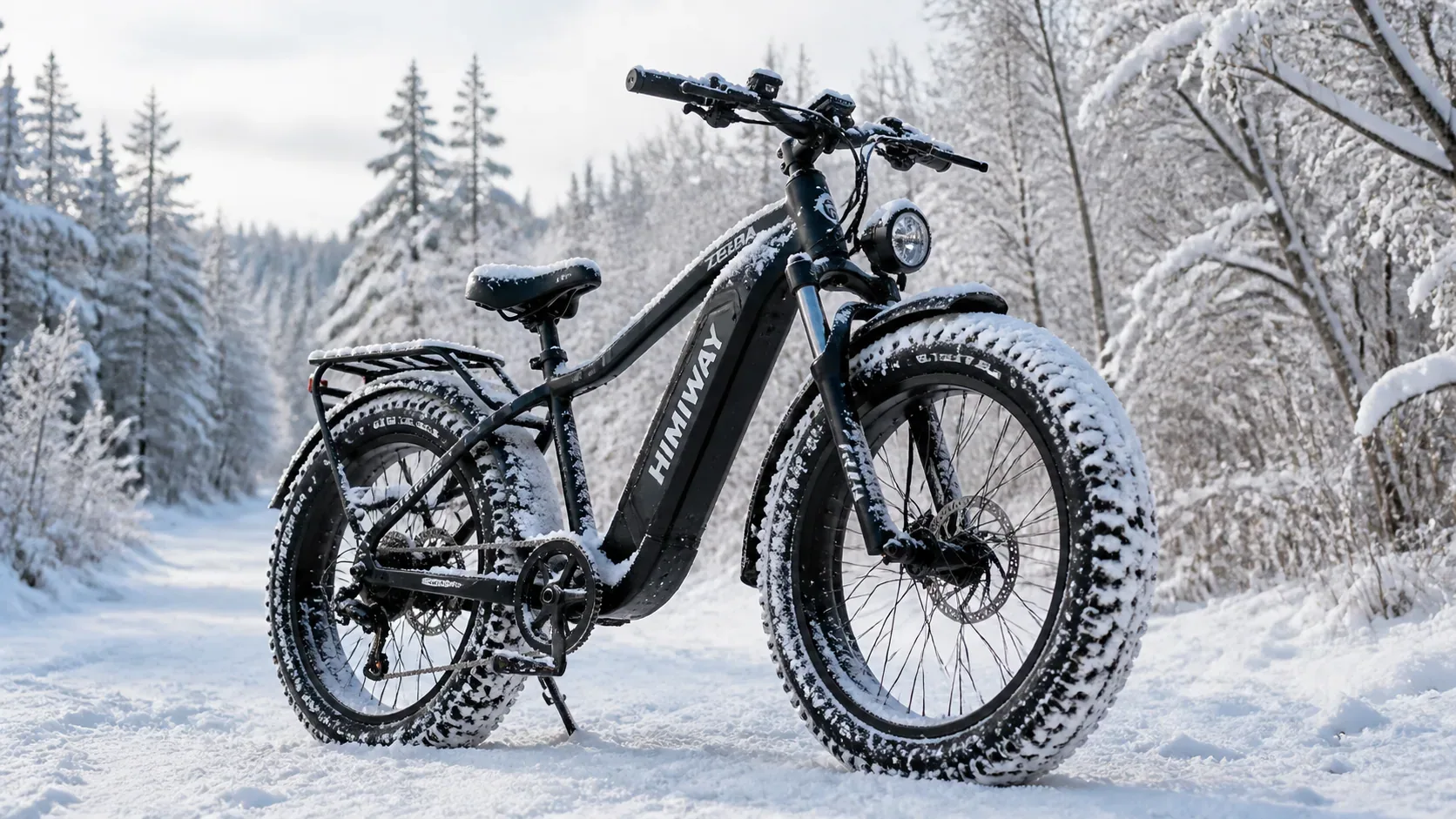
Winter commuting on two wheels sounds reckless—until you experience the Himiway Zebra's fat tires gripping through six inches of fresh snow. Most riders abandon their bikes when temperatures drop and roads turn treacherous, but fat-tire e-bikes are changing that narrative entirely. The Himiway Zebra has earned a reputation as a workhorse in the e-bike community, particularly among riders tackling demanding terrain.
With its 750W motor, oversized 26 x 4.0-inch tires, and 80-mile range capacity, the Zebra is built for more than casual weekend rides. Winter presents unique challenges—cold batteries lose efficiency, icy surfaces demand superior traction, and heavier weight becomes a liability when trails turn slick. This guide breaks down exactly how the Zebra performs in winter environments, covering battery behavior in freezing temperatures, tire grip on ice and snow, motor responsiveness in harsh conditions, and practical maintenance strategies for cold-weather riding.
Discover the Himiway Zebra's winter capabilities and explore its full specifications today.
How Cold Weather Affects the Himiway Zebra's Battery Performance
Battery capacity reduction in freezing temperatures
Cold is the enemy of lithium batteries. The Zebra's 48V 20Ah Samsung/LG battery typically experiences a 20-40% capacity loss in freezing temperatures, meaning that theoretical 80-mile range shrinks considerably when mercury dips below freezing. This isn't a defect—it's simple chemistry. Cold slows ion movement inside battery cells, reducing available power until the battery warms up.
Samsung/LG battery behavior at different temperature thresholds
The Zebra's premium battery components respond predictably to temperature changes. Above 50°F, performance remains optimal. Between 32°F and 50°F, expect noticeable power reduction and slower charging. Below 32°F, the battery enters preservation mode—it may refuse to charge entirely as a safety mechanism to prevent internal damage. Riders who push through frigid conditions should allow 30-60 minutes of idle time for the battery to warm before charging.
Strategies to maximize range during winter months
Keeping the battery warm extends winter range significantly. Carrying the removable battery indoors before rides allows it to reach optimal operating temperature. Using lower pedal-assist levels (1-2 instead of maximum) preserves capacity by reducing demands on cold cells. Planning shorter routes with charging stations nearby eliminates range anxiety. Storing the bike in an unheated garage versus outdoor exposure makes a measurable difference in next-ride performance.
Charging considerations and optimal storage practices
Charge the battery indoors at room temperature whenever possible. Attempting to charge a frozen battery can cause permanent damage to internal cells. If the battery has been exposed to cold, let it sit at room temperature for at least an hour before connecting the charger. For winter storage spanning weeks, charge the battery to 50-60% capacity and store it indoors at moderate temperatures rather than leaving it fully charged or completely depleted.
Real-world range expectations on winter trails versus manufacturer claims
The Zebra's 80-mile range claim assumes ideal conditions: temperate weather, flat terrain, moderate pedal assistance, and consistent riding speed. Winter reality looks different. Expect 50-60 miles in snow and ice when maintaining safe speeds and using higher assistance levels for climbing. Cold-soaked batteries performing at 30% capacity loss, combined with rolling resistance from snow and demanding terrain, compress that range significantly.
Removable battery advantages for indoor charging and warming
The Zebra's removable battery design shines in winter. Detaching the battery after each ride allows it to warm indoors, ensuring optimal charge before the next trip. This practical feature eliminates the problem of frozen batteries refusing to charge or delivering minimal power. Riders can carry a fully charged spare battery for extended winter excursions, switching batteries halfway through the ride.
Fat Tire Traction: Testing the Zebra on Snow, Ice, and Slush
26 x 4.0-inch tire design and grip mechanics on frozen surfaces
The Zebra's 26 x 4.0-inch fat tires are purpose-built for winter. Their massive contact patch distributes rider weight across a larger surface area, reducing pressure per square inch and preventing the bike from sinking into soft snow. The tire tread pattern is engineered for muddy and loose surfaces, though winter-specific knobby designs would offer marginal improvements on hardpack ice. The sheer volume of rubber between rider and frozen ground provides grip levels impossible with standard e-bike tires.
Tire pressure adjustments for winter riding safety
Lowering tire pressure from summer specifications (typically 10-15 PSI for fat tires) to 6-8 PSI in winter dramatically improves traction. Softer tires conform better to irregular frozen surfaces and ice, maximizing contact between rubber and ground. The trade-off is increased rolling resistance and slower speeds, which works in winter's favor anyway—slower riding on ice is safer riding. Monitor pressure weekly since cold air contracts, naturally reducing PSI.
Comparison of fat tire performance versus standard e-bike tires in snow
Standard 2.0-2.5-inch tires on typical e-bikes offer no meaningful traction in snow or ice—riders quickly lose control or dismount entirely. The Zebra's 4.0-inch tires fundamentally change the equation. The difference is the distinction between walking and riding. Standard tires slice through soft snow to find ice underneath; fat tires float across the surface. On packed snow and slush, fat tires excel where regular tires fail completely.
Traction control and stability at different riding speeds
Speed directly impacts winter traction. Crawling at 5-8 mph on ice, the Zebra feels stable and controllable. Push to 15 mph on the same icy surface, and the rear tire slides unpredictably. The 750W motor delivers sufficient torque for climbing steep snowy hills without spinning out, though proper technique (staying seated, distributing weight evenly) matters more than raw power. Momentum management becomes critical—accelerate gradually and avoid sudden direction changes.
Risk factors and when conditions become too hazardous
Glare ice—the transparent, slippery coating that forms on asphalt—presents genuine danger even with fat tires. Loose snow over slick ice layers creates unpredictable conditions where the front wheel suddenly loses grip mid-corner. Riding after freezing rain when ice coats everything requires advanced skills and significantly increases crash risk. Temperature matters: riding at 25°F feels safer than attempting the same route at 35°F when freeze-thaw cycles create mixed conditions.
Tire maintenance and cleaning after winter exposure
Salt and chemical de-icers corrode both tires and rims. Rinse the Zebra thoroughly after each winter ride, paying special attention to the tire sidewalls and rim interiors where salt accumulates. Use fresh water, not soapy solutions that can trap moisture. Dry the drivetrain immediately to prevent rust formation on the chain and Shimano gears. Regular maintenance prevents long-term damage and extends component lifespan.
Motor Power and Climbing Performance in Winter Conditions
750W rear hub motor responsiveness in cold weather
The Zebra's 750W rear hub motor maintains consistent power output in freezing temperatures far better than the battery. Motors generate heat during operation, warming themselves even in subfreezing conditions. Throttle response remains snappy and direct; the motor doesn't hesitate in cold. However, peak power delivery depends on a healthy battery, so a cold-sapped battery limits what the motor can accomplish regardless of its own capabilities.
Torque delivery on icy inclines and packed snow
Climbing snow-covered hills demands torque, not just wattage. The 750W rear hub motor delivers sufficient twist for sustained climbs on packed snow at walking pace. On glare ice, any climb becomes treacherous—the rear wheel loses traction, and no amount of motor power prevents sliding. The motor's strength shines on powder and packed snow where grip exists; on pure ice, technique and rider weight distribution matter more than horsepower.
Pedal-assist levels and when to use them on slippery terrain
Maximum pedal-assist (typically level 5) provides fastest acceleration but sacrifices control and traction. Level 2-3 offers a balanced approach for winter: enough motor assistance to climb without excessive wheelspin, slow enough to maintain stability. Riders tackling technical icy descents should use Level 1 or throttle mode exclusively, allowing precise speed control without sudden power surges that upset weight distribution on ice.
Motor efficiency compared to other fat-tire e-bikes in the $1,800-$2,300 price range
The Zebra's 750W hub motor sits at the mid-range for fat-tire e-bikes in this price tier. Mid-drive motors offer advantages on steep terrain, but the Zebra's hub design is simpler, more durable, and less affected by cold. Direct-drive hub motors like the Zebra's are inherently efficient at converting electrical power to movement, though they sacrifice some hill-climbing feel compared to premium mid-drive systems. For the price point, the motor-to-performance ratio is competitive.
Throttle control for precise navigation on winter trails
The Zebra's throttle mode (available on most versions) becomes invaluable in winter. Rather than relying on pedal-assist which responds to pedaling force, throttle mode lets riders modulate speed independently. On icy descents, throttle control allows feathering power delivery for stability. Navigating tight, slippery turns becomes easier when motor power responds directly to hand input rather than pedaling intensity.
Thermal management and motor longevity concerns
Hub motors can overheat during extended climbs in summer, but winter cold provides natural cooling. Thermal management isn't a winter concern for the Zebra. The motor's sealed design handles road salt exposure reasonably well, though regular cleaning prevents long-term corrosion of external components. Cold weather actually extends motor lifespan by reducing stress from heat-related degradation.
Learn more about the Himiway Zebra's motor performance and technical specifications.
Weight, Handling, and Rider Control on Slippery Surfaces
Himiway Zebra's weight distribution and center of gravity on ice
The Zebra weighs approximately 65-75 pounds—noticeably heavier than standard e-bikes and significantly heavier than conventional bicycles. This weight distribution, concentrated in the rear hub motor and battery pack, affects handling on ice. The rear-heavy bias can feel cumbersome when dismounting in soft snow or walking the bike over obstacles. On slippery surfaces, that mass demands respect; momentum becomes harder to control.
How 400 lbs payload capacity affects stability in winter
The Zebra's 400 lb payload capacity accommodates heavier riders plus gear, maintaining stability even when heavily loaded. For winter commuting, bundled clothing and gear add 10-20 pounds—well within comfortable margins. The high payload capacity means the frame and components aren't stressed by typical winter clothing weight. However, the absolute weight of the bike itself (65-75 lbs) is what matters most for ice handling, not payload capacity.
Braking performance (hydraulic vs. mechanical disc options) on frozen ground
The Zebra offers both hydraulic and mechanical disc brake versions. Hydraulic disc brakes deliver superior stopping power and modulation on ice, allowing riders to brake gradually without locking the wheel. Mechanical disc brakes work adequately but require more careful technique on frozen surfaces—too much pressure triggers skidding. Both are vastly superior to traditional rim brakes in winter; hydraulic versions offer a meaningful advantage for safety on ice.
Steering response and front suspension fork effectiveness
The Zebra's front suspension fork absorbs impact from frozen, uneven terrain, reducing rider fatigue and improving traction by keeping the front wheel planted. However, suspension slightly delays steering response compared to rigid forks. On ice, this subtle lag matters less than front-wheel grip; the fork's compliance helps maintain contact with the ground. The suspension also improves ride quality on the rough, broken-ice surfaces common in winter trail riding.
Physical strength requirements for winter riding
Winter riding demands more physical effort than summer riding. Braking harder, accelerating more cautiously, and maintaining balance on slippery surfaces all require active engagement. The Zebra's weight becomes noticeable when dismounting to walk on steep icy slopes or when repositioning the bike around obstacles. Riders with limited upper body strength should seriously consider whether they can confidently handle the Zebra's heft on winter trails.
Techniques for maintaining balance on unpredictable terrain
Successful winter riding on the Zebra depends on technique more than the bike's specifications. Keep weight centered, avoid sudden movements, and shift weight backward during descents to prevent the front wheel from losing grip. Standing on the pedals during climbs improves traction by loading the rear wheel. Smooth throttle inputs prevent sudden acceleration-induced sliding. These skills develop through practice, starting on packed snow before progressing to ice.
Maintenance and Care: Keeping Your Zebra Winter-Ready
Post-ride cleaning protocols to prevent corrosion
Road salt is the winter rider's enemy. After every ride, rinse the entire Zebra with fresh water, paying special attention to the frame crevices, motor area, and battery connectors. Use a soft brush to remove compacted salt and dirt. Dry everything thoroughly with a clean cloth. This simple 10-minute routine prevents catastrophic corrosion that can compromise structural integrity and electrical components.
Chain, drivetrain, and Shimano gear system care in salt and moisture
The Shimano gear system performs admirably in winter but requires diligent care. Moisture and salt attack the chain relentlessly. Apply chain lubricant designed for wet conditions (not summer dry-lube) after each ride, wiping away excess. Clean the derailleur pulleys and cassette teeth weekly with an old toothbrush and degreaser. This prevents premature wear and shifting problems that become dangerous on slippery terrain.
Brake maintenance and pad replacement frequency
Winter riding puts extra demands on brakes. Inspect pad thickness monthly—cold, frequent braking accelerates wear. Salt contamination reduces braking power by coating rotor surfaces. Clean rotors regularly with isopropyl alcohol and a clean cloth. Replace pads before they wear to metal, which damages rotors and creates safety hazards. Consider carrying spare pads for extended winter expeditions.
Frame inspection for rust and damage
Monthly visual inspections catch rust before it becomes structural problems. Look for white crusty deposits on welds and frame joints, which indicate corrosion beginning. Address surface rust immediately with fine steel wool and touch-up paint. Examine the aluminum frame for cracks, particularly around the head tube and bottom bracket where stress concentrates. Winter's harsh conditions reveal frame defects that summer riding conceals.
Battery connector protection and waterproofing
The battery connector is vulnerable to salt spray and moisture intrusion. Apply a thin silicone grease to connector contacts after disconnecting the battery. If you notice corrosion around the connector pins, clean gently with isopropyl alcohol and a cotton swab. Consider covering the connector with a small silicone cap when storing the bike in damp conditions. Protected connectors prevent charging failures and power delivery issues mid-ride.
Seasonal storage recommendations
Before storing the Zebra for extended periods, charge the battery to 50-60% capacity and remove it from the bike. Store both battery and bike indoors at moderate temperature and humidity. Lightly oil the chain and all pivot points before storage to prevent rust formation during dormancy. Cover the bike if storing in a garage with temperature fluctuations. Charge the battery every 2-3 months even during storage to maintain cell health.
Who Should Ride the Himiway Zebra in Winter?
Ideal rider profiles for winter e-biking
The Zebra suits riders who embrace adventure and don't mind equipment maintenance. Commuters tired of seasonal hibernation find the Zebra liberating. Adventure seekers exploring snowy trails discover new landscapes winter normally closes. The ideal Zebra winter rider is pragmatic about weather conditions, committed to regular cleaning, and prepared to invest in proper safety gear and technique development.
Experience level requirements and skill progression
Complete beginners shouldn't start winter riding on the Zebra. Prior cycling experience, ideally including some e-bike familiarity, provides necessary foundation. Riders should complete at least 20-30 summer rides before attempting winter conditions. Progression matters: begin with light snow on familiar trails, graduate to packed snow on moderate inclines, then advance to ice and technical terrain. This staged approach builds confidence and skills systematically.
Geographic regions where winter Zebra riding thrives
The Zebra excels in regions with consistent snow cover and controlled freezing temperatures. Moderate snow regions (annual totals of 20-50 inches) are ideal—enough snow to justify fat tires, not so much that snow removal leaves bare, dry pavement. Areas with severe freeze-thaw cycles create dangerous ice conditions unsuitable even for experienced Zebra riders. Coastal regions where salt spray persists create maintenance challenges but don't prevent riding.
Commuting distance considerations and feasibility
Winter cold reduces the Zebra's 80-mile summer range to 50-60 miles realistically. Commutes under 10 miles one-way are ideal for winter use; longer distances demand rigorous route planning and charging logistics. If your commute spans more than 15 miles each direction with no charging options, winter riding becomes impractical without a second bike or backup transportation. Shorter commutes capitalize on the Zebra's strengths without overwhelming its winter limitations.
Fitness and strength demands compared to summer riding
Winter riding requires more physical exertion than summer. Constant micro-adjustments to maintain balance, more frequent braking, and careful weight distribution all tax the core and legs. Riders with shoulder or wrist issues may struggle with the Zebra's weight during dismounts on ice. Generally, riders capable of moderate summer cycling can progress to winter riding with training, but severe fitness limitations should be honestly assessed first.
Safety gear and protective equipment recommendations
Winter Zebra riding demands serious safety investment. Studded tires, while not installed on the Zebra from factory, offer dramatic traction improvements on ice if budget allows. Quality helmets rated for cold weather, insulated gloves maintaining dexterity, and foot protection preventing slipping on pedals are non-negotiable. Reflective clothing and lights become critical as winter daylight shrinks. Impact protection—wrist guards, knee pads—reduces injury severity when inevitable slides occur.
Cost-Benefit Analysis: Is Winter Riding Worth the Investment?
Total ownership cost including maintenance and repairs
The Zebra's $1,799-$2,299 purchase price is just the beginning. Winter adds maintenance costs: frequent chain replacement ($30-50), occasional derailleur adjustments ($50-100), regular brake pad changes ($40-80), battery maintenance supplies, and potential rust repair. Budget $400-600 annually for winter-specific maintenance. Add safety gear (studded tires $200+, quality helmet $150+, protective clothing $100+) bringing first-year total ownership cost to approximately $2,900-3,600.
Comparing the Zebra's $1,799-$2,299 price against winter-specific alternatives
Premium winter e-bikes from brands like Ripmor or Juiced Bikes range from $2,500-$4,000+. The Zebra undercuts most direct competitors while maintaining comparable specifications—similar wattage, battery capacity, and fat-tire design. Mid-range alternatives like the RadRover sacrifice some build quality for lower cost ($1,500-$1,800). The Zebra represents a balanced choice: more expensive than budget options but significantly cheaper than premium competitors.
Long-term durability and component longevity
The Zebra's aluminum frame withstands winter corrosion reasonably well with maintenance. The Samsung/LG battery lasts 3-5 years with proper care—replacements cost $600-800. The Shimano drivetrain, while durable, needs regular maintenance to avoid premature wear. The motor's sealed hub design resists corrosion but eventual bearing wear (year 4-5) may necessitate costly repairs. Properly maintained Zebras reach 5-7 years of reliable service before major component replacement.
Resale value and depreciation factors
E-bike resale values depreciate 40-50% in the first year. The Zebra holds value better than budget e-bikes because premium components and motor quality retain buyer interest. A well-maintained two-year-old Zebra typically commands $1,000-$1,300 on the used market. However, significant corrosion, battery degradation, or motor issues reduce value sharply. Winter riding accelerates depreciation unless the bike receives meticulous care.
Insurance and liability considerations
E-bikes face increasing insurance scrutiny. Standard homeowner policies rarely cover e-bikes; specialized bicycle insurance adds $100-200 annually depending on coverage limits and deductibles. Liability coverage becomes important—if you cause an accident, medical costs can far exceed the bike's value. Winter riding increases accident probability, making insurance even more valuable. Long-term Zebra ownership should include professional bike insurance.
ROI for year-round commuters versus seasonal riders
Serious commuters using the Zebra 250+ days annually break even within 3-4 years by avoiding vehicle expenses. Even partial car-replacement (eliminating one fuel-dependent trip daily) generates meaningful savings. Casual winter riders taking the Zebra out 20-30 days yearly need 7-10 years to justify the investment through commuting savings alone. For casual use, the Zebra makes sense only if you deeply value winter adventure; financial ROI takes decades.
Your Winter Riding Decision Starts Here
The Himiway Zebra doesn't just survive winter—it genuinely thrives when conditions turn harsh. Through slushy commutes, icy climbs, and snow-packed trails, the combination of fat-tire grip, powerful motor, and extended battery range consistently delivers. That said, winter riding demands respect, preparation, and honest self-assessment about your skill level and commitment to maintenance.
The Zebra's $1,799 to $2,299 price tag positions it as an accessible entry point for serious winter riders, undercutting premium alternatives while maintaining the rugged build quality essential when temperatures plummet. The 750W motor powers through conditions that strand standard e-bikes. The 26 x 4.0-inch tires grip surfaces where regular tires fail entirely. The removable 48V battery allows warming and optimal charge management impossible with integrated power systems.
If you're tired of hibernating your bike or abandoning commutes because of snow and ice, the Himiway Zebra is worth serious consideration. Start with test rides in dry conditions to understand handling characteristics. Progress to light winter trails during mild cold snaps, building confidence gradually before attempting challenging terrain. Invest in proper safety equipment—the bike is only half the equation; protective gear and technique complete the picture.
The winter riding decision ultimately depends on your geography, commitment to maintenance, and philosophy toward seasonal living. For riders in regions with consistent snow cover who embrace active winter living, the Zebra represents genuine value. The investment pays dividends when you're rolling through conditions that strand everyone else.