HTVRont Auto Heat Press: Scale Apparel Production
Discover how the HTVRont Auto Heat Press Machine helps small business owners automate custom apparel production. Learn about automation features, production capacity, and ROI potential for scaling your heat transfer business.
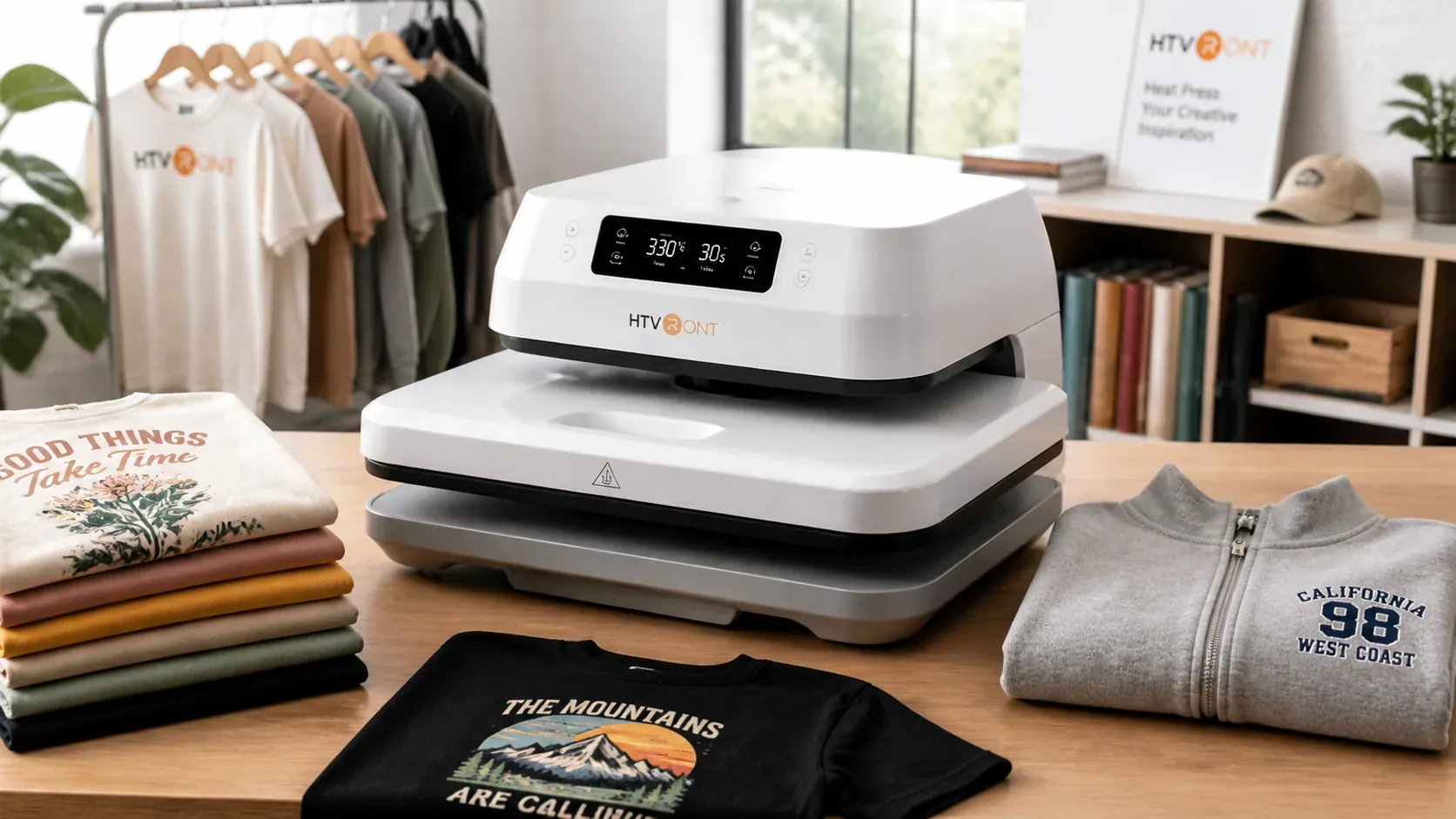
Heat transfer automation isn't a luxury for small apparel businesses—it's a necessity. When you're manually pressing transfers for hours each day, you're watching productivity slip and profit margins shrink. The reality hits hardest when a customer needs 50 custom t-shirts by Friday, and you're still hand-pressing each one individually.
The HTVRont Auto Heat Press Machine eliminates this bottleneck entirely. By automating the pressing process, it replaces tedious manual work with consistent, professional results that come out perfect every single time. Built specifically for entrepreneurs who need commercial-quality output without commercial-grade pricing, the HTVRont delivers the automation and reliability that typically commands premium prices—but at a mid-range investment of $200–$400.
Understanding how this machine impacts your workflow, materials, and bottom line is essential before committing. This article breaks down the HTVRont's automation features, production efficiency gains, material versatility, workspace requirements, and financial justification—so you can make an informed decision about whether automation is right for your business model.
Explore the HTVRont Auto Heat Press Machine and start automating your production today.
How Automation Transforms Your Production Workflow
Hands-Free Pressing Eliminates Physical Strain
Manual heat presses demand constant physical force. Your operator stands there, applying pressure by hand, holding it steady, releasing, repeating—hundreds of times per week. This repetitive motion creates fatigue and strain injuries that sideline your best people. The HTVRont's automatic pressing mechanics remove the operator from this equation entirely. The machine applies consistent pressure automatically, letting your team focus on material placement and removal rather than exerting force.
Time Savings Compound Across Production Runs
A manual press takes 2–3 minutes per transfer when accounting for setup, pressure application, and cooling time. The HTVRont cuts this to under 1 minute in automatic mode while maintaining identical quality. Run the numbers: if you process 100 items weekly, that's 100–200 minutes recovered—roughly 2–3 hours per week. Scale to 500 items, and you're reclaiming 10–15 hours monthly. Those hours redirect toward order fulfillment, customer communication, and business growth.
Batch Production Maintains Quality Across Volume
Fatigue degrades manual pressing quality. By hour four of pressing transfers, your operator's attention wanes, pressure application becomes inconsistent, and defects increase. The HTVRont processes batch after batch with zero quality degradation. Every twentieth transfer looks identical to the first. This consistency becomes your competitive advantage—customers receive flawless work, repeat orders increase, and your reputation for reliability grows.
Consistency Creates a Competitive Advantage
Professional results aren't just about aesthetics; they're about eliminating customer complaints and rework costs. When every transfer meets identical heat, pressure, and timing standards, return rates plummet. Customers notice. They return. They refer friends. The machine's digital controls track every setting, removing guesswork and creating audit trails for quality assurance.
Preset Modes Speed Hiring and Training
New hires typically need 2–3 weeks to master manual pressing techniques. The HTVRont's preset modes compress this timeline dramatically. A new employee can run vinyl mode on day one with confidence. This reduces training burden, accelerates team productivity, and decreases the cost of bringing new people onboard.
Digital Controls Minimize Material Waste
Real-time monitoring displays temperature, pressure, and time settings without ambiguity. Your operator sees exactly what the machine is doing, catches deviations before they ruin materials, and adjusts settings with precision. Manual presses often waste materials through guesswork and failed experiments. The HTVRont's transparency eliminates waste.
Material Versatility and Profit Margin Opportunities
Vinyl and HTV Production at Premium Quality
The HTVRont supports temperatures up to 400°F with adjustable settings for different vinyl types. Heat Transfer Vinyl (HTV) requires precise temperature control—too hot and it scorches, too cool and it won't adhere. The machine's temperature stability ensures professional-grade transfers that rival commercial equipment. Your customers see the difference, and they pay premium prices for it.
Sublimation Printing Expands Your Service Menu
Fast, uniform temperature distribution is sublimation's secret weapon. This technology delivers vibrant, fade-resistant transfers on polyester and coated items. The HTVRont's even heating ensures saturated colors and sharp detail across the entire transfer. Sublimation commands higher margins than basic HTV work—adding this capability to your service menu directly increases revenue per customer.
DTF (Direct-to-Film) Applications Open New Markets
Direct-to-Film transfers are exploding in popularity. The HTVRont includes preset modes calibrated specifically for DTF applications, letting you tap into this growing market without extensive research or experimentation. DTF transfers work on cotton, polyester blends, and dark fabrics—dramatically expanding which customers and projects you can handle.
Mixed-Material Batches Maximize Workspace Efficiency
The ability to switch between vinyl, sublimation, and DTF without extensive recalibration is a significant efficiency win. You're not locked into single-material batches. If you have ten vinyl orders and five sublimation orders, you process them together by simply switching preset modes. This flexibility keeps your machine running constantly and your output high.
Profit Margin Analysis: Quality Commands Premium Pricing
HTVRont-quality transfers command 15–30% premium pricing compared to manual-press alternatives. Customers perceive automation-produced work as more professional and reliable. This margin expansion directly multiplies your profitability. A job that generates $50 in revenue with manual pressing now generates $65–$75 with the HTVRont—on the same material cost.
Invest in the HTVRont and unlock higher profit margins on every transfer you produce.
Seasonal Product Expansion Without Bottlenecks
Holiday apparel, event merchandise, and seasonal collections drive revenue spikes. Without automation, these peaks overwhelm your capacity. The HTVRont lets you accept larger seasonal orders without hiring temporary staff or outsourcing to competitors. You capture the revenue. You build the customer relationships.
Workspace Optimization for Home-Based and Studio Operations
Compact Desktop Footprint Fits Small Spaces
The HTVRont doesn't consume a warehouse. Its compact design fits small studios, home offices, and pop-up shop setups. You're not making a real estate investment to accommodate industrial equipment. This accessibility makes automation financially viable for bootstrapped entrepreneurs running from spare bedrooms or shared maker spaces.
Project Size Range Covers Your Core Revenue Stream
The machine handles t-shirts, hoodies, tote bags, pillows, and custom apparel up to mid-sized dimensions. This covers the vast majority of small business apparel work. You're not forced to turn away orders because your equipment can't accommodate the size.
Heat Management and Ventilation Considerations
Place the HTVRont in climate-controlled environments to maintain consistent performance. The machine generates heat during operation, so adequate ventilation prevents temperature fluctuations that degrade transfer quality. This isn't a complex installation—basic home office ventilation suffices. No HVAC upgrades required.
Standard Electrical Compatibility Simplifies Setup
The HTVRont plugs into standard outlets. No specialized electrical wiring. No infrastructure upgrades. No electrician bills. You unbox it, plug it in, and start working. This straightforward setup eliminates barriers to getting production running immediately.
Workspace Layout Strategies Enhance Workflow
Position the press between material staging, pressing station, and finished-goods area. This triangle arrangement minimizes operator movement and keeps materials flowing smoothly. Ergonomic workspace design reduces fatigue and increases throughput. The compact footprint makes optimized layouts feasible even in tight quarters.
Scalability Within Existing Space
Your workspace doesn't expand, but your production volume does. The same 100-square-foot studio handles 300 transfers per month today and 1,000 per month in a year. The HTVRont scales with ambition without forcing physical expansion. This financial advantage compounds year after year.
Financial Justification: ROI and Break-Even Analysis
Initial Investment Comparison
The HTVRont costs $200–$400. Industrial heat presses run $2,000–$10,000+. This pricing gap represents a 5–25x cost difference. For entrepreneurs bootstrapping their businesses, this accessibility changes everything. You can automate without securing business loans or venture capital.
Cost Per Transfer and Labor Economics
Material costs remain identical whether pressing manually or automatically. But labor cost per unit drops significantly. If manual pressing costs $3 in labor per transfer (accounting for time investment), HTVRont pressing cuts this to $0.50 or less due to speed and consistency. Run 100 transfers weekly, and you're saving $250 in labor costs every single week.
Break-Even Timeline Based on Your Volume
Break-even depends on your current order volume and profit margins. A business doing 50 transfers per week at $5 profit per unit sees $250 weekly savings—meaning the machine pays for itself in 1–2 weeks of operation. Even conservative businesses processing 10–15 items weekly break even within 2–3 months. After that, every transfer is pure margin improvement.
Revenue Acceleration Through Faster Turnaround
Speed creates competitive advantage. Customers choose vendors who deliver quickly. The HTVRont's production efficiency enables shorter turnaround times, attracting customers willing to pay premiums for speed. This ability to handle rush orders opens revenue channels unavailable to manual competitors.
Reduced Waste Eliminates Hidden Costs
Manual pressing generates failed transfers—over-pressed materials, temperature mistakes, pressure inconsistencies. Each failure represents material waste and rework time. The HTVRont's consistency eliminates these hidden costs. You're not wasting $50 in materials monthly on failed experiments.
Opportunity Cost Analysis Reveals Hidden Value
Hours spent manually pressing represent hours not spent marketing, developing customer relationships, or creating new products. The opportunity cost of manual labor often exceeds the direct cost. Redirect this time toward business development, and your revenue growth accelerates exponentially.
Financing Options Make This Accessible
Many equipment retailers offer payment plans. The HTVRont's rapid ROI makes financing sensible—the machine pays for itself before the first payment clears. This removes financial barriers for entrepreneurs without substantial cash reserves.
Addressing the Learning Curve and Setup Challenges
Preset Mode Familiarization Builds Confidence
The HTVRont includes preset modes for vinyl, sublimation, DTF, and other common applications. Learning these modes takes a single afternoon. Spend a few hours experimenting on scrap materials, documenting which settings work best for your specific fabric types, and you've mastered the machine. The presets aren't limitations—they're accelerators that compress learning into days instead of weeks.
Temperature and Pressure Calibration Requires Fine-Tuning
Different materials demand different settings. Cotton accepts higher heat than delicate polyester blends. The HTVRont's adjustable controls let you dial in perfection. This fine-tuning takes practice, but the digital display removes guesswork. You see the settings working in real time.
First-Run Testing Prevents Costly Mistakes
Always run practice batches on scrap materials before committing expensive custom orders to production. This safety protocol catches calibration issues and prevents catastrophic waste. The small investment in test materials pays dividends through confidence and quality assurance.
Common Beginner Mistakes and How to Avoid Them
Over-pressing scorches fabrics. Incorrect temperature settings create adhesion failures. Pressure miscalibration produces inconsistent transfers. These mistakes teach lessons—if you're testing on practice materials. The HTVRont's documentation and support materials walk new operators through these pitfalls, compressing the learning timeline dramatically.
Larger Footprint Reality Check
Measure your workspace before purchasing. The HTVRont's compact design fits most spaces, but "compact" is relative. Verify dimensions against your actual available area. This two-minute measurement prevents the frustration of receiving equipment that doesn't fit your studio layout.
Documentation and Video Resources Accelerate Mastery
HTVRont maintains comprehensive support materials, tutorials, and community forums. When you encounter questions or troubleshooting needs, answers exist in searchable, accessible formats. The user community actively shares settings and techniques, compressing your learning curve through collective knowledge.
Ongoing Optimization Perfects Your Workflow
Track which settings work best for your specific material combinations. Maintain a simple log of successful runs. Over weeks and months, you develop an intuitive sense of what works for your business. The machine becomes an extension of your process rather than a foreign device.
Comparing HTVRont to Other Mid-Range Heat Press Options
Automatic vs. Manual Press Trade-Offs
Manual presses cost less upfront—$100–$200 for quality basic equipment. But they sacrifice time, consistency, and operator health. The HTVRont's automation premium ($200–$400) becomes inconsequential when balanced against hundreds of hours in labor savings annually. For production-focused businesses, automation justifies the premium immediately.
HTVRont's Competitive Advantages
Auto-adjust pressure removes manual calibration complexity. Preset modes eliminate guesswork. The safety features (auto-off function) protect operators and equipment. These features aren't universal among similarly-priced competitors. The HTVRont's combination of automation, reliability, and user-friendliness stands out in the mid-range market.
Brand Reliability and Customer Support
HTVRont's reputation for durability backs production-focused businesses. The brand invests in responsive customer service, treating problems as learning opportunities rather than dismissing complaints. This commitment shows in user satisfaction ratings and community engagement.
Warranty and Longevity Considerations
A well-maintained HTVRont operates for years without major issues. The expected lifespan for home-business use spans 3–5+ years, depending on usage volume and maintenance. This longevity means your initial investment distributes across hundreds of thousands of transfers, reducing per-unit capital cost to negligible levels. Warranty coverage protects against manufacturing defects, giving you confidence in the investment.
Feature Parity at Different Price Points
Budget alternatives ($100–$150) sacrifice automation and consistency. Premium commercial presses ($1,500+) add features you don't need—larger footprints, industrial capacity, specialized applications. The HTVRont occupies the sweet spot: automation and quality at a price that scales with small business budgets. This positioning makes it the logical first automation investment for growing operations.
User Community and Resale Value
The active HTVRont user base means troubleshooting help exists readily. The secondary market for used HTVRont equipment remains strong, meaning if your business pivots, you recoup a reasonable percentage of your initial investment. This community and resale value provide financial security around your purchase decision.
Your Path to Production-Ready Heat Transfer Automation
The HTVRont Auto Heat Press Machine is a strategic investment that directly impacts your bottom line by eliminating manual pressing, reclaiming hours each week, reducing quality inconsistencies, and enabling larger orders without sacrificing profitability. Your time has value—every hour spent manually pressing transfers is an hour not spent marketing, nurturing customers, or developing new products. The HTVRont's hands-free operation and preset modes transform you from the production bottleneck into a scalable operation. Whether running a home-based operation or small studio, this machine scales with your ambitions without requiring a warehouse or specialized electrical setup. The real question isn't whether you can afford the HTVRont Auto Heat Press Machine—it's whether you can afford to keep doing things manually. If you're serious about growing your custom apparel business beyond hobby-level production, this machine deserves a place on your investment shortlist.
Start your automation journey with the HTVRont Auto Heat Press Machine today.