Joyreal Magnetic Tiles: STEM Learning for Preschoolers
Discover how Joyreal Toys Magnetic Tiles develop spatial reasoning and STEM skills in young learners. Explore set sizes, educational benefits, and why parents choose these colorful magnetic tiles for screen-free play.
Unlocking Creative Potential Through Magnetic Construction Play
Did you know that children who engage in hands-on construction play develop spatial reasoning skills up to 30% faster than those who don't? It's a striking finding that reveals just how powerful open-ended building toys can be for early childhood development. Joyreal Toys Magnetic Tiles have become a go-to choice for parents and educators seeking toys that deliver genuine learning value without screens or complicated rules.
These colorful, magnetic construction sets combine satisfying tactile feedback with legitimate developmental benefits—making them far more than just another toy cluttering the playroom. The appeal runs deep: children experience immediate gratification when tiles snap together magnetically, while parents recognize the quiet magic of screen-free engagement. What begins as simple stacking evolves into complex architectural thinking, storytelling, and problem-solving without anyone forcing a lesson plan.
How Magnetic Tiles Build STEM Foundations in Young Minds
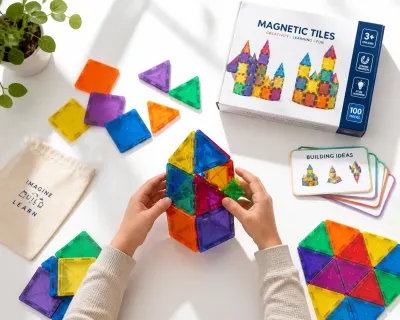
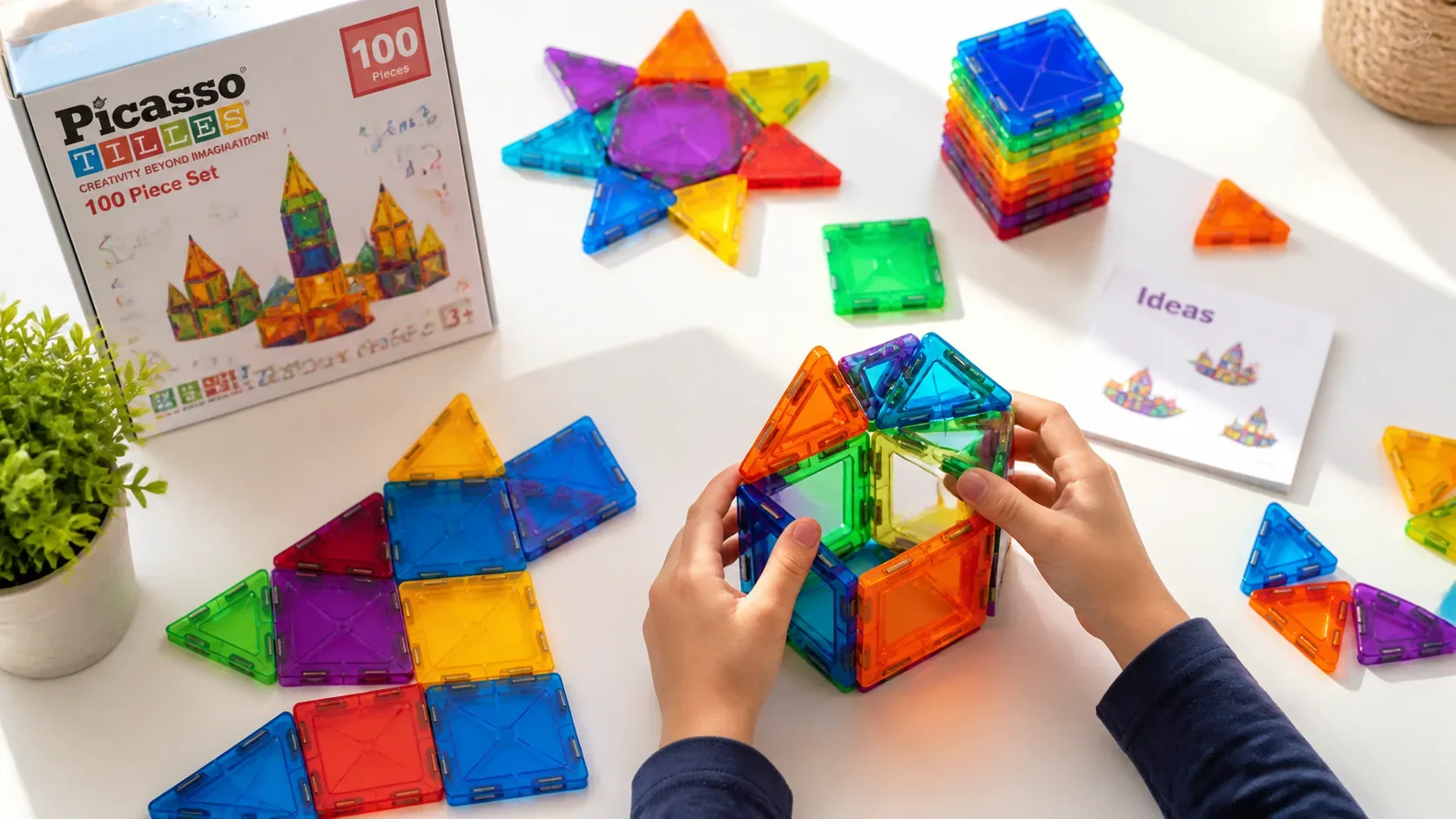
When children stack, rotate, and arrange magnetic tiles, they're actively constructing their understanding of the physical world. Spatial reasoning develops naturally as kids visualize how shapes connect in 2D patterns and translate those concepts into 3D structures. A simple rectangle becomes a wall, then a tower, then a complete house—each iteration strengthening the mental pathways that underpin geometry and engineering thinking.
Spatial reasoning development through 3D structure building
Building with magnetic tiles requires children to mentally manipulate shapes in space. They learn that a triangle placed horizontally creates a different silhouette than one tilted at an angle. They discover through experimentation that certain combinations stand sturdy while others topple over, introducing foundational physics concepts without formal instruction.
Early geometry and shape recognition skills
Each tile type offers a lesson in geometric properties. Squares teach symmetry and right angles. Triangles demonstrate angular relationships. Pentagons and hexagons introduce more complex geometric thinking. Children sort tiles by shape intuitively, reinforcing recognition through repetitive tactile exposure and visual pattern-matching.
Color theory and pattern sequencing through tile combinations
The bright translucent colors in Joyreal sets invite spontaneous pattern creation. Children naturally progress from random color placement to intentional sequences—red, blue, red, blue—building foundational understanding of repetition and order. They experiment with complementary colors and contrast, absorbing color theory through play rather than instruction.
Problem-solving through trial-and-error construction
Magnetic tiles tolerate failure beautifully. A structure that won't balance doesn't stay upright; children immediately see the problem and adjust. This rapid feedback loop strengthens critical thinking. They begin asking questions: Why did that fall? Where should I add weight for stability? What if I try this differently?
Foundation for physics concepts: balance, stability, symmetry
Advanced builders naturally explore center of gravity, weight distribution, and structural integrity. They test hypotheses about which configurations support the most additional pieces. These hands-on experiments with balance and symmetry create intuitive understanding of physics principles they'll formalize in later education.
Fine motor skill development and hand-eye coordination
Placing tiles, aligning them with magnetic precision, and positioning them exactly where envisioned strengthens fine motor control. The magnetic connection provides satisfying feedback and requires enough precision to build hand-eye coordination without frustration.
Mathematical thinking through counting, grouping, and measurement
Sorting tiles by quantity, estimating how many pieces a structure requires, and discussing proportions naturally embed mathematical thinking. Children count tiles as they build and learn practical measurement through comparing structure heights and widths.
Screen-free cognitive engagement and sustained attention building
Unlike apps that jump rapidly between activities, magnetic tile play sustains focus. Children spend 20, 40, sometimes 60 minutes engaged in a single building project. This extended concentration builds attention span and teaches that meaningful projects require patience and dedication.
Understanding Joyreal Set Sizes: From Starter Packs to Premium Collections
Starter packs (30-60 pieces): ideal entry point for ages 3-4
Starter packs introduce magnetic tiles without overwhelming young builders. Thirty to sixty pieces provide enough variety for simple structures without decision fatigue. A three-year-old can exhaust possibilities at their developmental level without becoming frustrated by infinite options. Starter packs are perfect for testing whether your child enjoys this type of play before investing in larger collections.
Mid-range sets (60-100 pieces): expanded building possibilities for ages 4-6
As children's spatial thinking matures, they crave more pieces for more complex creations. Mid-range sets offer the sweet spot for preschool and early kindergarten years. Sixty to 100 pieces allow construction of recognizable structures like houses, towers, and vehicles while remaining manageable for storage and cleanup.
Premium collections (100+ pieces): unlimited creative potential and advanced structures
Premium sets unlock architectural ambition. Children begin conceptualizing multi-room structures, elaborate towers, and increasingly sophisticated designs. Sets with 100+ pieces offer enough building material for sibling collaboration and rarely leave pieces unused as children's creativity expands.
Piece variety across different set tiers
Starter packs typically feature basic shapes: squares, triangles, and perhaps rectangles. Mid-range sets add shapes like pentagons and hexagons. Premium collections often include specialty pieces like arches, trapezoids, and varied sizes. This graduated complexity matches developmental readiness.
Accessory options: wheeled bases, alphabet cards, and themed expansions
Many Joyreal sets include accessories that extend play possibilities. Wheeled bases transform static structures into vehicles. Alphabet cards add language learning to construction play. Themed expansion packs let you customize your collection by color or specialty pieces.
Storage considerations for different set sizes
Starter packs fit easily in a small container. Mid-range sets require dedicated storage bins. Premium collections benefit from multiple containers or a sorting system. Consider your storage space before purchasing; an overwhelming collection creates cleanup resistance.
Budget-friendly pricing structure and value comparison
Joyreal sets typically range from $20 for starter packs to $60+ for premium collections. Cost-per-piece generally decreases with larger sets, making premium collections the best long-term value. However, starting small and expanding allows you to observe your child's genuine interest level before committing to larger investments.
Scalability: building your collection over time versus buying larger sets upfront
Some parents prefer purchasing one large set immediately; others gradually expand their collection. Gradual expansion maintains novelty (new pieces reignite interest in existing structures) and allows budget flexibility. Larger upfront purchases provide immediate comprehensive play but can feel like investment pressure.
Material Quality and Durability: What Sets Joyreal Apart
Strong built-in magnet strength and consistency
Joyreal tiles feature magnets calibrated to hold connections reliably without being so strong that placement becomes difficult. The magnetic strength remains consistent across pieces, preventing frustration from tiles that disconnect unexpectedly or magnets so weak that structures collapse.
Translucent color quality and visual appeal
The translucent plastic allows light to pass through tiles, creating appealing visual effects especially when backlit. Colors remain vibrant through extended play, maintaining the initial visual appeal that attracts children's interest.
Durable plastic construction and long-term wear resistance
Joyreal tiles withstand intensive play across multiple years. The plastic resists cracking, splintering, and stress marks that plague lower-quality alternatives. Pieces maintain structural integrity through countless connections and disconnections.
Safety certifications and non-toxic materials
Joyreal tiles meet safety standards and use non-toxic plastic appropriate for children. Parents can feel confident allowing young children to handle and occasionally mouth tiles without chemical concerns.
Compatibility with other magnetic tile brands for expanded building
Joyreal tiles work seamlessly with other magnetic tile brands, allowing you to supplement your collection or mix sets for increased variety. This compatibility provides flexibility and prevents brand lock-in.
Resistance to fading and discoloration from sunlight exposure
Magnetic tiles stored near windows or used outdoors occasionally maintain color vibrancy. The plastic formulation resists UV fading that degrades lesser products.
Edge design and structural integrity during intensive play
Rounded, well-finished edges eliminate sharp points that frustrate builders or cause injuries. The structural design handles the inevitable drops and rough handling of enthusiastic young constructors without permanent damage.
Longevity across multiple children and years of use
Many families pass Joyreal sets between children or to cousins. Tiles withstand this multi-year, multi-child lifecycle, making them excellent investments rather than disposable toys.
Age-Appropriate Play Progression and Developmental Milestones
Ages 3-4: foundational exploration and basic 2D pattern building
Three and four-year-olds explore tiles through sensory engagement. They stack pieces, listen to the magnetic click, enjoy the bright colors. Structures remain primarily 2D patterns—lines and simple arrangements. This stage celebrates exploration and play rather than construction intent.
Ages 4-5: transitioning to simple 3D structures and collaborative play
Around four years old, children begin intentional construction. Simple towers emerge. Cubes are built deliberately rather than accidentally. Collaborative play increases as older siblings or friends inspire building ambition. Structures remain relatively simple but demonstrate emerging spatial planning.
Ages 5-6: complex architecture, storytelling integration, and advanced designs
By five or six, many children design structures with purpose. A pile of tiles becomes a carefully planned house, complete with rooms and stories. Characters inhabit the spaces. Structures incorporate multiple levels and increasing complexity. Play integrates narrative and imaginative scenarios alongside construction.
Supervision requirements by age group
Three-year-olds require close supervision due to choking hazard risk and occasional frustration management. Four and five-year-olds can play with periodic check-ins. Six-year-olds often engage independently, though parental involvement enhances learning.
Choking hazard considerations for younger toddlers
Magnetic tiles aren't appropriate for children under three who still mouth objects indiscriminately. Even with three-year-olds, supervision prevents accidental ingestion. Loose magnets (if tiles break) pose serious hazards and require immediate removal.
Cognitive complexity scaling as children grow
Younger children focus on immediate sensory feedback and simple cause-and-effect. Older children conceptualize abstract plans before building. The same tile set supports both developmental levels, growing with your child.
Encouraging independent versus guided building experiences
Some moments, step back and allow your child to explore independently. Other times, pose gentle challenges: "Can you build something taller than yourself?" or "What shape would work better here?" Balance freedom with strategic guidance.
Transitioning from simple shapes to advanced geometric concepts
Early play celebrates any structure. Gradually introduce geometric language and challenges. "Notice how that tower wobbles? What shape would make it sturdier?" Children naturally internalize geometric principles through guided observation.
Maximizing Educational Value During Playtime
Guided building challenges that promote critical thinking
Suggest building challenges without dictating solutions. "Build the tallest structure you can make," "Create something with four levels," or "Make a bridge that spans across the room." Children figure out approaches while you observe their problem-solving.
Open-ended play versus structured learning activities
Balance matters. Completely structured play feels like school and reduces intrinsic motivation. Completely open-ended play sometimes needs gentle redirection. Offer structure loosely—suggestions rather than requirements.
Incorporating storytelling and imaginative scenarios
"This tower is a castle. What happens next?" turns construction into narrative. Children build spaces for imaginary characters, creating stories that deepen engagement and add meaning to structures.
Using tiles to explore mathematical concepts informally
Count pieces together. Compare structure heights. Discuss proportions. Ask how many more pieces are needed to match another structure's height. Mathematics emerges naturally from building.
Color-sorting games and pattern recognition exercises
Create patterns and ask your child to continue them. Sort tiles by color, then by shape. Play games where your child guesses which color comes next in a sequence. These playful exercises strengthen pattern recognition.
Collaborative building projects with siblings or peers
Joint projects teach negotiation, compromise, and cooperative problem-solving. Siblings create together, combining different building styles. Playdate construction becomes social learning.
Documenting structures through photos to build memory and reflection skills
Take photos of completed creations before they're dismantled. Review them later: "Remember when you built this? How did you make the roof?" Photo documentation builds memory, pride in accomplishments, and reflective thinking.
Rotating tile access to maintain novelty and sustained interest
Store half the collection away and rotate monthly. New pieces reignite building interest and provide fresh possibilities. This rotation prevents tile fatigue and maintains engagement over years.
Addressing Common Parent Concerns and Practical Solutions
Preventing lost pieces through organization systems and storage containers
Use clear containers so missing pieces are immediately obvious. Establish a "tile station" where all pieces live. Involve your child in organization; they're more likely to maintain systems they helped create.
Managing magnet strength variations across different set purchases
If you purchase multiple sets at different times, magnet strength might vary slightly. Mix sets thoroughly so strength differences distribute evenly rather than creating one weak section.
Cleaning tiles safely without damaging construction quality
Warm soapy water and a soft cloth clean tiles without damage. Avoid harsh chemicals or abrasive scrubbing. Pat dry immediately to prevent water spots.
Rotating play to prevent overwhelm and maintain engagement
Don't force tile play if your child prefers other activities. Rotate magnetic tiles in and out of regular access. Sometimes stepping away and returning refreshes interest.
Integrating magnetic tiles into existing toy collections
Tiles complement building blocks, action figures, and other construction toys. They don't require isolation. Mixed play often sparks creativity—tiles become roofs for block structures, fences for figurines.
Space requirements for building and storage
A small corner accommodates starter packs. Mid-range sets benefit from a dedicated play area. Premium collections might warrant a small shelving unit. Assess your space honestly before purchasing larger sets.
Managing cleanup time and involving children in organization
Build storage into routine. "Tile time ends; now let's organize them together." Young children can sort by color or shape. Older children manage more complex storage systems. Cleanup feels less onerous when shared.
Troubleshooting weak magnets in starter packs and when to upgrade
Some starter packs ship with slightly weaker magnets than premium sets. If magnets frustrate your child, upgrade to a mid-range set. Don't persist with tiles that consistently disappoint due to magnet weakness.
Why Joyreal Magnetic Tiles Make Exceptional Gifts
Versatility across age ranges and developmental stages
A three-year-old plays with basic tiles; a six-year-old builds elaborate structures from the same set. Gifts remain appropriate and engaging across several years, extending their value far beyond single-season play.
Appeal to both boys and girls without gendered marketing
Construction play doesn't divide by gender. Bright colors attract all children. Joyreal marketing celebrates diverse builders, making tiles appealing gifts for any child.
Lasting value and multi-year play potential
Quality magnetic tiles entertain from age three through elementary school years. They're not novelties that lose appeal after weeks. This longevity makes them investment-worthy gifts.
Screen-free alternative parents actively seek
Many parents feel pressure regarding screen time. Magnetic tiles represent genuinely engaging screen-free alternatives. Gifting them addresses a genuine parental need and anxiety.
Complementary to other educational toys and building systems
Tiles work alongside blocks, building kits, and other construction toys. They don't replace other toys but enhance existing collections, making them safe complementary gifts.
Memorable unboxing experience with colorful presentation
Opening a box of colorful translucent tiles creates excitement. Visual appeal builds anticipation. The unboxing experience often matches the gift-giving moment in memory.
Encourages independent play and reduces parental screen-time pressure
Magnetic tiles sustain independent play without parental engagement or technology. Giving these tiles creates moments when children entertain themselves meaningfully, offering parents respite without guilt.
Investment in developmental milestones rather than trendy novelties
Trendy toys lose appeal quickly. Magnetic tiles support genuine developmental growth. Gifts that advance learning feel more meaningful than trendy alternatives.
Building Confidence Through Creative Expression and Achievement
Immediate gratification from magnetic connection feedback
The satisfying click of magnetic connection provides immediate reward. Children experience instant success every time pieces join. This positive feedback builds confidence and encourages continued engagement.
Celebrating completed structures and building pride
Children beam when structures are finished. Celebrate their achievements: "Look what you created! The roof perfectly covers the whole structure." This recognition builds pride in accomplishments.
Encouraging risk-taking in construction without fear of failure
Structures can be rebuilt endlessly. Unlike permanent art projects, tiles allow experimentation without consequences. This safety net encourages ambitious building attempts and creative risk-taking.
Transitioning from simple successes to ambitious projects
Early successes build confidence for ambitious projects. A child who masters simple towers tackles complex multi-level structures. Each success unlocks confidence for the next challenge.
Fostering persistence through trial-and-error learning
Building teaches persistence. Structures that won't stand require adjustment. Trial-and-error is built into the play. Children learn that problems have solutions and persistence pays off.
Developing growth mindset through iterative building
Redesigning structures based on what didn't work embodies growth mindset. "That didn't work, so let's try this" becomes automatic. Children internalize that challenges are opportunities rather than failures.
Sharing creations and receiving positive reinforcement
Built structures deserve an audience. Invite family members to observe. Ask genuine questions about the creation. Positive reinforcement for effort and creativity builds confidence and self-efficacy.
Building self-efficacy through independent problem-solving
When children solve building problems independently, they internalize capability. "I figured out how to make it stand" builds self-efficacy more powerfully than adult solutions.
The Lasting Impact of Hands-On Construction Play
Joyreal Toys Magnetic Tiles represent far more than a clever toy investment—they're a gateway to genuine developmental growth that unfolds naturally through play. From strengthening spatial reasoning and fine motor control to planting early STEM seeds, these colorful tiles deliver measurable cognitive benefits while keeping children engaged and entertained. The quality construction, affordable pricing, and compatibility with other building systems make them a smart choice for parents who want toys that grow alongside their children.
Whether you're selecting a starter pack for a three-year-old's first building experience or expanding with a premium collection for a kindergartener ready for architectural challenges, Joyreal offers flexibility that matches your child's developmental stage. The real magic happens when you step back and watch your child problem-solve independently, celebrate their creations, and build confidence through tangible achievements.
Structures built today teach lessons that persist far beyond childhood. The persistence required to balance a wobbly tower, the creativity sparked by infinite building possibilities, the confidence gained from independent problem-solving—these capabilities transfer to future academic challenges and adult confidence. Children who spend hours constructing with magnetic tiles internalize that problems yield to perseverance, that creativity flourishes through exploration, and that their ideas matter enough to build.