KN95 vs N95 Masks: Which Should You Choose for Daily Protection?
Compare KN95 vs N95 masks for filtration, fit, comfort, certification, and price. Learn what to check before buying the right respirator for your needs today.
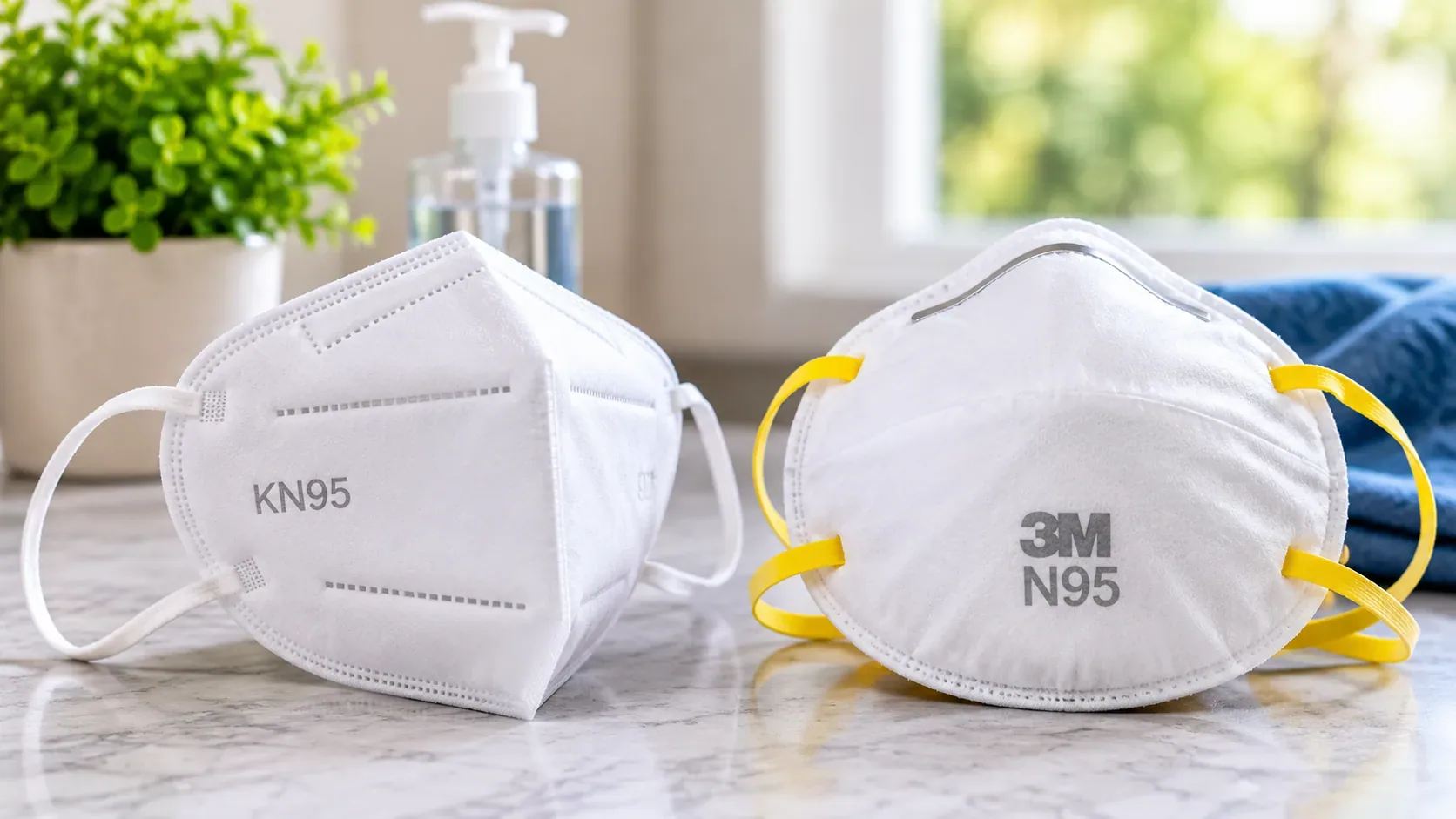
Shopping for face masks can get confusing, especially when different products look almost identical. Two common choices are KN95 and N95 respirators, but their standards, designs, and approval requirements aren't the same.
Understanding KN95 vs N95 masks can help you choose the right protection for your needs. Both are designed to filter airborne particles, but their effectiveness depends on verified performance and how securely they fit your face.
Before buying, it's worth comparing filtration, comfort, certification, pricing, and everyday use.
Brookwood Medical carries KN95 masks in different colors and pack sizes. You can explore available KN95 mask options while reviewing the differences explained below.
KN95 vs N95 Masks: What Are the Main Differences?
KN95 and N95 respirators are designed to reduce exposure to airborne particles when worn correctly.
However, they follow different standards.
N95 respirators are tested and approved by the National Institute for Occupational Safety and Health (NIOSH) in the United States.
KN95 respirators are designed to meet China's GB 2626 standard. They aren't automatically approved by NIOSH, even when a manufacturer claims compliance with the Chinese standard.
Both standards include filtration requirements of at least 95% under their respective test conditions. That doesn't mean every product labeled KN95 or N95 has passed the required testing.
Quick comparison: KN95 vs N95
| Feature | KN95 masks | N95 respirators |
|---|---|---|
| Standard | China's GB 2626 | U.S. NIOSH requirements |
| Filtration requirement | At least 95% under specified testing | At least 95% under specified testing |
| U.S. NIOSH approval | Not automatic | Required for approved N95 models |
| Common fastening style | Ear loops | Usually 2 head straps |
| Fit | Depends on face shape and design | Designed to form a tight facial seal |
| Workplace use | Depends on applicable regulations | Commonly used in regulated respiratory protection programs |
| Verification | Manufacturer documents and independent testing | NIOSH Certified Equipment List |
The biggest differences involve approval, fit, and how buyers can verify performance.
1. Filtration Standards and Protection
One of the most common questions concerns KN95 vs N95 filtration.
Both categories have standards requiring at least 95% particle filtration during specific laboratory tests.
However, filtration testing doesn't measure every factor affecting real-life protection.
Do both filter 95% of airborne particles?
A properly certified respirator must meet its applicable filtration standard under controlled conditions.
For N95 respirators, NIOSH testing includes challenging particles designed to evaluate filter performance.
KN95 products must meet the requirements of the applicable Chinese standard to legitimately claim compliance.
However, a product's filtration rating doesn't mean it blocks exactly 95% of everything you breathe.
Air can enter through gaps around your face, reducing protection.
Which provides better everyday protection?
A genuine NIOSH-approved N95 is generally the safer choice when you want highly reliable respiratory protection.
Its approval can be independently verified, and its head straps are designed to help maintain a secure fit.
A well-made KN95 may provide useful protection when it fits properly, but quality and fit vary between products.
When evaluating KN95 mask protection, look beyond the advertised filtration percentage.
You can review mask construction and material descriptions when comparing individual products.
2. Certification and Product Verification
Certification is one of the biggest differences between these respirators.
A genuine NIOSH-approved N95 has passed required testing and quality checks.
KN95 masks follow a different standard and shouldn't be described as NIOSH-approved unless the specific product has separately received an applicable NIOSH approval.
How can you verify an N95?
Checking N95 respirator certification is relatively straightforward.
Look for:
- The manufacturer's or approval holder's name.
- The N95 designation.
- The NIOSH name.
- A testing and certification approval number, such as TC-84A-XXXX.
- A matching entry in the official NIOSH Certified Equipment List.
You can verify the approval number using the CDC's online database.
How do you verify a KN95?
For KN95 masks, check the manufacturer's identity, applicable GB 2626 standard, product markings, and supporting test documents.
Ask for credible evidence of compliance when certification claims aren't clear.
Some sellers advertise CE certification. However, CE marking alone doesn't prove that a KN95 meets the Chinese GB 2626 standard or has U.S. NIOSH approval.
Before purchasing, make sure you understand which standard the product actually meets.
3. Fit and Facial Seal
Even an effective filter can't provide its intended protection if air escapes around the edges.
That's why proper respirator fit matters.
Why do N95 respirators usually have head straps?
Most NIOSH-approved N95 respirators use 2 head straps.
One typically rests near the top of your head, while the other sits behind your neck.
This design helps maintain pressure around the mask's edges and supports a secure facial seal.
Many KN95 masks use ear loops instead.
Ear loops can be convenient, but they may not provide enough tension for a reliable seal on every face.
How can you check your mask's fit?
Follow these simple practices:
- Place the respirator over your nose and mouth.
- Secure the straps or ear loops as instructed.
- Adjust the nosepiece if the design includes one.
- Check for noticeable gaps around your cheeks, nose, and chin.
- Perform a user seal check according to the manufacturer's instructions.
A user seal check helps identify obvious leakage, but it doesn't replace formal fit testing when required for workplace use.
If the respirator shifts when you talk or leaves noticeable gaps, try another size or model.
4. Comfort During Extended Wear
Protection should come first, but comfort matters when you're wearing a respirator for an extended period.
An uncomfortable mask may tempt you to adjust it frequently or remove it.
When comparing comfortable face masks, pay attention to the fastening design, nosepiece, interior material, and overall shape.
Are KN95 masks easier to wear?
Some people prefer KN95 masks because their ear loops are simple to put on and remove.
However, ear loops can cause discomfort around your ears, particularly during long periods of use.
N95 head straps distribute tension differently, which may feel better for some people.
Neither style is automatically comfortable for everyone.
What features should you check?
Look for a design that provides:
- A secure fit without painful pressure.
- Enough space around your mouth for speaking.
- A nosepiece that adjusts comfortably.
- Materials that don't irritate your skin.
- Fastenings that stay secure during normal movement.
Brookwood Medical lists several KN95 color options and a 5-layer construction.
However, color and layer count alone don't establish filtration performance or comfort.
You can compare available colors, designs, and pack quantities while evaluating the features that matter to you.
5. Price and Long-Term Value
Price can influence your decision, especially if you regularly purchase disposable respirators.
However, the cheapest product isn't necessarily the best value.
A poorly fitting or unverified mask may not provide the protection you expect.
How much do KN95 and N95 masks cost?
Prices depend on the manufacturer, model, quantity, retailer, and available promotions.
Both categories are sold individually and in multipacks, although available quantities vary.
For example, Brookwood Medical lists KN95 masks in packs ranging from 10 to 250 units.
Its product pages have advertised promotional starting prices around $19.99, but the actual amount depends on the selected product and quantity.
What should you compare before buying?
| Buying factor | Why it matters |
|---|---|
| Price per mask | Helps compare different pack sizes |
| Verified standards | Helps establish product reliability |
| Fit | Affects actual respiratory protection |
| Shipping charges | Changes your final purchase cost |
| Return policy | Important when trying a new model |
| Pack quantity | Helps avoid buying unnecessary stock |
If you're purchasing for occasional use, a smaller pack may be practical.
For frequent use, larger packs may reduce the cost per mask, depending on the seller's pricing.
You can check current multipack pricing and review shipping and purchasing information before comparing the total expense.
6. How to Identify Counterfeit or Misrepresented Masks
Counterfeit and misleadingly labeled respirators are a serious buying concern.
Some products claim certifications they haven't received, while others copy the appearance of genuine respirators.
Learning how to spot fake KN95 masks can help you avoid questionable listings.
What are common warning signs?
Watch for:
- Missing manufacturer information.
- Unclear or unsupported certification claims.
- Packaging with inconsistent product details.
- Test documents that don't identify the exact model.
- Claims that an ordinary KN95 is NIOSH-approved without verifiable evidence.
- Sellers unable to explain the product's applicable standard.
For N95 respirators, missing NIOSH markings or an invalid approval number are important warning signs.
The CDC maintains resources identifying counterfeit and misrepresented respirators.
Does a higher price guarantee authenticity?
No.
An expensive mask can still have questionable claims, while an affordable product may meet the relevant standard.
Focus on documentation, seller reliability, and verified approval rather than price alone.
You can examine the manufacturer's published product claims before comparing them with official certification requirements.
7. Which Mask Works Better for Different Situations?
Your intended use should guide your decision.
A mask suitable for a short everyday activity may not meet the requirements of a workplace with regulated respiratory hazards.
Everyday public settings
A properly fitting, verified KN95 can provide respiratory protection during everyday activities.
However, a genuine NIOSH-approved N95 is generally preferable when reliable protection is your priority.
Wildfire smoke and air pollution
Fine particles from wildfire smoke can enter your respiratory system.
A well-fitting NIOSH-approved N95 can help reduce exposure to airborne particles.
Neither N95 nor KN95 particulate respirators protect against gases such as carbon monoxide.
Healthcare and occupational settings
Workplaces may require specific NIOSH-approved respirators and formal fit testing.
Ordinary KN95 masks aren't automatically acceptable substitutes.
Follow workplace safety requirements and professional guidance when respiratory protection is required.
Which Respirator Should You Choose?
Choosing between KN95 and N95 masks depends on your protection needs, fit, comfort preferences, and budget.
If you want independently verifiable U.S. approval, a genuine NIOSH-approved N95 is generally the stronger choice.
If you're researching KN95 masks for everyday use, look for reliable compliance documents, a secure fit, and clear product information.
Before purchasing, check the manufacturer's claims, confirm applicable standards, and calculate the cost per mask.
If KN95 masks suit your needs, you can review available product details and current purchasing options.
The best choice is a genuine respirator that fits your face correctly and provides protection appropriate for your situation.