
Live Coding Classes for Kids | Codeyoung 2026
Discover why Codeyoung Online Coding Classes are transforming how kids learn to code. Explore live instruction, personalized learning, and real-world projects that build future-ready tech skills.
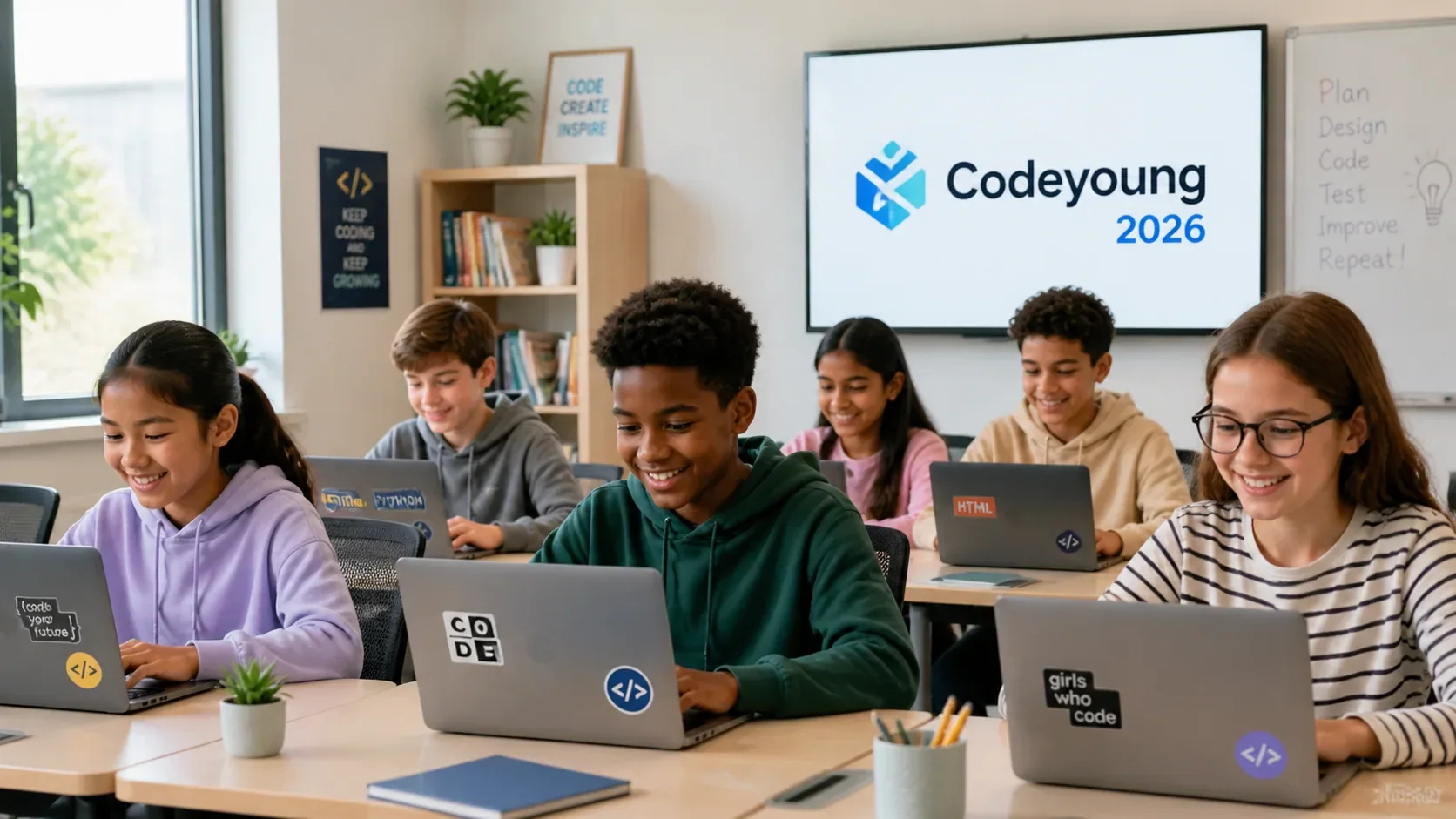
Over 60% of parents worry their children lack essential digital skills for future careers—yet finding quality coding education that actually engages kids remains surprisingly difficult. Between self-paced platforms that feel isolating and expensive bootcamps designed for adults, the middle ground where real learning happens is often missing.
Codeyoung Online Coding Classes fills this gap by connecting students with real instructors who deliver interactive sessions, provide immediate feedback, and adapt teaching to individual learning paces. Rather than relegating children to endless video tutorials, Codeyoung prioritizes human connection and responsive teaching—the ingredients that transform coding from intimidating to achievable.
Book a demo with Codeyoung to see how live instruction works for your child.
How Live Instruction Changes the Coding Learning Experience
Real-time feedback from instructors keeps students on track and corrects misconceptions immediately, preventing small mistakes from hardening into bad coding habits. When a child writes inefficient code or misunderstands a concept, their instructor catches it in the moment rather than hours or days later during asynchronous Q&A.
Interactive sessions during classes allow kids to ask questions when they're confused, not hours later. This immediacy matters enormously—a confused student can get clarification before moving forward, maintaining momentum and preventing cascading knowledge gaps.
Instructor presence creates accountability and motivation that self-paced platforms struggle to replicate. Knowing someone will check their work and ask about their thinking drives students to engage more seriously than they would with an empty screen and optional assignments.
Live coding demonstrations show problem-solving in action, making abstract concepts concrete. Watching an instructor work through debugging or tackle a new challenge reveals the thinking process behind code, not just the finished solution.
Group dynamics foster peer learning, where kids see how classmates approach challenges differently. One student's question might solve a problem another student hasn't articulated yet, and witnessing different problem-solving strategies expands everyone's toolkit.
Weekly scheduled sessions establish routine and structure that supports consistent progress. Consistency matters more than intensity—30 minutes every week builds skills more reliably than sporadic weekend marathon sessions.
Codeyoung's Curriculum Structure: From Beginner to Advanced Coder
Foundational computer science concepts introduce logic, algorithms, and computational thinking before diving into syntax. Children first learn to think like programmers before they learn to type like programmers, creating a stronger conceptual foundation.
Python programs serve as entry points for younger learners, teaching clean syntax and core programming principles. Python's readable structure helps students focus on logic rather than fighting obscure syntax rules.
JavaScript and web development courses bridge to real-world applications kids recognize and use daily. Building interactive websites connects coding to something tangible that students already encounter on screens they use constantly.
Game development tracks combine creativity with coding, keeping engagement high through tangible projects. When kids can see their code control a character moving across a screen, the abstraction suddenly becomes real.
App development modules teach mobile-first thinking and expose students to professional development workflows. Students work with tools and processes that actual developers use, preparing them for more advanced study or hobbyist projects outside the classroom.
Progression pathways allow beginners to advance naturally without jumping to content they're not ready for. Each level builds explicitly on previous skills rather than assuming prior knowledge.
Age-appropriate pacing ensures material matches cognitive development stages, not just calendar age. A curious 10-year-old might progress faster than a less motivated 12-year-old, and effective programs adapt to individual readiness.
Personalized Learning Paths and Class Size Options
Small batch classes maintain instructor attention while preserving peer learning benefits. With 4-6 students instead of 20-30, instructors know each child's learning style and can adjust explanations accordingly without losing the peer interaction element.
One-on-one sessions accommodate learning differences, accelerated learners, and students with specific goals. Some kids need extra support, while others race ahead and need customized challenge material that moves at their pace.
Flexible grouping allows students to move between class sizes as their needs change. A student might start in a small group class, graduate to larger cohorts as confidence builds, or switch to one-on-one if they hit a challenging topic.
Placement assessments determine starting level, preventing boredom from repetition or frustration from jumping ahead. Rather than assuming all eight-year-olds need the same content, assessment identifies where each child actually stands.
Customized project assignments let students explore interests—game design, app creation, robotics integration. When students code toward their own interests, motivation skyrockets and learning sticks.
Progress tracking shows parents exactly where their child stands and what comes next. Parents understand not just grades but specific skills their child has mastered and what growth areas need attention.
Instructor notes provide specific feedback on coding habits, problem-solving approach, and areas for growth. Rather than generic praise, students receive actionable observations about how they think and work.
Schedule a consultation with Codeyoung to discuss personalized learning options for your student.
Project-Based Learning That Builds Real Coding Skills
Weekly projects tie coding concepts to practical applications rather than abstract exercises. Instead of writing code snippets that disappear after submission, students build toward larger projects that demonstrate capability.
Game development projects keep younger learners engaged while teaching loops, conditionals, and functions. Building a simple platformer or puzzle game makes core programming concepts feel purposeful rather than theoretical.
App prototyping assignments introduce user experience thinking and real-world problem-solving. Students learn that code exists to solve problems for actual users, not just to satisfy assignment requirements.
Collaborative projects teach version control, code review, and teamwork—essential professional skills. Students work together using real developer tools, preparing them for professional environments where collaboration is non-negotiable.
Portfolio-building work creates tangible evidence of learning that students can show to parents and future opportunities. Rather than collecting certificates, students accumulate actual projects demonstrating what they can do.
Debugging challenges develop critical thinking and persistence when code doesn't work as expected. Learning to systematically find and fix errors builds resilience and problem-solving habits that transfer far beyond coding.
Incremental complexity ensures each project builds on previous learning without overwhelming students. Projects scale naturally—early projects are simple, later ones integrate multiple concepts into more ambitious applications.
Assessments, Certificates, and Measuring Progress
Formative assessments throughout courses identify gaps before they compound into bigger problems. Regular check-ins catch misunderstandings while there's still time to reinforce concepts.
Practical coding challenges evaluate understanding through application, not just multiple-choice questions. Students demonstrate competency by building something that works, which reveals understanding more reliably than test answers.
Certificates of completion provide recognition and motivation, especially for younger learners. Having something tangible to celebrate creates milestone moments that reinforce progress.
Progress reports help parents understand their child's strengths, growth areas, and readiness for next levels. Regular communication keeps families informed and aligned with their child's learning journey.
Skill badges acknowledge mastery of specific concepts, creating milestone celebrations. Rather than waiting for course completion, students earn recognition throughout their journey.
Performance metrics track coding efficiency, code quality, and problem-solving speed over time. Students see concrete evidence of improvement—code they write becomes cleaner and more efficient as skills develop.
Transcript documentation supports applications to advanced programs or schools emphasizing STEM. For students considering competitive high schools or summer programs, Codeyoung transcripts provide credible evidence of learning.
Pricing, Plans, and Getting Real Value for Your Investment
Course lengths range from short-term introductions to extended programs spanning multiple months. Families can start with introductory courses to test whether coding resonates before committing to longer-term study.
Pricing typically falls between a few hundred to over a thousand dollars depending on duration and format. The investment reflects the cost of experienced instructors, small class sizes, and curated curriculum rather than automated platforms.
Small group classes offer better value per session than one-on-one instruction while maintaining personalization. This middle-ground option works well for many families seeking balance between affordability and personal attention.
Premium packages bundle multiple courses or extended access at discounted rates. Students progressing from Python through JavaScript and into game development can save money through bundled enrollment.
Monthly subscription models provide flexibility for families testing the platform before long-term commitment. Rather than requiring full payment upfront, recurring charges reduce financial risk.
Refund policies and trial sessions reduce risk when deciding if Codeyoung fits your child's learning style. Many families take advantage of introductory sessions to assess whether the live instruction approach resonates before full enrollment.
Payment plans break costs into manageable installments rather than requiring full upfront payment. For families with budget constraints, spreading payments across months makes quality coding education more accessible.
Why Parents Choose Live Instruction Over Self-Paced Alternatives
The accountability factor keeps kids engaged when motivation dips, a common challenge with independent learning. When assignments are optional and no one's checking, procrastination becomes tempting.
Stable schedules prevent procrastination and create healthy screen-time boundaries. Wednesday at 4 PM becomes coding time—non-negotiable and expected—which eliminates decision fatigue and creates healthy routine.
Instructor relationships build confidence and make learning feel like mentorship, not isolated studying. Having someone invested in their progress matters enormously for children's willingness to tackle difficult material.
Real-time debugging help prevents frustration from hours spent stuck on single problems. Rather than giving up or developing bad habits from struggling alone, students get unstuck quickly.
Peer community creates belonging and shows kids they're not alone in struggling with difficult concepts. Overhearing classmates ask similar questions normalizes confusion and reduces shame about not understanding immediately.
Structured progression ensures comprehensive skill building rather than random topic jumping. Rather than following whatever coding tutorial sounds interesting, students follow a coherent pathway building methodically.
Professional guidance steers learners toward best practices and industry-standard approaches from day one. Instead of learning problematic habits they'd need to unlearn later, students build solid foundations.
Considerations Before Enrolling: Honest Trade-offs
Schedule commitment requires consistent weekly attendance, which doesn't work for every family's calendar. Families with unpredictable schedules or multiple competing activities may struggle with the regular time commitment.
Higher pricing than free or low-cost self-paced platforms demands careful budget consideration. Parents must genuinely prioritize coding education and have resources to invest in quality instruction.
Technology requirements include reliable internet and appropriate device, which not all families have equally. Students need stable connectivity and devices capable of running development environments.
Learning pace can feel fast for some students and slow for others despite personalization efforts. Even within small groups, individual learning speeds vary, and some students might benefit from more or less challenge than the class provides.
Time zone limitations may affect access for families in certain geographic regions. If Codeyoung's sessions run in time zones misaligned with where you live, scheduling becomes impossible.
Personality fit matters—some kids thrive with live instruction while others feel pressure from real-time interaction. Introverted students or those with social anxiety might experience classroom settings as stressful despite excellent instruction.
Switching costs apply if a student discovers coding isn't their interest after enrollment. Parents should honestly assess their child's interest level before committing to multi-month programs.
Building Future-Ready Skills Beyond Just Coding Syntax
Problem-solving frameworks teach systematic approaches to breaking down complex challenges. Students learn to decompose large problems into smaller, manageable pieces—a skill invaluable across mathematics, science, and professional work.
Computational thinking develops logical reasoning applicable across math, science, and everyday decisions. The structured reasoning required for coding strengthens cognitive abilities that transfer far beyond the keyboard.
Persistence and growth mindset emerge naturally when students debug code and iterate on projects. Experiencing failure, troubleshooting, and eventual success builds resilience that extends to academic challenges.
Collaboration skills develop through peer review, group projects, and instructor feedback. Students learn to work with others' code, explain their thinking, and incorporate feedback—abilities essential in every professional field.
Communication abilities improve as students explain their code and defend design choices. When students must articulate why they designed something a particular way, language skills sharpen alongside technical skills.
Creativity flourishes when coding becomes a tool for building games, apps, and digital creations. Rather than following rigid rules, students use coding as a medium for expression and innovation.
Career awareness grows as students see real applications and understand potential tech career paths. Exposure to game development, app design, and web development helps students envision themselves in technical careers.
What Sets Codeyoung Apart in the Competitive Coding Education Landscape
The decision to invest in quality coding education shouldn't feel like a gamble—and that's precisely where Codeyoung's live instruction model delivers genuine value. You're not paying for access to videos you could find free on YouTube; you're paying for expert guidance, real-time feedback, and a structured environment designed specifically for how kids actually learn best.
The combination of live mentorship, personalized progression, and project-based work creates momentum that self-paced platforms simply can't match. Students progress faster, retain concepts longer, and develop genuine confidence in their abilities when they have instructors invested in their success.
The trade-offs are real—schedule commitment and higher pricing aren't obstacles to dismiss lightly. Families must honestly assess whether they can commit to regular attendance and whether the investment aligns with their financial priorities.
But for families ready to prioritize coding education and give their children direct access to instructors who care about their progress, Codeyoung Online Coding Classes represent a meaningful investment in skills that will matter for decades. Your child gains not just technical knowledge but problem-solving abilities, collaborative confidence, and exposure to careers that will shape their future.
Your next step is to explore their course offerings, consider your family's schedule flexibility, and potentially take advantage of trial sessions to see if the live instruction approach resonates with your child's learning style.