Qi Wireless Chargers: Why Retailers Choose Cangyu
Discover why Shenzhen Cangyu Technology's Qi wireless chargers dominate the wholesale market. Learn specifications, pricing, and benefits for retailers stocking affordable, high-demand charging accessories.
Introduction
Wireless charging has transitioned from a novelty feature to an essential accessory category, with the global market projected to exceed $15 billion by 2026. Retailers who stock the right products capture substantial margins, while those who miss this wave face inventory obsolescence and lost revenue opportunities. The competitive advantage belongs to merchants who understand which manufacturers deliver consistent quality at scale—and Shenzhen Cangyu Technology has become the defining player in this space.
Shenzhen Cangyu Technology has built its reputation by delivering consumer electronics and mobile accessories that balance affordability with genuine functionality. Their best-selling Qi wireless chargers represent the exact product profile the wholesale market craves: dependable, cost-effective solutions that work across multiple devices without requiring complex setup or extensive customer support. These chargers move inventory consistently because they solve a real problem—the cable clutter and charging inconvenience that smartphone owners face daily.
This guide examines why these chargers dominate wholesale channels and what retailers need to know before committing to inventory. You'll discover the technical specifications that make these products competitive, the pricing structures that appeal to bulk buyers, and the specific use cases driving consistent demand. More importantly, you'll understand the real trade-offs that separate success from disappointment, plus actionable strategies for maximizing profitability.
Core Technical Specifications That Drive Wholesale Appeal
Wireless Output Power and Charging Speeds
The 10W to 15W charging power range positions these chargers as practical solutions for mainstream consumers. This output level delivers noticeably faster charging than standard 5W chargers while remaining below the premium tier that requires specialized power adapters. The wattage ceiling aligns perfectly with Qi certification standards and accommodates both smartphones and true wireless earbuds without requiring device-specific configuration.
Input Connectivity Options
Shenzhen Cangyu Technology manufactures variants with both USB-C and micro-USB inputs, addressing the fragmented charging landscape retailers encounter. USB-C increasingly dominates new device ecosystems, while micro-USB variants appeal to customers with older smartphones or those seeking compatibility across multiple device generations. This flexibility allows retailers to stock versions that match their customer base demographics and regional device preferences.
Safety and Performance Engineering
Temperature control systems prevent overheating during extended charging sessions—a critical feature that protects both the charging device and the customer's smartphone battery. Foreign-object detection identifies metallic obstructions and incompatible materials, automatically halting charge delivery to prevent damage. LED status indicators provide visual feedback about charging status, connection quality, and potential issues, reducing customer support inquiries and returns related to uncertainty about whether charging is occurring.
Material Composition and Durability
ABS and PC construction materials deliver the balance between cost efficiency and durability that retail environments demand. These plastics resist cracking from repeated handling, resist discoloration from continuous desktop use, and maintain structural integrity across hundreds of charge cycles. The material choices also enable the slim profile that appeals to consumers concerned about workspace clutter.
Form Factor and Desktop Integration
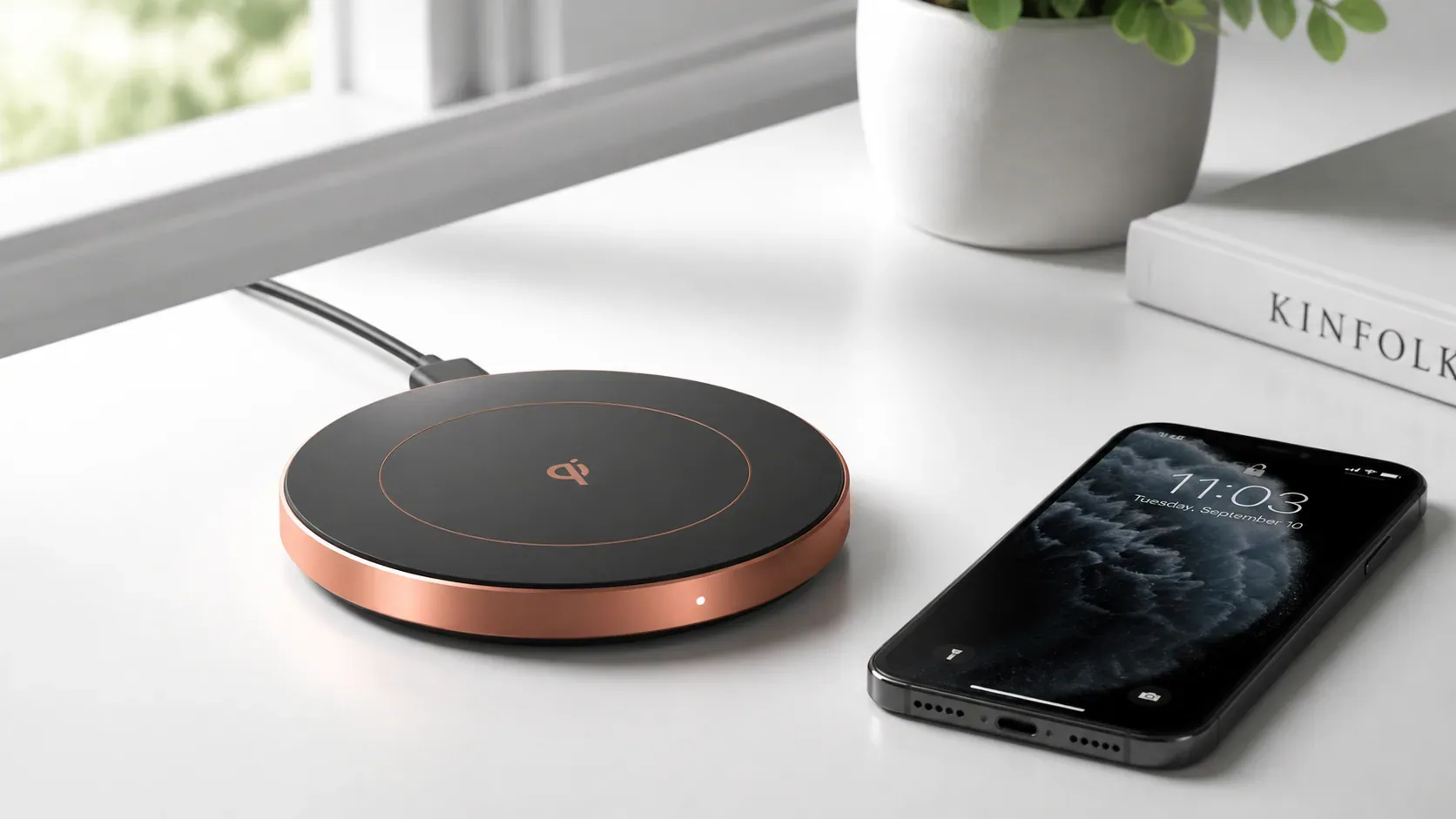
The slim, compact design fits naturally into home, office, and travel scenarios without consuming excessive desk real estate. Unlike chunky charging stations, these chargers accommodate modern minimalist aesthetics while delivering functional performance. The footprint advantage makes them suitable for small apartments, crowded office desks, and tight travel luggage space—expanding the addressable customer base beyond customers with dedicated charging stations.
Charging Through Phone Cases
The ability to deliver full charging power through lightweight protective cases eliminates a major customer frustration point. Premium cases sometimes block wireless charging entirely, forcing customers to remove protection before charging. Shenzhen Cangyu Technology's chargers maintain performance consistency across popular case brands and materials, reducing return rates and support requests related to case compatibility issues.
Anti-Slip Pad Engineering
Precision-engineered charging surfaces prevent device slippage during vibration or accidental table movement. This seemingly minor feature protects against the daily frustration of smartphones sliding off chargers or the anxiety of devices falling to floor level. From a retail perspective, anti-slip technology reduces customer complaints and damage claims while enhancing the perceived quality of the product.
Wholesale Pricing Structure and Margin Opportunities
Price Range and Volume Economics
The $5 to $20 per unit pricing range spans different quality tiers, branding approaches, and material selections. Base models with essential features approach the lower end, while models incorporating premium materials, enhanced branding, or faster charging speeds command higher wholesale rates. This range allows retailers to position wireless chargers at multiple price points—competing on budget-conscious segment strategies while offering premium options for customers willing to pay more.
Volume discount tiers typically reward bulk commitment. Orders of 100 units trade differently than 1,000-unit commitments, with per-unit costs declining as order size increases. The cost reduction reflects manufacturing efficiency gains rather than quality degradation, making bulk ordering economically rational for retailers planning inventory strategies around forecast demand.
OEM and ODM Customization Considerations
White-label branding and custom packaging carry premium pricing but deliver competitive differentiation in saturated retail markets. Retailers seeking brand distinction negotiate custom color schemes, logo imprinting, or packaging redesigns to create proprietary product variants. These customization costs typically add $1 to $3 per unit depending on complexity, justified by the ability to command retail markups that pure commodity pricing cannot sustain.
Competitive Positioning Against Alternatives
Wireless chargers compete primarily against wired fast-charging solutions and established brand competitors in the wireless space. The value proposition emphasizes convenience and universal compatibility rather than raw charging speed. Retailers position wireless chargers as gateway products that introduce customers to cable-free charging, with the expectation that satisfaction drives repeat purchases and ecosystem expansion.
Seasonal Pricing Variations
Wholesale rates fluctuate throughout the year, reflecting manufacturing capacity utilization and demand forecasting accuracy. Peak seasons—particularly holiday periods and back-to-school windows—sometimes see price premiums as suppliers allocate limited inventory to highest-volume buyers. Off-season periods create opportunities for retailers to negotiate better per-unit costs and lock in favorable rates before demand surges.
Minimum Order Requirements
Shenzhen Cangyu Technology typically maintains MOQ thresholds ranging from 100 to 500 units depending on customization level and order type. Standard catalog products accept lower minimums, while custom white-label variants require higher volume commitments to justify production setup costs. Understanding MOQ requirements shapes sourcing strategy and cash flow planning.
Shipping and Logistics Cost Integration
Freight expenses from Shenzhen to destination markets substantially impact true wholesale margins. Retailers often overlook logistics costs during initial pricing negotiations, discovering later that landed costs consume margin projections. Factor shipping weight, container consolidation opportunities, and port-to-final-destination transportation when calculating breakeven analysis and profitability thresholds.
Why Retailers and Distributors Stock This Product Category
Universal Device Compatibility
Qi wireless charging has achieved ecosystem-wide adoption across iPhone, Samsung, Google, and virtually every mainstream smartphone manufacturer. This universal standard means customers don't face the compatibility anxiety that plagues other accessory categories. A retailer stocking one wireless charger model serves customers across competing phone ecosystems—dramatically simplifying inventory management and expanding addressable customer volume.
Gift-Worthy Appeal and Repeat Purchases
Wireless chargers occupy a unique psychological positioning as practical yet aesthetically appealing gifts. Unlike utilitarian cables or basic chargers, wireless solutions feel slightly premium and thoughtful without commanding luxury-tier pricing. Holiday seasons and special occasions generate bulk purchase cycles as customers buy chargers for family, colleagues, and clients. This gift-driven demand pattern creates predictable seasonal revenue spikes.
Desk Accessory and Workspace Trend Alignment
Remote and hybrid work arrangements have accelerated spending on home office accessories and workspace aesthetics. Wireless chargers complement this trend by combining functional charging with desktop organization benefits. The slim profile and cable-free design appeal to customers optimizing their work-from-home environments for both productivity and visual appeal.
Minimal Customer Education Requirements
Wireless charging operates on an intuitive principle—place device on charger, charging occurs automatically. This simplicity eliminates the support burden that plagues more complex accessories. Retailers experience fewer return inquiries, fewer setup-related calls, and higher customer satisfaction because the product essentially works as customers expect.
Fast Inventory Turnover Compared to Competing Categories
Mobile accessories vary dramatically in turnover velocity. Some categories gather dust while others cycle through inventory rapidly. Wireless chargers consistently rank among the faster-turning categories because demand remains steady across seasons, price points encourage impulse purchases, and the product category avoids the obsolescence risk associated with technology-dependent accessories.
Impulse Purchase Potential at Retail Checkout
The psychological trigger for impulse purchases aligns perfectly with wireless charger positioning. Customers at checkout see wireless chargers priced at $9.99 to $24.99 and perceive them as genuine bargains compared to competitor pricing. The low barrier to adding a charger to an existing purchase transaction generates incremental revenue with minimal selling effort required.
Brand-Agnostic Ecosystem Positioning
Wireless chargers transcend the tribal smartphone loyalties that define other accessory categories. A customer using Samsung today might switch to iPhone tomorrow without rendering their wireless charger obsolete. This ecosystem flexibility makes wireless chargers reliable inventory across shifting customer demographics and usage patterns.
Performance Across Real-World Use Cases
Home Charging Stations and Bedroom Convenience
The most common deployment scenario involves nightstands and bedroom surfaces where customers charge phones and earbuds overnight. The cable-free design appeals to customers who value a minimalist bedroom aesthetic and appreciate the convenience of reaching over and placing their phone on the charger without fumbling with cables in darkness. This use case drives substantial volume among residential consumers.
Office Productivity Setups and Cable Reduction
Workplace desks accumulate cable clutter that frustrates productivity-focused workers. Wireless chargers eliminate one cable from the tangle, making desk organization feel slightly easier. This modest benefit translates into consistent purchasing behavior among professionals who spend 8+ hours daily at workstations. Office-driven demand provides year-round stability compared to consumer segments with more seasonal purchasing patterns.
Travel Scenarios and Compact Portability
Business travelers appreciate the slim form factor that fits into carry-on luggage without consuming precious space. Unlike bulky charging stations, these chargers pack flat and weigh minimally. The compact advantage matters for travelers navigating airport security, hotel room limitations, and transportation logistics. This segment generates consistent demand from frequent business travelers seeking efficiency.
Multi-Device Households and Sequential Charging
Households with multiple smartphones, tablets, and earbuds benefit from having dedicated chargers that serve different family members without configuration headaches. The universal compatibility means one charger model works across all family devices. Sequential charging across multiple devices throughout the day distributes the charging workload without requiring expensive multi-charging stations.
Protective Case Compatibility and Real-World Performance
Consumer testing reveals that performance consistency varies across popular protective case brands and materials. Thinner cases from brands like Spigen generally allow full charging power transmission, while thicker cases or metal-reinforced protective solutions sometimes degrade charging efficiency. Retailers should expect some customer inquiries about case compatibility, particularly from customers combining wireless chargers with premium protective solutions.
Temperature Management During Extended Sessions
The temperature control systems function as designed in typical usage scenarios. Extended charging sessions with moderately demanding applications generate minimal heat that the system manages effectively. Extreme conditions—such as charging in direct sunlight for extended periods or using power-hungry applications while charging—occasionally trigger thermal throttling that slows charging speeds. These edge cases represent minority scenarios affecting the broader customer experience.
Battery Health Preservation and Long-Term Device Impact
Wireless charging generally preserves battery health comparably to wired charging when temperature management functions properly. The slower charging speeds sometimes associated with wireless solutions actually benefit battery longevity compared to aggressive fast-charging protocols. Customers charging overnight or during extended stationary periods experience no meaningful battery degradation compared to wired charging alternatives.
Honest Trade-Offs and Quality Variability Retailers Should Know
Charging Speed Comparison Against Premium Wired Solutions
The 10W to 15W wireless output delivers respectable charging speeds for overnight or desk-based scenarios but cannot match premium wired fast-charging solutions rated at 20W, 30W, or higher. Customers accustomed to rapid smartphone charging will notice the difference. This speed trade-off represents the defining compromise of wireless charging—convenience and aesthetics in exchange for charging duration. Retailers should educate customers about realistic charging timeframes to prevent disappointment.
Phone Case Performance Variability and Compatibility Issues
Despite the design commitment to charging through cases, real-world performance fluctuates based on case materials and thickness. Metal-reinforced protective cases sometimes trigger foreign-object detection, halting charging entirely. Thick rubber cases occasionally absorb enough charging power transmission to slow speeds noticeably. Customers combining wireless chargers with premium protective solutions may experience performance degradation that creates support inquiries and return requests.
OEM Batch Variability and Quality Control Inconsistencies
Manufacturing across multiple production runs introduces variability that affects customer experience. A unit from early production might deliver flawless performance while a unit from later batches exhibits LED indicator inconsistencies or temperature control sensitivity variations. This batch-to-batch variability remains one of the most frustrating aspects of high-volume sourcing from any manufacturer, including Shenzhen Cangyu Technology. Retailers should anticipate return rates of 2% to 5% rather than expecting defect-free shipments.
LED Indicator Reliability and Status Accuracy
The LED status indicators that communicate charging status occasionally display inaccurate information. Lights might suggest charging has completed when charging is still occurring, or fail to illuminate despite successful charging operation. These discrepancies frustrate customers who rely on visual feedback to confirm their phone is charging. Most occurrences resolve through firmware updates or replacement units, but the inconsistency represents a documented quality variation.
Build Material Durability and Long-Term Wear Patterns
ABS and PC materials eventually show wear with heavy use environments. Desktop use in offices experiences decades of vibration exposure, dust accumulation, and thermal cycling. Charging pads sometimes show wear grooves after 18 to 24 months of intensive daily use. While this durability timeline exceeds most accessory products, it means chargers don't represent lifetime investments. Retailers should manage customer expectations about product lifespan.
Foreign-Object Detection Sensitivity and False Triggers
The foreign-object detection systems occasionally trigger false positives or fail to detect actual metallic obstructions. A charger might refuse to charge when a harmless item sits nearby, creating customer confusion. Conversely, actual foreign objects sometimes slip past detection, creating potential safety scenarios. These inconsistencies stem from detection algorithm limitations rather than design flaws, but they affect customer confidence in product reliability.
Warranty and Return Logistics at Scale
Managing customer returns and warranty claims becomes complex at high-volume operations. Replacement processes require inventory reserves, tracking systems, and customer communication protocols. Retailers must establish clear policies distinguishing manufacturing defects from customer damage. Budget for 3% to 5% of wholesale volume as replacement units rather than assuming zero return scenarios.
Sourcing Strategies for Maximum Profitability
Direct Manufacturer Relationships Versus Middlemen Dynamics
Working directly with Shenzhen Cangyu Technology typically delivers better pricing than purchasing through intermediaries. Direct relationships provide access to volume discounts, customization flexibility, and priority production scheduling. Middlemen add markup layers and introduce communication delays that complicate problem resolution. Retail operations should invest in establishing direct manufacturer connections for orders exceeding 500 units monthly.
Sample Testing Protocol and Quality Verification
Before committing to bulk orders, request 10 to 20 sample units representing different production batches. Test charging speeds across multiple smartphone models and case combinations. Verify LED indicator accuracy and temperature management through extended charging cycles. Assess build quality and material durability through hands-on handling. This testing investment prevents discovering quality issues after receiving 1,000-unit shipments.
Customization Opportunities and Brand Differentiation
Evaluate white-label branding options that differentiate your product from competitor offerings. Custom packaging, logo imprinting, and color variations create perceived brand value that justifies retail markup premiums. Minimum order requirements typically increase for customization, but the margin opportunity justifies larger initial inventory commitments.
Payment Terms Negotiation and Cash Flow Optimization
Wholesale relationships often involve negotiable payment terms. Standard arrangements might require 30% deposit with balance due upon shipment, or net-30 terms after delivery. Retailers with established credit history can negotiate more favorable arrangements, improving cash flow and reducing financing costs. Payment terms discussions should occur during initial sourcing conversations rather than after order placement.
Quality Assurance Checkpoints and Defect Reduction
Establish pre-shipment inspection protocols that identify defective units before inventory acceptance. Work with the manufacturer to specify acceptable defect rates (typically 1% to 2% for wireless charging products). Random sampling during quality checks maintains compliance without requiring 100% inspection overhead. Documented quality standards protect both parties and reduce post-sale return complications.
Inventory Rotation Planning and Obsolescence Prevention
Wireless charging technology evolves gradually, but new standards and faster-charging innovations eventually impact demand for older models. Implement inventory rotation strategies that prioritize selling older stock before newer models arrive. Monitor sales velocity closely and adjust reorder quantities based on actual turnover rates rather than forecast projections.
Supplier Relationship Management and Long-Term Partnerships
Treating Shenzhen Cangyu Technology as a strategic partner rather than a transactional vendor cultivates benefits that transcend individual orders. Consistent volume commitments, reliable payment history, and collaborative problem-solving build relationships that provide access to pre-release products, priority production allocation, and favorable pricing during high-demand periods.
Market Demand Drivers and Competitive Positioning
Qi Standard Adoption and Ecosystem Growth
The global adoption of Qi wireless charging as the dominant standard creates expanding addressable markets. Smartphone manufacturers increasingly include Qi receivers as standard features rather than optional components. This ecosystem maturation means customers purchasing new phones often gain Qi compatibility without additional investment, driving wireless charger sales among new device owners seeking first-time charging solutions.
Smartphone Design Trends and Charging Port Evolution
Design trends toward eliminating physical charging ports accelerate wireless charging adoption. Some manufacturers experiment with port-less phone designs, making wireless charging the only viable charging method. These design innovations create forced adoption scenarios where customers must embrace wireless charging for device compatibility.
Earbud Market Proliferation and Complementary Demand
True wireless earbuds represent one of the fastest-growing smartphone accessories, with ownership penetration exceeding 50% in developed markets. Most earbud models incorporate Qi charging cases, creating complementary demand for wireless chargers. A customer purchasing earbuds often purchases a wireless charger within weeks to simplify dual-device charging workflows.
Sustainability Messaging and Environmental Positioning
Consumer preference for reduced electronic waste and environmental sustainability benefits wireless charger positioning. The cable-free approach reduces plastic waste associated with charging cables. Environmental consciousness messaging appeals to younger demographics and premium-positioned customers willing to pay modest premiums for products aligning with values.
Workplace Flexibility and Home Office Acceleration
Remote and hybrid work arrangements expanded during recent years and show no signs of reversing. Home office spending on ergonomic furniture, lighting, and accessories continues growing as employees optimize personal workspaces. Wireless chargers fit naturally into this category as desktop organizing solutions that enhance workspace functionality.
Holiday Seasons and Gift-Giving Purchase Cycles
Major gift-giving occasions—particularly winter holidays and Valentine's Day—drive substantial wireless charger sales volumes. The gift-friendly price point and universal appeal position wireless chargers prominently in holiday accessory promotions. Retailers should plan inventory buildout 2 to 3 months before major gift-giving occasions to ensure adequate stock.
Competitive Pressure and Market Share Defense
Shenzhen Cangyu Technology maintains market position through consistent quality, responsive customization, and competitive pricing despite emerging competitors entering the market. Retailers should evaluate competitive offerings periodically but recognize that established manufacturing relationships provide advantages in pricing, reliability, and delivery consistency that newcomers struggle to replicate.
Maximizing Return on Investment for Your Retail Operation
Pricing Strategy and Retail Markup Optimization
Calculate retail pricing that balances margin objectives against competitive market rates. A wireless charger purchased at $8 wholesale might retail at $19.99 to $24.99 depending on market positioning and brand perception. Premium branding and custom packaging justify higher markups, while commodity positioning requires efficiency-focused lower markups. Track competitor pricing regularly and adjust your strategy quarterly based on market evolution.
Cross-Selling Opportunities and Bundle Strategies
Bundle wireless chargers with complementary products—protective cases, charging cables, and phone stands—to increase transaction value. Customers purchasing phone protection often accept bundle offers combining cases with charging solutions. These bundles improve per-transaction revenue and reduce inventory complexity by moving complementary products simultaneously.
Customer Education Content and Purchase Confidence
Develop product descriptions and video demonstrations that address common customer concerns about wireless charging. Explain charging speeds realistically, demonstrate case compatibility, and showcase desk integration possibilities. Educational content reduces purchase hesitation and return rates by setting accurate customer expectations before purchase.
Seasonal Promotion Timing and Demand Capitalization
Plan promotional calendars around peak demand periods. Back-to-school seasons, holiday periods, and gift-giving occasions create opportunities for featured promotions and bundled offers. Retail promotions timed with seasonal demand spikes generate volume that offsets promotional discounting through increased transaction frequency.
Inventory Forecasting and Data-Driven Stock Levels
Track historical sales data to build inventory projections for upcoming periods. Analyze seasonal patterns, promotional response rates, and category trend data. Use forecasting to maintain stock levels that prevent stockouts during high-demand periods while avoiding excess inventory that ties up capital during slower seasons.
Customer Review Management and Trust Building
Encourage satisfied customers to share positive reviews emphasizing reliability, charging speed, and design appeal. Negative reviews addressing quality inconsistencies or case compatibility issues deserve thoughtful responses that acknowledge concerns without making excuses. Review management directly impacts conversion rates and customer acquisition costs.
Repeat Purchase Incentives and Loyalty Development
Implement loyalty programs offering discounts on repeat wireless charger purchases. Customers satisfied with their first charger often purchase additional units for different locations (bedroom, office, car). Loyalty pricing encourages these repeat purchases while building customer lifetime value.
The Bottom Line: Why Shenzhen Cangyu Technology's Wireless Chargers Remain a Retail Powerhouse
Shenzhen Cangyu Technology's best-selling Qi wireless chargers deliver exactly what the wholesale market demands—affordability, functionality, and universal appeal that translates into consistent sales velocity. The technical specifications provide legitimate competitive advantage through temperature control, foreign-object detection, and case compatibility. The pricing structure creates genuine margin opportunities for retailers willing to commit to volume orders and optimize their selling strategies.
The margin potential is substantial, the customer demand remains consistent across seasons, and the barrier to entry is remarkably low compared to other accessory categories. Success requires honest acknowledgment of occasional quality variability between manufacturing batches, performance inconsistencies with certain phone cases, and the reality that wireless charging will never match premium wired charging speeds. Retailers operate most effectively when they understand these trade-offs and communicate them transparently to customers.
The retailers capturing the most value build direct relationships with Shenzhen Cangyu Technology rather than purchasing through intermediaries. They invest in sample testing and quality verification before committing to large orders. They position wireless chargers strategically within broader accessory portfolios and cross-sell complementary products that increase transaction values. They track inventory turnover metrics closely and adjust purchasing patterns based on actual customer demand rather than theoretical forecasts.
Start with a pilot order sized appropriately for your market. Track which models move quickly and which variants accumulate excess inventory. Document which customer segments show the strongest purchasing signals. Scale based on actual performance data rather than sales projections. Seasonal demand peaks present opportunities for volume buildup, but pilot approaches prevent overcommitment before understanding your specific market dynamics.
The wireless charging market continues expanding as device ecosystems mature and consumer adoption accelerates. The time to secure production capacity and build supplier relationships with established manufacturers is now, before smaller retailers compete for limited availability during peak demand periods. Shenzhen Cangyu Technology's manufacturing scale, consistent quality within acceptable variance ranges, and responsive customization make them the logical choice for retailers serious about capturing this segment.