ROBOTIME DIY Miniature House Kit Guide
Discover how the ROBOTIME DIY Miniature House Kit combines creativity, relaxation, and stunning décor. Explore assembly tips, theme options, and why this craft project makes the perfect gift.
Building Tiny Worlds: Your Complete Guide to ROBOTIME DIY Miniature House Kits
Over 2 million DIY craft enthusiasts worldwide have discovered the therapeutic magic of building miniature worlds with their own hands. There's something deeply satisfying about transforming flat wooden pieces and tiny accessories into a fully realized scene that captures imagination and detail. The process itself becomes as rewarding as the finished product—hours of focused work that quiet the mind and engage the hands.
ROBOTIME has established itself as a leader in the DIY miniature craft space, and their house kits have become go-to choices for hobbyists, gift-givers, and interior decorators alike. The brand consistently delivers quality materials, thoughtful design, and the kind of attention to detail that makes each build feel special. From cozy cafés to enchanted libraries, their collection spans themes that speak to different tastes and display aesthetics.
Explore ROBOTIME's full collection of miniature house kits today.
What's Inside the Box: Unpacking Your ROBOTIME Miniature House Kit
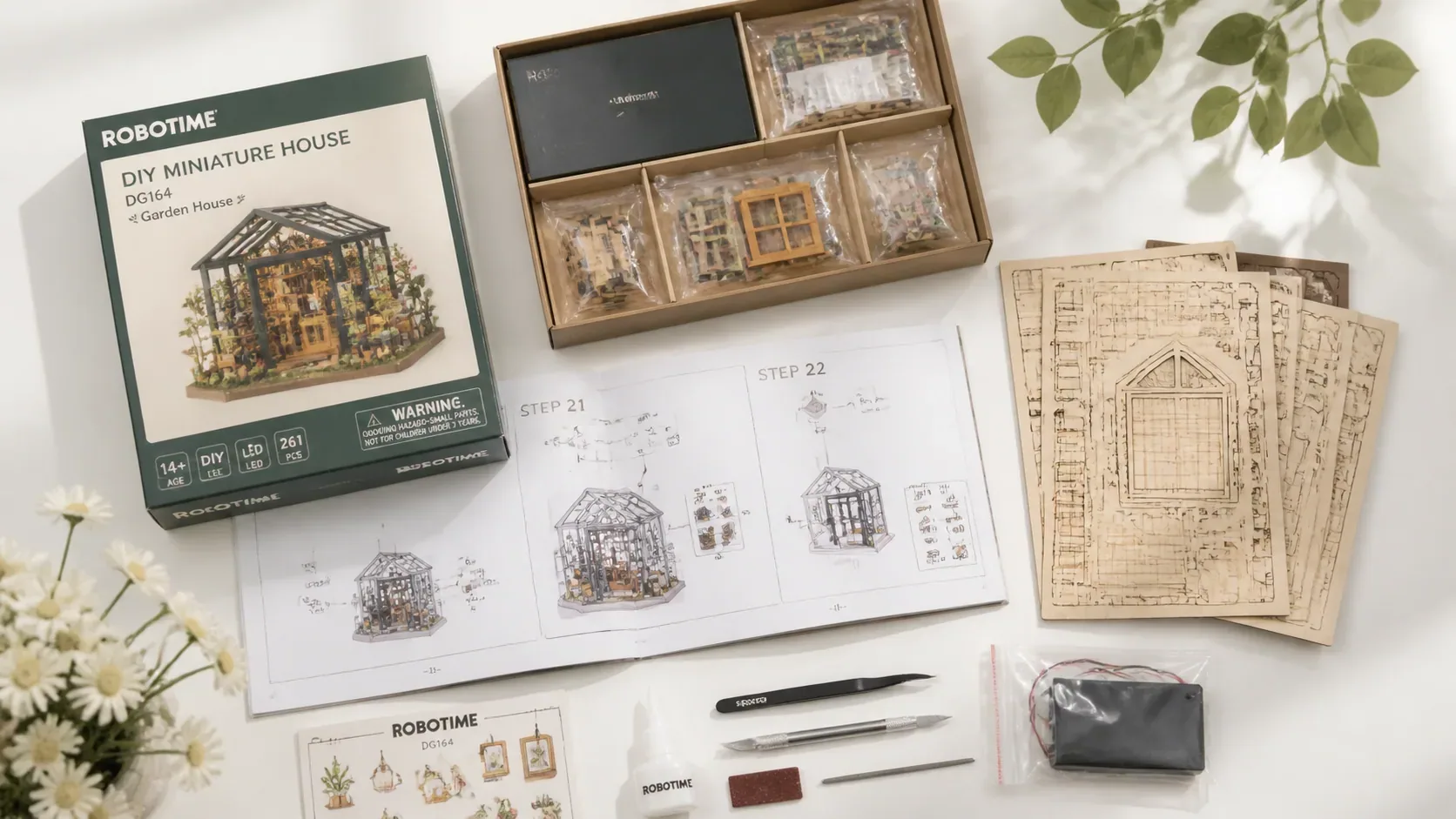
Opening a ROBOTIME kit reveals a carefully organized collection of components designed for seamless assembly. Each box contains precision-cut wooden parts that fit together with satisfying accuracy—no warped pieces or sloppy tolerances. The kit typically includes dozens of individual components, from structural walls and roofing elements to intricate furniture and decorative accessories that bring the scene to life.
Complete Inventory of Precision-Cut Wooden Parts and Their Functions
The wooden pieces serve specific structural and aesthetic purposes. Load-bearing walls form the foundation, while roof panels, floor sections, and interior dividers create the three-dimensional structure. Additional pieces serve purely decorative functions—railings, window frames, door panels, and trim elements that add character and polish to the finished piece.
Quality of Materials Used
ROBOTIME uses quality plywood and solid wood components that feel substantial in hand. The wood is pre-finished with a natural or stained aesthetic that requires no additional painting unless you choose to customize. The manufacturing tolerances are tight enough that parts fit snugly without forcing, which prevents damage during assembly and ensures structural integrity.
LED Lighting Components and Battery Requirements
Most ROBOTIME house kits include LED lighting elements that transform the build at night. These typically consist of small LED strips or bulbs that wire through the structure, powered by battery compartments that mount discreetly inside. Most models use standard AA or AAA batteries, though some include USB-powered options for continuous display use. The lighting installation requires basic soldering skills or pre-soldered connections depending on the kit complexity.
Detailed Accessory Collections
Beyond the structural pieces, each kit arrives packed with miniature furniture, décor items, and figurines that populate the space. A café-themed kit might include tiny tables, chairs, a counter, coffee cups, and hanging pictures. A bookstore model features shelving units, books, reading chairs, and decorative plants. These accessories are where personality emerges—they transform an empty shell into a lived-in world.
Instruction Manual Clarity and Language Options
The instruction manuals are comprehensively illustrated with numbered steps, exploded diagrams, and color-coded part identification. Most ROBOTIME kits provide instructions in multiple languages, though the visual format makes language barriers minimal. Each step builds logically on the previous one, and checkpoints throughout the process confirm you're on the right track.
Estimated Part Count and Complexity Indicators
A typical ROBOTIME house kit contains between 100 and 300+ individual pieces, depending on the specific model. The brand clearly labels complexity levels—beginner kits might involve 100-150 pieces and 5-8 hours of assembly, while advanced models push toward 300+ pieces and 15-20 hours. This transparency helps you select appropriately for your patience level and available time.
Packaging Quality and Protection During Shipping
ROBOTIME packages their kits thoughtfully. Each component category nestles in its own compartment or sleeve, preventing rattling and damage during transit. The outer box itself is sturdy corrugated cardboard reinforced at stress points. Kits consistently arrive in perfect condition, even after long-distance shipping.
Choosing Your Perfect Theme: From Cozy Cafés to Enchanted Libraries
ROBOTIME's theme range spans aesthetics from nostalgic to contemporary. Each theme appeals to different sensibilities and display contexts.
Popular ROBOTIME House Themes and Aesthetic Styles
Café and restaurant themes attract those who love hospitality aesthetics and warm gathering spaces. Bookstore and library models appeal to readers and intellectuals. Flower shop kits attract nature lovers and gardening enthusiasts. Living room and bedroom themes work for those who enjoy home design. Seasonal collections—holiday-themed houses, Halloween haunted cottages, spring gardens—add variety to long-term collecting.
Size Variations and How They Fit Different Display Spaces
ROBOTIME kits typically produce finished pieces measuring 6 to 12 inches wide, though some premium models extend larger. A 6-inch piece fits neatly on a desk or shelf. The 8-10 inch range works well for dedicated display cabinets. Larger models become statement pieces that anchor a room's décor. Consider your display location before ordering—measure your shelf space and ensure adequate clearance for viewing and occasional dusting.
Complexity Levels Matched to Experience and Patience Thresholds
Beginner models use larger components, simpler assembly sequences, and fewer pieces. They're ideal if you've never built before or want a relaxing weekend project. Intermediate kits introduce smaller parts, more assembly steps, and lighting elements. Advanced models feature intricate details, numerous tiny components, and complex lighting systems. Honesty about your patience and fine-motor comfort matters—attempting an advanced kit without the right temperament transforms joy into frustration.
Seasonal and Limited-Edition Collections to Watch For
ROBOTIME regularly releases limited-edition themes for holidays and seasons. These models tend to sell out quickly and appreciate in value among collectors. Spring releases feature gardens and outdoor scenes. Autumn brings Halloween and harvest themes. Winter holidays inspire holiday cottages and snowy landscapes. Summer collections often focus on beach houses and outdoor entertainment spaces. Joining ROBOTIME's mailing list alerts you when limited editions launch.
Theme-Specific Accessory Packs and Customization Options
Many themes offer expansion packs with additional accessories to populate the space further or customize the aesthetic. A café might add more furniture variations, additional tables, or decorative wall art. These packs let you expand a basic kit or create entirely unique variations by mixing components between different kits.
How Different Themes Appeal to Various Collector Interests
Some collectors focus exclusively on one theme—accumulating every café variant, for instance. Others prefer diversity, building a varied collection that spans different aesthetics and eras. Themed collections tell stories and create cohesive narratives when displayed together. Understanding your collecting philosophy helps guide which models to prioritize and how to arrange displays.
Start building your curated collection with ROBOTIME's diverse theme options.
Building Your Masterpiece: A Realistic Assembly Experience
The assembly process is where ROBOTIME kits truly shine. What begins as a box of components transforms through methodical, engaging work into something genuinely impressive.
Typical Assembly Timeline and Time Commitment Per Session
A beginner kit typically requires 5-8 hours across multiple sessions—perhaps 2-3 hours per evening over a few nights. Intermediate kits stretch toward 12-15 hours. Advanced models can demand 20+ hours. Breaking assembly into manageable sessions prevents fatigue and frustration. Most builders find that 2-3 hours per sitting represents the sweet spot before attention lapses and mistakes creep in.
Step-by-Step Progression and When to Expect Frustration Points
Early assembly moves quickly as you establish the foundational structure. The walls and basic frame come together satisfyingly fast, providing early momentum. Mid-assembly often presents the greatest challenge—intricate details, numerous small pieces, and complex lighting preparation can feel overwhelming. The final stages, where you're adding finishing accessories and testing the lights, typically restore enthusiasm as the piece comes alive. Anticipating this rhythm prevents discouragement when hitting the difficult middle stretch.
Tools Needed Beyond What's Included in the Kit
ROBOTIME kits include most essential tools, but having your own quality instruments enhances the experience. A precision hobby knife with fresh blades cuts cleaner than dull ones. Small needle-nose pliers help with tiny component manipulation. A cutting mat protects your work surface and provides reference grids. Magnifying glasses reduce eye strain during detailed work. A hot glue gun or wood adhesive complements the included glue, though not always necessary. A small flashlight proves invaluable when working with LED components and internal wiring.
Common Assembly Mistakes and How to Avoid Them
The most frequent error is forcing pieces that don't align perfectly. ROBOTIME components fit precisely—if something resists, recheck the orientation rather than applying pressure. Over-gluing creates mess and permanent joints when you might need adjustability. Apply adhesive sparingly. Rushing through instruction steps causes misalignment in later stages when correction becomes difficult. Patience with early steps prevents costly mistakes downstream. Misidentifying small, similar-looking parts wastes time and frustration. Using the parts inventory and keeping components organized prevents this.
Lighting Installation and Troubleshooting Tips
LED installation represents the most technically involved aspect for many builders. Read the lighting-specific instructions thoroughly before beginning. Pre-soldered connections simplify this step dramatically. If soldering is required, invest in a quality soldering iron and practice on scrap wire first. Route wires carefully through channels to avoid snagging or crimping. Test connections incrementally—verify each light before proceeding. If lights don't function, check battery polarity, inspect solder joints for cold connections, and verify the battery has sufficient charge.
Adhesive Recommendations for Optimal Part Bonding
ROBOTIME kits include wood glue suitable for most assembly. For added security or if you're dissatisfied with the included adhesive, quality wood adhesive from craft suppliers works excellently. For decorative elements and accessories, a quality hot glue gun provides quick bonding without clamping requirements. For LED components, silicone adhesive offers electrical insulation. Don't over-rely on adhesive—well-designed components should fit securely with minimal glue. Excess adhesive seeps from joints and mars the finished appearance.
Your Next Creative Chapter Awaits
Building a ROBOTIME DIY Miniature House Kit transcends typical craft projects—it's a gateway to mindfulness, creative expression, and tangible accomplishment. The hours spent assembling tiny components quiet the mind and engage the hands in ways that screens simply cannot replicate. There's genuine meditation in following instructions, solving spatial puzzles, and watching chaos organize into beauty.
Whether you're seeking a meditative hobby, a meaningful gift, or the foundation of a collector's passion, these kits deliver on multiple levels. The combination of quality materials, thoughtful design, and that electric moment when you flip the switch and watch your creation come to life makes every hour of assembly worthwhile. The finished piece becomes something you're genuinely proud to display—a conversation starter and a window into creativity and craftsmanship.
The satisfaction extends beyond the final product. The memories of focused work, the problem-solving during assembly, and the pride of completion linger longer than the physical object itself. For gift-givers, these kits offer something rare in our throwaway culture—something handmade, personal, and enduring. For collectors, they become a passionate hobby with measurable tangible progress.