SIRUI Sniper 23mm Autofocus Lens Review 2026
Discover why the SIRUI Sniper 23mm Autofocus Lens is the go-to prime for Sony, Fujifilm, and Nikon creators. Learn about its f/1.2 aperture, autofocus speed, and incredible value in this in-depth review.
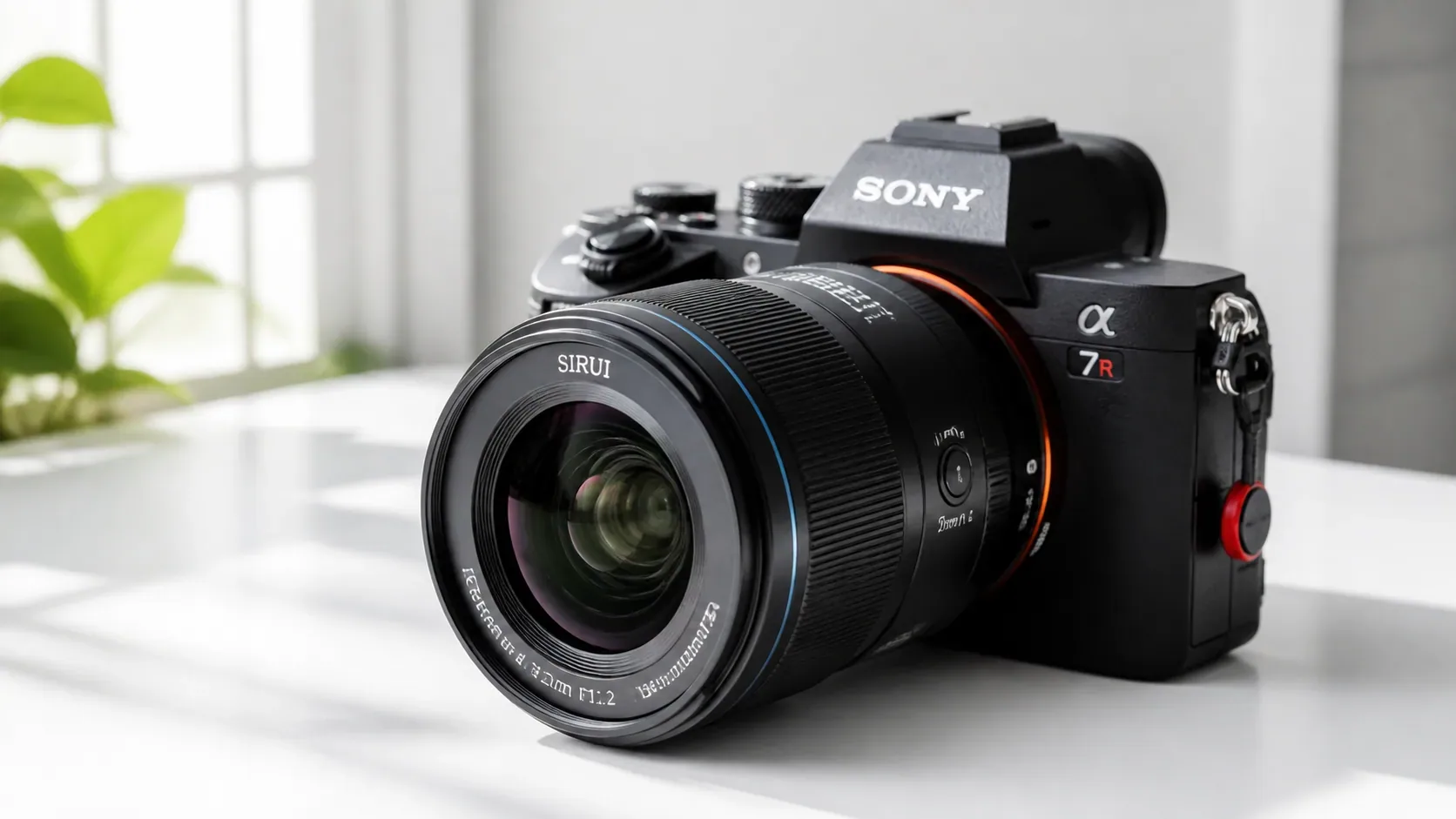
Nearly 70% of content creators cite lens cost as their biggest barrier to upgrading their kit. Yet somehow, a $250–$300 prime lens has become one of the most recommended investments in the mirrorless community. The SIRUI Sniper 23mm Autofocus Lens has quietly disrupted the budget prime market—and for good reason.
When SIRUI entered the mirrorless lens space, they took a different approach than established manufacturers. Instead of chasing cutting-edge features with premium price tags, they focused on delivering professional-grade optical performance at genuinely accessible price points. The Sniper 23mm became their flagship achievement—a lens that punches well above its weight class, especially for creators working with Sony E, Fujifilm X, and Nikon Z systems.
Explore the SIRUI Sniper 23mm and see why it's become a creator favorite.
Optical Performance and Image Quality: What the f/1.2 Aperture Actually Delivers
The f/1.2 maximum aperture stands as the defining characteristic of this lens, and it delivers on its promise in ways that matter to real-world creators. The exceptional sharpness across the frame remains consistent even at wider apertures, eliminating the soft-edged compromises that often plague budget lenses. This means you can shoot wide open and trust the results.
Low-light performance elevates significantly with the f/1.2 design. Content creators working in dimly lit venues—concert halls, restaurants, indoor events—can maintain lower ISO values without sacrificing shutter speed. This translates directly to cleaner files with less noise, a critical advantage when your lighting conditions aren't under your control.
The bokeh rendering deserves special attention. The creamy, pleasing background blur flatters both portrait subjects and environmental shots, creating visual separation that makes images feel more cinematic and intentional. The lens achieves this without the harsh or busy bokeh that sometimes accompanies cheaper alternatives.
Chromatic aberration and distortion remain minimal for a prime at this price point. The color rendering and contrast characteristics work harmoniously with different camera profiles, whether you're shooting Sony's natural palette, Fujifilm's film simulations, or Nikon's processing.
The 23mm focal length translates particularly well across APS-C sensor sizes. On crop-sensor bodies, it functions as a moderate wide-angle lens—roughly equivalent to a 35mm on full-frame—making it ideal for environmental portraiture and street work without feeling cramped.
Autofocus Performance for Stills and Video Work
Autofocus speed and reliability matter more than most specs suggest. This lens delivers fast, responsive tracking suitable for both photography and cinematic applications. Whether you're capturing moving subjects in street photography or following action in video, the autofocus system keeps pace without hunting or hunting delays that derail takes.
The autofocus motor operates quietly, a crucial consideration for video creators recording on-camera audio. The quiet operation means your sound recording remains clean and uninterrupted by mechanical lens noise. This alone makes the lens significantly more practical for hybrid creators switching between stills and video.
Performance varies slightly across different camera bodies. Sony A6700 users report snappy autofocus, Fujifilm X-S20 owners appreciate reliable tracking, and Nikon Z30 shooters find consistent performance. These variations reflect firmware differences and camera body implementation rather than lens shortcomings. Continuous autofocus remains reliable for dynamic scenes, maintaining lock on moving subjects without losing tracking.
The manual focus override works intuitively. The focus ring provides responsive tactile feedback, allowing you to take manual control when needed without disengaging the autofocus system. Autofocus speed in challenging lighting conditions remains respectable—dim concert venues or low-contrast scenarios don't completely derail performance, though you may notice slight hesitation compared to premium alternatives.
Build Quality and Ergonomics: Premium Feel Without the Premium Price
The lightweight metal construction balances durability with portability. This isn't a plastic-feeling budget lens; the metal barrel and control surfaces deliver a premium tactile experience that contradicts the price point. Compared to other budget-friendly alternatives, this lens feels more intentional and refined.
The compact form factor makes everyday carry practical. Weight specifications keep the lens light enough for travel without sacrificing the substantial feel that suggests quality construction. The lens barrel design and control layout feel intuitive—focus and aperture rings are positioned logically, making operation instinctive even in dim lighting conditions.
Long-term durability based on user feedback remains strong. The aesthetic design complements modern mirrorless camera bodies, creating a cohesive system look rather than appearing like an afterthought. When comparing build quality to lenses at double the price point, the Sniper 23mm holds its own impressively.
Check current pricing and availability on the SIRUI store.
Real-World Use Cases: Where This Lens Truly Shines
Street photography finds a natural home with this lens. The shallow depth of field at f/1.2 creates subject separation that elevates candid moments from snapshots to deliberate compositions. The 23mm focal length provides enough width to capture context while remaining tight enough for controlled framing.
Portrait work benefits from the flattering focal length on APS-C sensors and the creamy bokeh that renders skin tones beautifully. The f/1.2 aperture gives you genuine control over depth of field, allowing you to separate subjects from busy backgrounds with visual elegance.
Travel and documentary work appreciates the compact size paired with versatile framing. Photographers lugging gear through cities and countries find the lens portable enough for all-day carry without sacrificing optical quality. The fast aperture means you're not hunting for tripods or pushing ISO excessively in museums and dimly lit historical sites.
Video content creation benefits tremendously from smooth autofocus, quiet operation, and cinematic bokeh. Creators producing YouTube videos, short-form content, and professional documentaries find the lens delivers visual quality that suggests far more expensive equipment.
Low-light scenarios reveal where f/1.2 truly shines. Concerts, events, and indoor environments where most photographers would hesitate become workable. You maintain shutter speeds that freeze motion and ISO values that preserve image quality.
Hybrid creators—those seamlessly switching between stills and video without lens changes—find this lens incredibly practical. The autofocus speed and audio-friendly quiet operation eliminate the friction that often accompanies frequent format switches.
Compatibility Deep Dive: Sony E, Fujifilm X, and Nikon Z Mounts
The Sniper 23mm arrives in multiple mount options, ensuring compatibility with your specific mirrorless system. The 23mm focal length performs differently on each mount due to sensor size considerations, though all versions optimize for APS-C systems where the focal length becomes most versatile.
Sony E-mount users experience native autofocus integration with camera bodies. The autofocus protocol works seamlessly with Sony's AF system, delivering responsive tracking without compatibility quirks.
Fujifilm X-mount performance remains consistently solid, with autofocus reliability that matches Sony implementation. The lens's optical characteristics complement Fujifilm's color science and film simulation profiles particularly well.
Nikon Z-mount considerations center on the lens performing naturally with Z30 and similar APS-C bodies. Autofocus responsiveness remains fast and reliable across Nikon's lineup. The lens works intuitively within Nikon's menu structure and settings.
APS-C system optimization means this lens is specifically designed for crop sensors, unlike some alternatives that compromise when used on smaller sensors. The optical design assumes APS-C use, delivering superior performance compared to full-frame lens designs adapted for crop bodies.
Mount-specific accessories remain limited but functional. Standard lens caps, filters, and hoods work across all versions, ensuring you can find compatible gear without hunting for proprietary solutions.
The Value Equation: Why $250–$300 Feels Like a Steal
The price-to-performance ratio stands as the defining strength. Competing prime lenses at similar focal lengths typically cost $400–$500 for equivalent optical performance. The Sniper 23mm delivers comparable sharpness, faster autofocus, and superior build quality while undercutting competitors substantially.
The feature set justification explains the pricing. An f/1.2 aperture on a prime lens, paired with reliable autofocus and metal construction, typically commands premium pricing. SIRUI's market positioning allows them to deliver these features without the premium burden.
For creators building their kit strategically, this lens represents a long-term investment that preserves budget for other essential gear. Rather than stretching finances on a single lens, you can acquire multiple focal lengths or invest in tripods, lights, and other production equipment.
Vintage manual focus alternatives cost less upfront but require you to rack focus manually during video and sacrifice autofocus convenience during photography. The autofocus capability justifies the price premium over older glass.
Resale value and market demand for used units remains strong, suggesting the lens holds value. If your creative direction changes or you upgrade systems, selling a used Sniper 23mm won't leave you underwater financially.
The cost savings when choosing this lens over more expensive alternatives accumulate. A $200–$300 savings on the lens itself allows photographers to invest in supporting equipment that actually improves their creative output.
ROI potential for content creators monetizing their work becomes tangible. The professional-looking results attract higher-paying clients and sponsorships, making the lens investment return through improved income potential.
Limitations and Honest Trade-offs to Consider
Weather sealing absence represents the most significant limitation. The lens lacks protection against dust and moisture, ruling it out for harsh-condition work. Professional photographers covering outdoor sports, severe weather, or adventure expeditions should consider alternatives with weather-sealed construction.
APS-C-only availability means full-frame mirrorless shooters must look elsewhere. The optical design optimizes for crop sensors, and full-frame compatibility isn't available.
Autofocus variation between camera bodies and firmware versions occurs occasionally. Some users report firmware updates that affect autofocus behavior. This isn't a deal-breaker but worth acknowledging if you rely on consistent performance across multiple bodies.
No optical stabilization means you're dependent on in-body stabilization. For handheld video work requiring smooth footage, you may benefit from additional equipment like gimbals or monopods.
Minimum focusing distance and macro capability remain limited. The lens excels at normal and distant subjects but won't provide close focusing for macro work or detailed product photography.
The lack of weather-sealed construction rules out professional outdoor work in challenging conditions. If you regularly shoot in rain, snow, or dusty environments, this lens requires thoughtful care or protective measures.
Compatibility with older camera firmware versions occasionally presents minor issues, though most users on current firmware experience no problems.
Comparing the 23mm to Other SIRUI Sniper Focal Lengths
The Sniper 23mm stands out as the most versatile option in the lineup. While the 18mm delivers wider framing for architecture and environmental shots, and the 35mm provides a tighter perspective for portraiture, the 23mm occupies the practical middle ground.
The 35mm equivalent focal length on APS-C translates to roughly 35mm in full-frame terms, placing it in the wide-standard range where it handles everyday shooting exceptionally well. The practical framing works for street photography, environmental portraits, travel documentation, and video work without requiring composition adjustments for different focal lengths.
Use case scenarios where alternatives might suit better do exist. The 18mm excels in confined spaces and architectural work. The 35mm delivers more intimate framing for traditional portraiture. But for creators wanting a single versatile prime that handles most situations competently, the 23mm claims the crown.
Complementary focal lengths for building a complete prime lens kit work well around the 23mm. Pairing it with a 35mm delivers a natural progression, or combining it with an 18mm and 50mm creates a comprehensive kit covering wide to moderate telephoto perspectives.
Optical design differences between Sniper focal lengths reflect each lens's intended use. The 23mm balances optical performance across its entire range, while wider focal lengths prioritize edge performance and tighter focal lengths optimize for shallow depth of field characteristics.
Price variations across the Sniper series remain modest, typically within $50–$100 of each other. This accessibility makes building a multi-focal-length kit reasonable for budget-conscious creators without the financial commitment full-frame zoom lenses demand.
Making Your Decision: Is the SIRUI Sniper 23mm Right for Your Creative Work?
The SIRUI Sniper 23mm Autofocus Lens represents something increasingly rare in the camera market: genuine innovation at an accessible price. It delivers optical performance that rivals lenses costing twice as much, pairs that with genuinely fast autofocus, and wraps it all in a build quality that feels premium without the premium burden on your wallet. For street photographers, travel creators, and videographers working with Sony E, Fujifilm X, or Nikon Z systems, this lens consistently delivers professional-looking results.
That said, it's not a universal solution. The lack of weather sealing rules it out for harsh-condition work, and the APS-C-only design means full-frame shooters need to look elsewhere. But if you're building a mirrorless kit on a realistic budget—or you're a seasoned creator looking to add a versatile prime without breaking the bank—the 23mm absolutely deserves your consideration.
The real question isn't whether this lens is good; it's whether the 23mm focal length matches your creative vision. If it does, you're looking at one of the smartest lens investments available.