
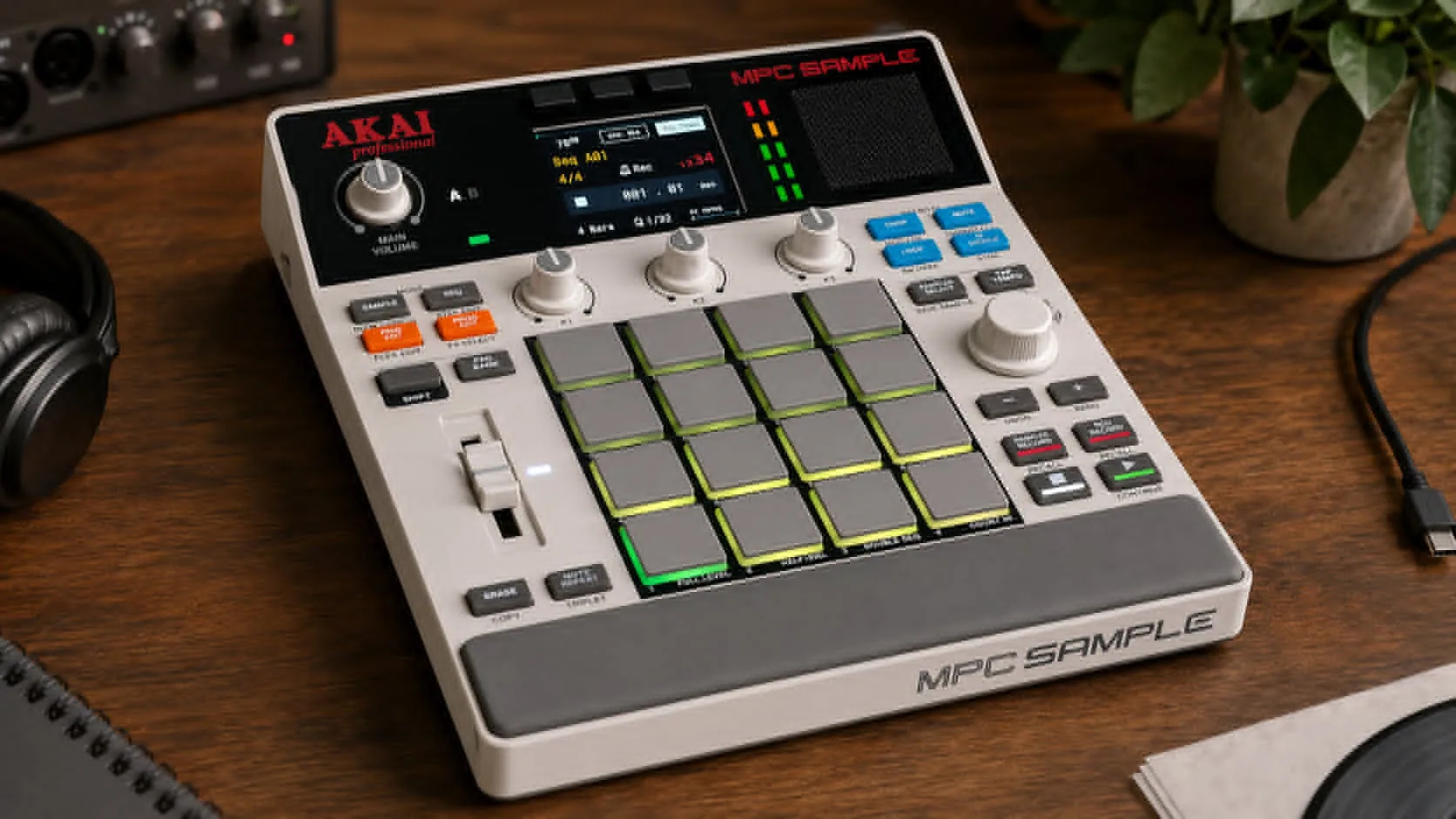
A great beat can start anywhere—a coffee shop, a hotel room, a park bench, or during a commute. The Akai Professional Portable Sampler is built for exactly those moments.
Instead of carrying a laptop, audio interface, and extra gear, you get a standalone music production tool that fits comfortably in a backpack while delivering the classic MPC workflow producers have trusted for decades.
Akai designed the MPC Sample for musicians who want hands-on sampling, sequencing, and sound design without a complicated setup. With responsive pads, onboard effects, battery-powered operation, and flexible connectivity, it aims to bring professional beatmaking into a portable format.
After spending time reviewing its features, workflow, and real-world usability, it becomes clear that this device focuses on speed, creativity, and convenience.
Akai Professional Portable Sampler: Core Features and Design
The Akai Professional Portable Sampler, officially called the MPC Sample, combines portability with the iconic MPC workflow that helped shape modern hip-hop and electronic music. The device features 16 RGB velocity-sensitive pads, a 2.4-inch color display, dedicated controls, and a compact form factor designed for mobile production.
At approximately 2.2 pounds, it travels easily without feeling fragile. The rechargeable lithium-ion battery provides up to five hours of use, while the built-in speaker and microphone allow you to create music without connecting external gear.
If you're searching for a portable music sampler, this model offers a strong balance between mobility and functionality. Unlike many compact samplers that strip away essential features, the MPC Sample retains the workflow that made the MPC series famous.
Sampling and Sound Creation
Sampling sits at the center of the MPC experience, and the MPC Sample handles it surprisingly well for its size.
You can record sounds directly through the built-in microphone, capture audio through USB-C connections, or import samples from external sources. Once the audio is loaded, several editing tools become available:
- Sample chopping for breaking loops into playable segments
- Real-time time-stretching
- Re-pitching and key adjustments
- Reverse playback effects
- Internal resampling
- Loop creation and editing
- Multi-sample program creation
Akai also includes over 100 factory kits to help producers start creating immediately.
For anyone looking for a hardware sampler for beginners, the workflow feels approachable without sacrificing creative depth. Most functions are accessible through straightforward menu navigation and dedicated controls.
MPC Workflow and Sequencing Performance
One reason the MPC family remains popular is its sequencing workflow. The MPC Sample carries that tradition forward with a built-in sequencer and several performance-oriented tools.
Key sequencing features include:
- MPC Swing
- Note Repeat
- Quantization
- Pattern chaining
- Song Mode
- Automation recording
These tools help transform simple loops into complete arrangements without requiring a computer. The workflow encourages experimentation, which is particularly valuable during creative sessions.
Many producers specifically search for a standalone sampler because they want to create music without staring at a laptop screen. The MPC Sample succeeds in delivering that experience while remaining portable.
Effects and Sound Processing
A sampler is only as useful as its ability to shape sounds, and Akai includes a generous collection of onboard effects.
The MPC Sample offers more than 60 effect types across four internal effects engines. Available options include:
- EQ
- Compression
- Delay
- Reverb
- Chorus
- Flanger
- Phaser
- Tape emulation
- Vinyl simulation
- Flex Beat
The inclusion of creative effects like vinyl emulation and tape saturation helps producers add character and texture to samples without relying on external plugins.
Connectivity Options and Expansion
Despite its compact footprint, connectivity is surprisingly comprehensive.
The MPC Sample includes:
- USB-C audio and MIDI connectivity
- Stereo line inputs
- Stereo line outputs
- Headphone output
- MIDI input and output
- Sync output
- microSD card support
The expandable storage is especially useful because sample libraries tend to grow quickly. While the unit includes 8GB of internal storage and 2GB of RAM, microSD expansion provides additional room for larger projects.
If you're looking for a battery powered sampler, this model checks an important box. The internal rechargeable battery makes it possible to work away from power outlets for extended periods.
Technical Specifications
| Feature | Specification |
| Pads | 16 Velocity-Sensitive RGB Pads |
| Display | 2.4-Inch Color Screen |
| RAM | 2GB |
| Internal Storage | 8GB |
| Expansion | microSD Support |
| Battery | Rechargeable Lithium-Ion |
| Connectivity | USB-C Audio/MIDI |
| Built-In Speaker | Yes |
| Built-In Microphone | Yes |
| Battery Life | Up to 5 Hours |
Sources: Akai Professional and MusicRadar specifications.
Real-World Performance and Hands-On Impressions
After examining reviews, product documentation, and user feedback, the MPC Sample appears designed for producers who prioritize speed and portability.
One of its strongest qualities is how quickly ideas move from concept to finished beat. The dedicated sampling workflow eliminates many of the distractions that come with software-based production.
A practical example involves field recording. You can record sounds through the onboard microphone, chop them into slices, assign them to pads, add effects, and build a sequence within minutes.
That simplicity makes the MPC Sample particularly appealing for mobile creators and DAWless setups.
For producers searching for a beat making machine, the MPC Sample delivers a focused experience centered on rhythm creation and sample manipulation.
Price and Value
At the time of writing, the Akai Professional MPC Sample is listed on Amazon US for approximately $399.00, matching Akai's official launch pricing. Pricing can fluctuate based on promotions and retailer availability.
Compared with larger MPC models, the MPC Sample offers a lower-cost entry point into the MPC ecosystem while retaining many of the workflow advantages that producers appreciate.
Many searches for an MPC Sample review focus on value, and that's where this device performs well. You get standalone functionality, sampling tools, sequencing, effects, portability, and battery operation at a price point that remains accessible compared to flagship MPC units.
Limitations to Consider
No piece of music hardware is perfect, and the MPC Sample has a few limitations worth discussing.
The 2.4-inch display works well for basic navigation but can feel restrictive during detailed editing sessions. Producers accustomed to larger touchscreens may need time to adjust.
The compact layout also creates tighter spacing between controls. While portability benefits from this design, users with larger hands may prefer a larger workstation for lengthy production sessions.
Some advanced features available on premium MPC models are absent here. That tradeoff helps keep the unit affordable and portable.
Presenting these limitations is important because expectations play a major role in overall satisfaction.
Who Should Buy the Akai Professional Portable Sampler?
The MPC Sample fits several types of creators:
- Hip-hop producers
- Electronic music producers
- Traveling musicians
- DAWless performers
- Beginner beatmakers
- Songwriters looking for quick sketch tools
- Sample-based producers
Its portability makes it especially appealing for creators who want a dedicated production device away from a traditional studio environment.
Industry Context and Why MPC Still Matters
The MPC platform has influenced music production since its introduction in 1988. Many legendary producers helped establish the MPC's reputation through innovative sampling techniques and groove-focused workflows.
The MPC Sample brings that heritage into a compact modern device. Instead of trying to replace a full studio workstation, it focuses on capturing ideas quickly and turning them into complete musical sketches.
That focused approach helps explain why many producers continue to gravitate toward hardware samplers even as software becomes more powerful.
Final Thoughts
The Akai Professional Portable Sampler succeeds at delivering a genuine MPC experience in a compact, travel-friendly package. Its combination of standalone operation, responsive pads, onboard effects, battery-powered design, and flexible sampling tools creates a workflow that feels fun and productive.
The smaller screen and compact controls may not suit every producer, yet those tradeoffs support the portability that defines the device. For beatmakers, mobile producers, and musicians looking for a focused creative tool, the MPC Sample offers plenty to explore.
If the MPC Sample sounds like a good fit for your workflow, take a look at the latest Amazon listing, compare current pricing, and browse related music production gear. There are plenty of creative tools worth exploring alongside it, and finding the right setup can make a big difference in your music-making process.