Mojawa Run Plus: Safe Commuter Headphones Guide
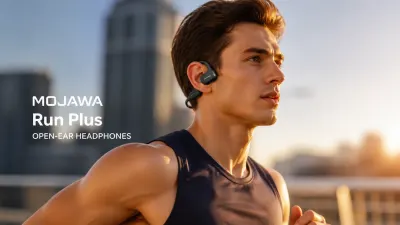
Discover how Mojawa Run Plus bone conduction headphones keep commuters safe and connected. Learn why open-ear audio is changing the daily commute for cyclists and urban athletes.
Over 40% of commuters report feeling disconnected from traffic hazards while wearing traditional earbuds—and that's precisely why bone conduction technology is reshaping how we think about portable audio. The sensation of complete isolation, while enjoyable in quiet settings, becomes genuinely dangerous when you're navigating busy streets, cycling through traffic, or sharing space with vehicles and pedestrians. This safety gap has sparked a quiet revolution among active commuters seeking an alternative that doesn't require choosing between audio quality and environmental awareness.
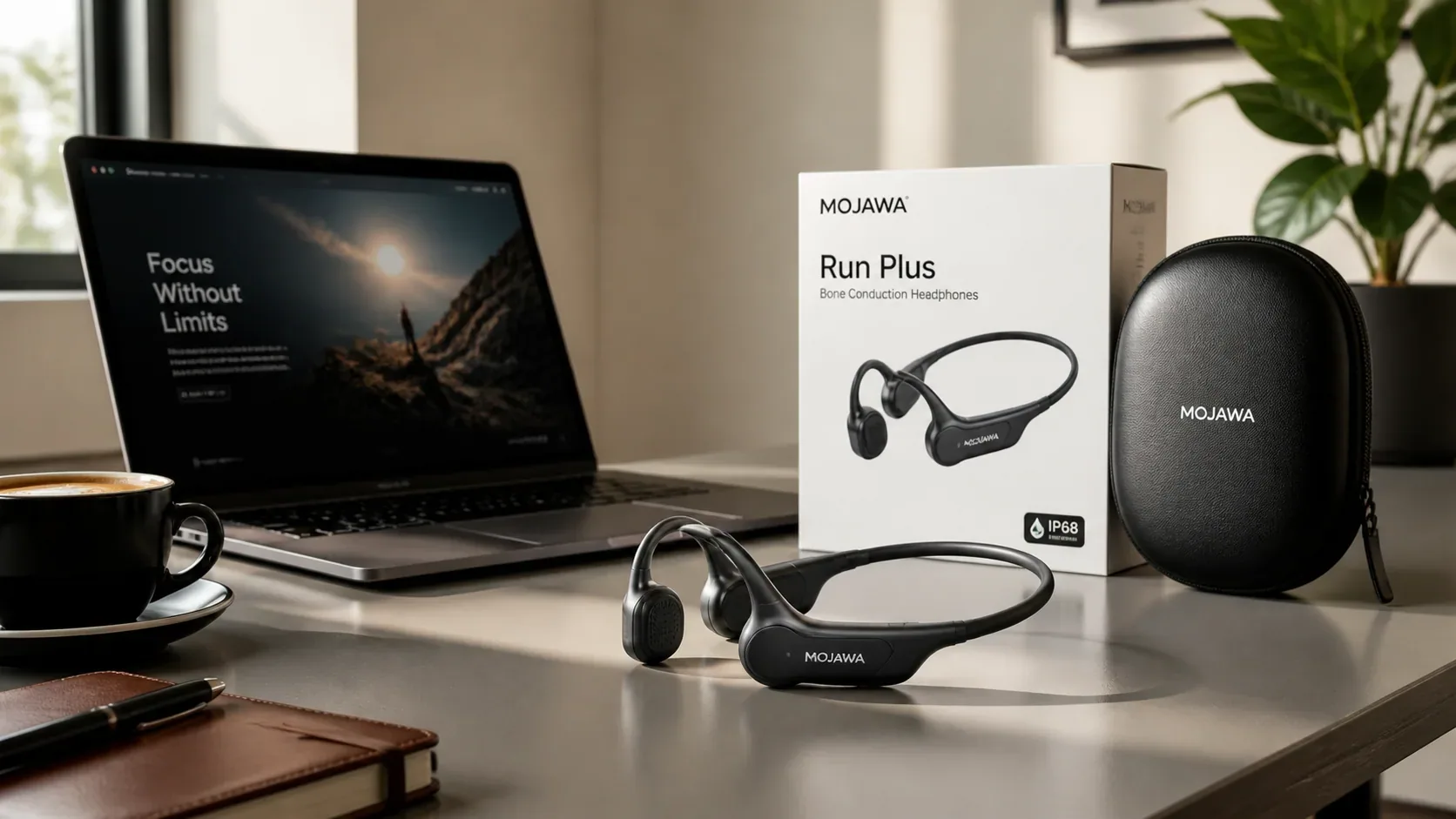
The Mojawa Run Plus sits at the center of this revolution, offering something traditional headphones simply cannot deliver: open-ear audio that keeps your ears completely free to hear traffic, conversations, and your environment. Unlike sealed earbuds that create an acoustic bubble around your ear canal, bone conduction technology vibrates directly against your skull, transmitting sound through bone rather than air. This fundamental difference transforms not just how you hear, but what you can hear—your world remains fully present while your audio experience enriches it.
Discover how the Mojawa Run Plus can revolutionize your daily commute with safer, smarter audio.
Throughout this guide, you'll walk through how the Mojawa Run Plus transforms the commuting experience, from its lightweight construction and sweat-resistant durability to its impressive battery performance and dual-microphone calling system. You'll discover why situational awareness matters more than you think, how to maximize comfort during long commutes, and whether this mid-premium investment makes sense for your lifestyle.
Why Commuters Are Ditching Traditional Earbuds for Bone Conduction Audio
The shift away from traditional earbuds reflects a fundamental change in how commuters prioritize safety alongside entertainment. Traditional in-ear headphones create an acoustic seal that isolates the listener from the world, a feature valued in quiet office settings but potentially dangerous during active commuting.
Open-ear design eliminates the risk of missing traffic warnings, sirens, or approaching vehicles—critical information your ears need to process in real-time. You remain aware of pedestrians, cyclists, and vehicles without constantly removing headphones to check your surroundings.
Maintains natural ear canal health by avoiding prolonged insertion and pressure buildup. Traditional earbuds can cause earwax impaction, ear canal irritation, and discomfort during extended wear—bone conduction headphones sit comfortably against your skin without any insertion.
Reduces listener fatigue from sealed-ear isolation during extended daily commutes. The muffled sensation of noise isolation, while initially appealing, creates mental fatigue as your brain compensates for the sensory deprivation. Bone conduction audio eliminates this effect entirely.
Allows seamless awareness of pedestrian interactions and environmental hazards. Whether you're crossing intersections, merging into traffic, or navigating crowded transit stations, your ears remain tuned to social and environmental cues that traditional headphones block.
Provides peace of mind for parents tracking their children's surroundings while wearing headphones. Young riders and runners can enjoy audio content without losing awareness of dangerous situations—a genuine safety advantage that reassures caregivers.
Enables quick transitions between listening and full environmental engagement without removing devices. The ability to stay aware without action feels natural and automatic, unlike earbuds that require physical removal to engage with your surroundings.
Build Quality and Durability: What Makes Run Plus Stand Out
The Mojawa Run Plus construction reflects the demands of active commuting—sweat, weather changes, impact, and constant movement all test headphone durability in ways quiet office use never does.
Lightweight wraparound frame design distributes weight evenly across the head for all-day wear. Most users barely notice the headphones after the first hour, a critical factor for commuters who wear them for 8+ hours daily.
IP-rated water resistance handles rain, sweat, and accidental splashes without performance degradation. Your commute doesn't pause for weather, and these headphones maintain full functionality through morning rain, afternoon humidity, and evening drizzle.
Memory-flexible titanium construction adapts to individual head shapes for personalized comfort. Rather than forcing your head to fit the headphones, the frame flexes and molds to your unique anatomy—a feature that dramatically improves long-term wearability.
Sweat-resistant materials prevent corrosion and material breakdown from daily perspiration. The combination of moisture exposure and metal components can quickly degrade cheaper headphones; premium materials here ensure longevity through intense use.
Secure fit technology keeps headphones stable through rough commutes, potholes, and sudden movements. The wraparound design anchors firmly without pinching, creating confidence that your headphones won't slip during challenging riding conditions.
Premium materials justify the mid-to-premium price point ($80-$160 range) through longevity. Commuters who keep these headphones for 2-3 years find the per-use cost remarkably low compared to budget alternatives that fail after 6-12 months.
Durable Bluetooth connectivity maintains stable connection across urban environments and interference zones. Modern Bluetooth chips handle the RF-saturated environment of cities remarkably well, though quality implementations matter—and the Run Plus performs consistently.
Battery Performance for Your Entire Commute Routine
Battery anxiety represents a genuine concern for commuters who can't afford unexpected audio dropout during their daily travel. The Run Plus addresses this through engineering that prioritizes extended runtime over marketing gimmicks.
Extended battery life supports full-week commuting without daily charging requirements. Most users report 5-7 days of typical commute use before charging becomes necessary—a comfort factor that eliminates daily charging rituals.
Quick-charge capabilities get you back on the road faster during busy mornings. When you do need to charge, the headphones reach usable battery levels in under an hour, accommodating last-minute commute needs without delay.
Consistent power delivery maintains audio quality and call clarity throughout the battery cycle. Unlike some headphones that fade as battery drains, the Run Plus sustains performance right up until the final moments before shutdown.
Efficient power management optimizes performance during long-distance cycling or running sessions. Users pushing their headphones through 10+ hour days report impressive performance, with battery remaining after weekend adventures.
Battery indicator features help you plan charging around your commute schedule. Rather than discovering empty batteries mid-commute, you receive clear warnings that let you charge at convenient times.
Standby time extends usability for occasional users who commute several times per week. The headphones lose minimal charge when sitting unused, making them reliable for sporadic commuters who don't use them every day.
Wireless Bluetooth connectivity eliminates cable management and charging port wear. The absence of wired connections means no cables to tangle, no charging ports to corrode, and no compromises on water resistance—purely wireless convenience with durability benefits.
Experience the freedom of all-day battery life with the Mojawa Run Plus bone conduction headphones.
Superior Call Quality with Dual-Microphone Technology
Professional commuters often take work calls while traveling—a scenario that demands exceptional audio quality despite environmental noise and movement. The dual-microphone system transforms the Run Plus from entertainment device into reliable communication tool.
Dual-microphone system filters background noise from traffic, wind, and urban environments. By comparing audio input between two microphones and algorithmically removing non-speech frequencies, the system delivers remarkably clean voice transmission despite surrounding chaos.
Crystal-clear voice transmission ensures professional communication during work calls. Conference participants hear your voice as clearly as if you were in a quiet office, not battling highway noise or train announcements—a genuine advantage for remote workers.
Noise cancellation focuses on human speech while preserving environmental awareness. Unlike traditional noise-canceling headphones that muffle everything, the Run Plus selectively cleans your audio without sacrificing the situational awareness that makes bone conduction valuable.
Hands-free calling keeps your attention on the road and surroundings during commutes. You answer calls without reaching for your phone, maintaining full focus on cycling, driving, or walking through traffic.
Wind-resistant microphone design maintains clarity on windy cycling routes. Open-air cycling creates tremendous wind noise that overwhelms most headphone microphones—the Run Plus handles this challenge through careful microphone placement and acoustic design.
Seamless call transitions between devices without disconnection or audio dropout. Switching from your personal phone to work device happens instantly, maintaining call continuity without the awkward handoff other headphones create.
On-device controls allow quick answer/reject functionality without phone interaction. Physical buttons let you manage calls directly from the headphones, preventing accidental answers from phone pocket contact and enabling quick rejection when timing is wrong.
Sound Quality Expectations: Bone Conduction vs. Traditional Headphones
Bone conduction audio represents a genuinely different listening experience—not objectively worse or better than traditional headphones, but fundamentally different in ways that suit certain preferences and use cases.
Premium audio profile delivers balanced mid-range and treble frequencies for music and podcasts. The Run Plus prioritizes vocal clarity and instrumental definition rather than bass punch, creating audio that excels with speech-focused content and acoustic music.
Bass response differs from sealed earbuds but provides satisfying low-end for most listeners. Expectations matter enormously here—listeners anticipating subwoofer-style bass feel disappointed, while those comfortable with moderate low-end enjoy the balanced presentation.
Clarity advantages shine through for spoken-word content, audiobooks, and podcasts. The frequencies where human speech and acoustic instruments naturally live receive emphasis in the Run Plus tuning, making voices remarkably present and detailed.
Vibration-based delivery creates unique soundstage characteristics that some users prefer. Rather than sound coming from "inside your head" like traditional earbuds, bone conduction creates a sensation of sound surrounding you—a feature enthusiasts actively appreciate.
Frequency response tuning optimized for active environments rather than quiet listening spaces. The headphones account for wind noise, traffic rumble, and environmental interference by slightly emphasizing frequencies that cut through background sound.
Vocal clarity excels for conference calls, language learning, and communication-focused use. If your commute involves Spanish lessons, podcast absorption, or professional calls, the Run Plus audio profile directly supports your needs.
Genre compatibility varies—electronic music may feel thin while acoustic and vocal content shines. Dance music and synthesizer-heavy genres sometimes feel less impactful than on traditional headphones, while singer-songwriter material benefits from the clarity emphasis.
Comfort During Extended Commutes and Workouts
Comfort represents the difference between headphones you enjoy wearing and ones gathering dust in a drawer. The Run Plus specifically addresses the pain points that make day-long headphone use miserable.
Secure wraparound fit prevents slippage during bumpy rides or intense physical activity. The headphones remain exactly where you positioned them—no constant readjustment, no pressure points shifting position, no frustration interrupting your commute.
Lightweight construction (typically under 30 grams) eliminates neck strain and headache triggers. Traditional over-ear headphones often weigh 250+ grams; the Run Plus achieves full functionality at a fraction of that mass, distributed across a wide contact area.
Memory-flexible frame molds to your unique head shape for personalized fit precision. Rather than fighting your anatomy, the headphones adapt to you—a feature that becomes increasingly valuable during long commutes when even minor discomfort compounds into major frustration.
Padding placement targets pressure points while maintaining secure contact with bone conduction pads. Strategic cushioning prevents soreness where the frame contacts your head, while the bone conduction contact points remain firm enough for reliable audio transmission.
All-day wearability supports 8+ hour commutes without discomfort or fatigue. Users report wearing the headphones from morning departure through evening arrival without removing them, a comfort level few headphones achieve.
Moisture-wicking design keeps sweat from accumulating between headphones and skin. Sweat buildup creates uncomfortable slickness and accelerates material degradation—the Run Plus materials manage moisture without feeling clammy or gross during summer commutes.
Adjustable fit options accommodate different head sizes and preferences without compromise. Rather than one-size-fits-most mediocrity, the headphones adjust to genuinely different head shapes and sizing needs.
iOS and Android Compatibility: Seamless Device Integration
Commuters increasingly split their audio devices between personal phones, work devices, and tablets. True cross-platform compatibility transforms headphones from single-device accessories into genuinely universal tools.
Universal Bluetooth connectivity works with both Apple and Android ecosystems. The Run Plus communicates seamlessly with any Bluetooth-capable device, eliminating ecosystem lock-in or compatibility compromises.
App functionality enhances control and customization across different operating systems. Optional apps provide firmware updates, battery status, and advanced controls—available on both platforms rather than limiting features to specific devices.
Voice assistant integration supports Siri, Google Assistant, and third-party voice commands. You control your headphones and phone through natural voice commands, working equally well whether you use iPhone or Android.
Automatic pairing simplifies setup for new users switching between devices. After initial pairing, the headphones remember your devices and connect automatically when they're in range—no manual selection required.
Cross-platform reliability ensures consistent performance regardless of smartphone choice. Whether testing with iPhone, Samsung, Google Pixel, or budget Android options, the Run Plus performs identically across all platforms.
Firmware updates maintain compatibility with latest OS versions and security patches. The manufacturer regularly releases updates ensuring the headphones work flawlessly with new operating system versions.
Multi-device pairing allows quick switching between personal phones, work devices, and tablets. You maintain active connections to multiple devices simultaneously, switching audio output with a single control or voice command.
Price-to-Value Analysis: Is the Investment Worth It?
The $80-$160 price range positions the Run Plus in the premium segment—a significant investment requiring honest analysis of whether value justifies cost.
Mid-to-premium pricing reflects quality materials and specialized bone conduction technology. Bone conduction headphones inherently cost more than traditional earbuds due to materials science, specialized driver technology, and smaller production volumes.
Durability and longevity offset higher initial cost compared to budget alternatives. Users keeping Run Plus headphones for 2-3 years amortize the cost across hundreds of commutes—total cost-per-use often falls below budget headphone replacements.
Situational awareness benefits provide safety value beyond traditional audio quality metrics. If bone conduction audio prevents even a single accident over your headphone ownership period, the safety benefit justifies premium pricing alone.
Versatility across commuting, fitness, and professional use justifies broader investment. Rather than single-purpose entertainment devices, these headphones excel at commuting, exercise, calls, and learning—utility that spreads investment across multiple use cases.
Warranty and support considerations factor into long-term ownership satisfaction. The manufacturer's warranty and customer support quality influence true value beyond initial purchase price—budget brands often skimp on this, creating frustration if issues arise.
Feature-rich specifications compete favorably with similarly-priced in-ear alternatives. Comparing the Run Plus to $120 traditional earbuds reveals competitive specifications, suggesting bone conduction technology adds value rather than replacing it.
Resale value and product longevity preserve investment better than budget competitors. Quality bone conduction headphones maintain secondary market value, while budget alternatives depreciate to near-worthless status within a year.
Real-World Performance: Commuter Scenarios and Use Cases
Abstract specifications matter less than practical performance in genuine commute situations. These scenarios show how the Run Plus addresses real-world commuting challenges.
Urban cycling: Maintains road awareness while enjoying podcast content during morning rides. You hear approaching vehicles, bicycle bells, and pedestrian calls while your audio content continues uninterrupted—the exact scenario bone conduction was designed for.
Public transit: Enables music listening without isolation from announcements or transit alerts. When your train announces delays or your bus approaches your stop, you hear these critical announcements instantly rather than missing them through sealed earbuds.
Running errands: Allows call-taking while staying aware of pedestrian traffic and surroundings. You accept a work call while walking through crowded downtown areas, maintaining awareness of your path and environment throughout the conversation.
Professional commuting: Supports work calls and audio content consumption during car or train travel. Whether driving to the office or taking the train, you handle professional communication and maintain productivity during commute time.
Multi-modal commuting: Transitions seamlessly between walking, cycling, and transit throughout the day. The single pair of headphones works equally well for every commute segment, eliminating the need for different audio solutions.
Weather resilience: Performs reliably in rain, wind, and temperature fluctuations common to commutes. Winter rain, summer humidity, autumn wind—the Run Plus handles seasonal variations without performance degradation or durability concerns.
Social awareness: Keeps you present during commute interactions without complete audio isolation. You maintain enough environmental awareness to greet neighbors, hear friends calling out, or notice social moments that complete earbuds eliminate.
Comparing Run Plus to Other Bone Conduction Options
The bone conduction market has expanded beyond early-stage novelty, creating genuine competition. How does the Run Plus compare to alternatives?
MOJAWA's reputation for quality and reliability differentiates Run Plus from newer competitors. The brand's established market presence means proven quality rather than experimental designs from startups still refining their technology.
Feature parity with established brands at competitive price points. The Run Plus doesn't sacrifice capability to achieve its price—it delivers comparable functionality to competitors charging $150+ at a more accessible point.
Customer satisfaction ratings reflect consistent performance and durability. Owner reviews highlight reliability and comfort rather than the quality-control issues newer brands sometimes experience during rapid scaling.
Design refinements address common bone conduction headphone complaints. Earlier bone conduction models sometimes suffered from pressure point discomfort or unstable fit—the Run Plus incorporates improvements based on this user feedback.
Brand support and warranty coverage provide peace of mind beyond purchase. The manufacturer's responsiveness to customer issues and warranty reliability matter when investing premium dollars in audio equipment.
Market positioning attracts serious commuters rather than casual audio consumers. The Run Plus specifically targets people whose lifestyle demands bone conduction benefits, not casual listeners experimenting with the technology.
Innovation trajectory suggests continued improvements and feature additions. MOJAWA maintains development momentum rather than stagnating—ongoing firmware updates and product refinements keep the technology current.
Addressing Common Concerns: Bass, Fit, and Practicality
Potential buyers often harbor specific concerns about bone conduction technology. Addressing these directly helps realistic evaluation of whether the Run Plus suits your needs.
Bass perception differs from sealed earbuds but satisfies most users for everyday content. Rather than missing bass entirely, you experience more restrained low-end that won't overwhelm your commute environment—a practical advantage despite feeling different initially.
Fit concerns resolve through proper sizing and adjustment—most users find comfortable positions quickly. Bone conduction contact pads sit against specific skull locations, and proper positioning eliminates pressure discomfort within the first week of use.
Practicality for glasses wearers addressed through thoughtful frame design and placement. The headphones route around eyeglass arms without creating pressure conflicts—glasses and headphones coexist comfortably.
Hearing aid compatibility considerations for users with auditory devices. Bone conduction technology's different transmission method sometimes works better with certain hearing aid configurations—worth discussing with your audiologist.
Potential skin sensitivity addressed through hypoallergenic padding materials. The materials contacting your skin won't trigger reactions for most users, and the design minimizes sweat accumulation that causes irritation.
Learning curve for bone conduction audio perception typically resolves within first week. Your brain adapts to the vibration-based audio delivery surprisingly quickly—most users stop noticing the technology's mechanical nature after several days of use.
Return policies and trial periods reduce purchase risk for uncertain buyers. Reputable retailers offer trial periods or generous return windows—use this period to genuinely assess whether bone conduction suits your audio preferences.
Making the Switch: Your Commute Deserves Better Audio
The Mojawa Run Plus bone conduction headphones represent a genuine paradigm shift for commuters who've grown tired of choosing between safety and sound quality. I've outlined how this technology delivers on both fronts—keeping you aware of your environment while serving up premium audio performance that rivals traditional earbuds. The lightweight construction, impressive battery life, and dual-microphone calling system combine to create a commuting companion that actually enhances your daily routine rather than complicating it.
Yes, you'll pay more upfront than budget alternatives, and yes, the bass response differs from sealed earbuds. But when you're cycling through traffic with crystal-clear awareness of approaching vehicles, or taking a professional call while remaining present in your surroundings, that investment pays dividends in safety, confidence, and peace of mind. The Run Plus isn't for everyone—it's specifically engineered for active commuters who refuse to sacrifice situational awareness, and that's exactly what makes it exceptional.
Ready to transform your commute? Start by assessing your primary use case—are you a cyclist, runner, or urban commuter? Then consider whether the $80-$160 investment aligns with your audio needs and lifestyle. The Mojawa Run Plus has earned its bestseller status by delivering on a promise that matters: you can stay connected to your music, your calls, and your world all at once. Your next commute is waiting.
Start your journey toward safer, smarter commuting with the Mojawa Run Plus today.