ROBOTIME 3D Wooden Puzzles: Build Mechanical Models
Discover ROBOTIME 3D wooden puzzles: precision laser-cut mechanical model kits that combine creativity with engineering. Learn assembly tips, kit types, and why these make exceptional gifts.
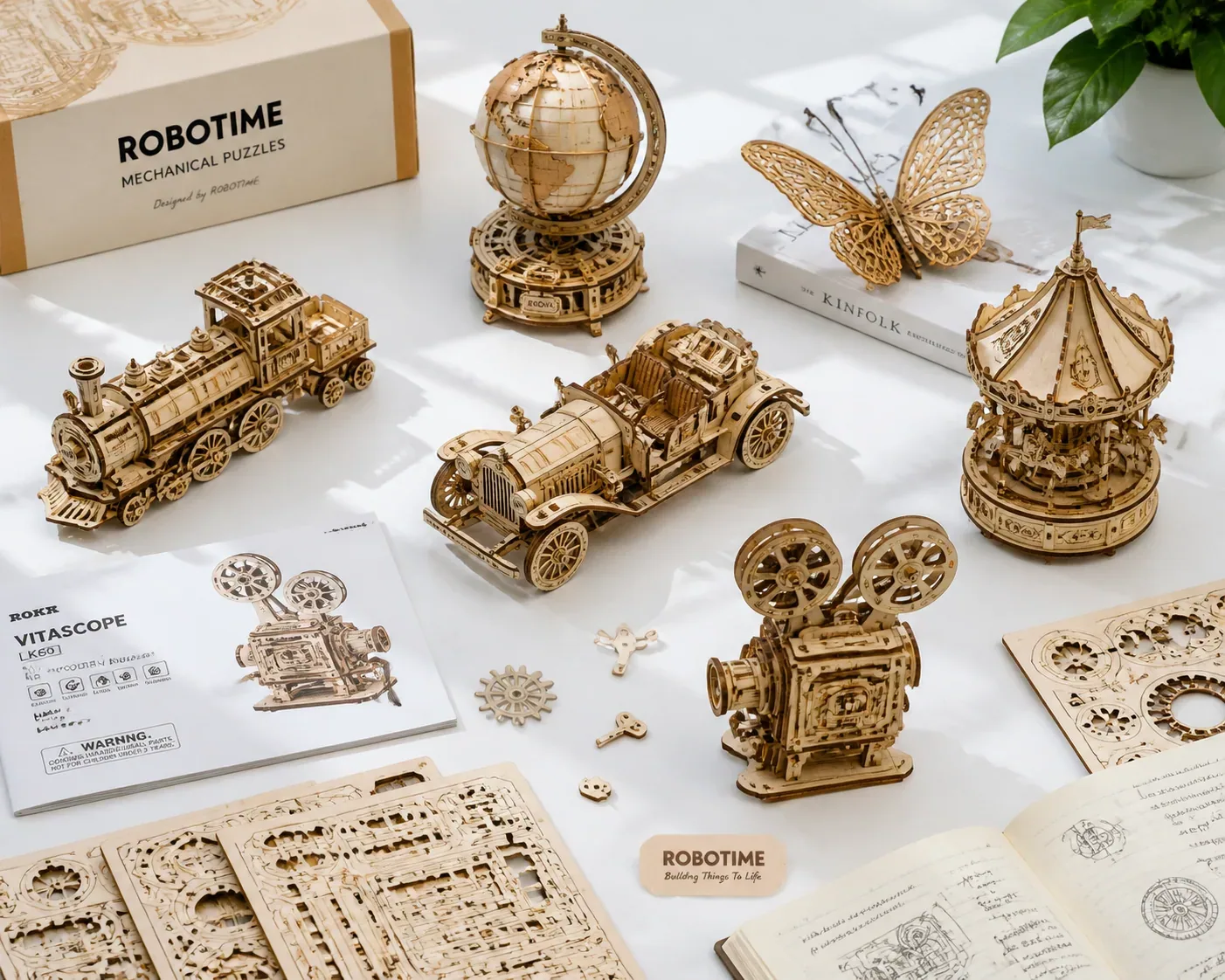
Over 2 million DIY enthusiasts worldwide have discovered that building something with your own hands beats scrolling through screens any day. There's a quiet magic in watching interlocking wooden pieces transform into a functioning music box or mechanical globe—and ROBOTIME 3D wooden puzzles deliver exactly that experience. ROBOTIME INTERNATIONAL LIMITED has perfected the art of accessible craftsmanship, with their 3D wooden puzzle line sitting at the sweet spot between serious hobby and casual entertainment.
Using precision laser-cut plywood and interlocking parts, these kits eliminate the need for glue while maintaining structural integrity and aesthetic appeal. You'll discover how the brand combines affordability with genuine mechanical function, creating models that work beautifully after you assemble them.
Explore ROBOTIME 3D Wooden Puzzles today and unlock your mechanical creativity.
How ROBOTIME 3D Wooden Puzzles Work: The Engineering Behind the Build
Precision laser-cutting creates interlocking parts that fit seamlessly
The foundation of every ROBOTIME kit begins with laser-cutting technology that produces components precise enough to lock together without adhesives. Each piece aligns perfectly with its neighbors, creating joints strong enough to support the model's weight and function throughout years of use and display.
Step-by-step instructions guide logical assembly sequences
The instruction booklets that accompany ROBOTIME kits follow a carefully structured progression. Rather than overwhelming builders with all components at once, they guide you through logical stages that build understanding gradually. Text descriptions pair with detailed photographs, allowing both visual and verbal learners to follow along confidently.
Functional mechanical components operate after completion
Unlike static puzzles, ROBOTIME models feature genuine mechanical elements. Gears mesh together, springs store and release energy, and motors (where included) power moving components. These aren't decorative touches—they're engineered systems that actually function, transforming your finished model into an interactive piece rather than just something to look at.
Structural integrity maintained through engineered joint design
The wood quality and joint engineering ensure that finished models remain structurally sound indefinitely. Interlocking design distributes stress across multiple connection points rather than relying on adhesive strength. This approach creates more durable assemblies than traditional glued models.
Models range from simple static displays to fully interactive mechanical creatures
ROBOTIME's catalog spans different complexity levels. Beginners might start with simpler models that focus on assembly fundamentals, while experienced builders tackle intricate automata featuring multiple moving systems. Each kit is engineered to deliver satisfying results at its intended difficulty level.
Assembly requires no tools beyond the included components
You won't need to raid your garage for screwdrivers or adhesives. ROBOTIME kits contain everything necessary, with most models requiring nothing beyond your hands and attention. This accessibility removes barriers for casual builders while maintaining the satisfaction of creation.
Popular ROBOTIME Model Categories: From Music Boxes to Mechanical Creatures
Music Box Kits
Hand-cranked mechanisms with custom melodies define this category. These kits combine precise mechanical engineering with wooden aesthetics, producing beautiful casings that house intricate musical mechanisms. Builders emerge with functioning music boxes capable of playing melodies for years.
Mechanical Vehicles
Working cars, trains, and locomotives capture the engineering principles that made transportation history possible. Some feature motorized propulsion, while others use wind-up mechanisms. Either way, your finished vehicle actually moves under its own mechanical power.
Rotating Globes
Functional spinning globes with detailed geographical features appeal to geography enthusiasts and decorators alike. These models combine educational interest with mechanical function—you spin them like traditional globes while appreciating the precision engineering underneath.
Automata and Creatures
Mechanical animals and figures with moving parts create surprisingly lifelike motion. Gears and levers create the illusion of breathing, walking, or other natural movements. These models showcase how simple mechanical principles produce complex-seeming motion.
Architectural Models
Detailed building replicas transcend typical model-building. Many feature moving components or lighting features that transform static architecture into interactive displays worthy of exhibition spaces.
Gear-Driven Displays
Kinetic sculptures showcase mechanical principles in action. These pieces serve educational purposes while functioning as captivating artwork, displaying how energy transfers through mechanical systems.
Puzzle Boxes
Multi-stage assembly puzzles with hidden compartments and mechanical reveals add mystery to the building process. These kits reward careful assembly with surprises and hidden functionality.
Assembly Tips That Transform Your Building Experience
Organize all pieces before starting
Dumping components directly onto your work surface guarantees frustration. Sort pieces by size, type, and assembly stage according to your instruction manual's groupings. This preparation prevents confusion mid-build and helps you spot missing pieces before you've invested hours of work.
Read through the entire instruction manual first
Understanding the overall structure before touching a single piece fundamentally changes your building experience. You'll recognize how individual components contribute to larger mechanisms and appreciate how the designer sequenced assembly for optimal construction flow.
Work in a well-lit space with a clean, flat surface
Good lighting prevents eye strain and helps you spot assembly errors. A clean surface minimizes the likelihood of losing tiny screws or delicate springs. Protecting your work area from dust and debris also preserves your finished model's finish.
Take breaks during longer builds
Multi-hour assembly sessions drain focus and concentration. Stepping away for 15 minutes every hour or two allows your mind to reset, reducing assembly errors and maintaining enjoyment throughout the process.
Use instruction photos as your primary guide
Visual learners benefit most from cross-referencing photos with text descriptions. When confusion arises, photos typically clarify more effectively than written directions alone.
Test mechanical components during assembly
Rather than waiting until completion to discover that a gear doesn't mesh properly or a spring lacks appropriate tension, test components as you assemble them. This early detection prevents rebuilding work late in the process.
Keep a small container for tiny screws and delicate parts
Intermediate assembly stages often require temporarily setting aside components. A dedicated container prevents losing these critical pieces during transitions between assembly sections.
Document your build with photos
The building process itself becomes shareable content. Photographing key stages creates a personal record of your creation while generating material for social media communities enthusiastic about mechanical building.
Start your ROBOTIME building journey with expert guidance and premium kits.
Why ROBOTIME Kits Make Exceptional Gifts Across Age Groups
ROBOTIME puzzles succeed as gifts because they operate at multiple levels simultaneously. They combine creativity, problem-solving, and mechanical learning in one package—appealing to people who crave hands-on engagement in our increasingly digital world.
Screen-free entertainment resonates powerfully with gift recipients fatigued by constant connectivity. Unlike most hobbies that demand ongoing investment in supplies or subscriptions, ROBOTIME kits deliver complete experiences within reasonable price points ($20-$60). Finished models serve as conversation-starting display pieces, ensuring your gift earns regular appreciation rather than disappearing into storage.
The versatility extends to use cases. Solo builders find deep satisfaction in solitary assembly sessions, while families and friend groups gather around kits as collaborative activities. This flexibility makes ROBOTIME appropriate for diverse audiences and occasions.
Hobbyists value the mechanical sophistication, while STEM enthusiasts appreciate the educational components. Casual builders enjoy the satisfying completion experience. Gift-givers appreciate that these kits deliver premium-feeling results at accessible price points. Social media-friendly aesthetics encourage sharing, creating community engagement that extends beyond individual builds.
Most importantly, ROBOTIME kits create memorable experiences. Years after assembly, recipients remember the time invested and satisfaction achieved—memories that outlast typical material gifts considerably.
ROBOTIME vs. Competitors: What Sets These Puzzles Apart
Superior laser-cutting precision distinguishes ROBOTIME from mass-market alternatives that produce sloppy tolerances and parts that require force-fitting. ROBOTIME's engineering ensures components align smoothly, making assembly genuinely enjoyable rather than frustrating.
Glue-free assembly reduces mess significantly compared to traditional model kits. No adhesive drying time means no waiting periods between sections. The assembly time itself stays shorter, making multi-hour builds feel more manageable.
Mechanical functionality separates ROBOTIME offerings from static 3D puzzles that prioritize complexity over purpose. Your finished model actually operates, distinguishing it from display-only alternatives.
The price-to-quality ratio outperforms premium hobby brands that charge three times the cost for marginal quality improvements. ROBOTIME delivers premium craftsmanship at mainstream pricing—a rare achievement in the DIY market.
Instruction quality and packaging presentation exceed competitor standards noticeably. Opening a ROBOTIME kit creates a premium experience comparable to luxury product unboxing. Instructions that actually clarify rather than confuse make the difference between frustration and flow.
Community support and online resources prove more robust than similar brands. Thousands of builders share tips, modifications, and encouraging commentary, creating an ecosystem that helps newcomers succeed.
Modern decorators and Instagram-conscious builders gravitate toward ROBOTIME's aesthetic sensibility. The finished models look intentionally designed for display, not like hobby projects hastily placed on shelves.
Consistent quality control across different kit types and production batches ensures reliable experiences regardless of which model you select.
Parting Wisdom: Your Next Step Into Mechanical Creativity
ROBOTIME 3D wooden puzzles represent something increasingly rare in our digital age: a tangible, rewarding way to spend several hours creating something genuinely impressive. You're not just assembling pieces—you're learning mechanical principles, developing patience, and building something worthy of display.
The combination of affordability, craftsmanship, and genuine functionality makes these kits stand out in a crowded market of disposable hobbies. Start with a beginner kit that matches your interests, clear your schedule for an afternoon or weekend, and experience the satisfaction firsthand. Whether you're shopping for yourself or seeking the perfect gift for someone who has everything, ROBOTIME delivers on its promise of premium DIY experience without the premium price tag.
Your next mechanical creation awaits—one precisely cut piece at a time.
Order your ROBOTIME 3D Wooden Puzzle kit now and transform hours into unforgettable creation.